email: latenightpickwick@gmail.com
In this space, the Pickwick Drive-In examines motion pictures through which a singular artist played an important part, large or small. Four Seasons is an exploration of four films — four brief moments, like the seasons themselves: spring, summer, autumn, and fall, representing birth, growth, the passage of time, and finality — with the contribution of a unique star, whether in front of the camera as a movie star; playing a supporting role in the production’s cast; or behind the camera as a cinematographer, director, writer, and more.
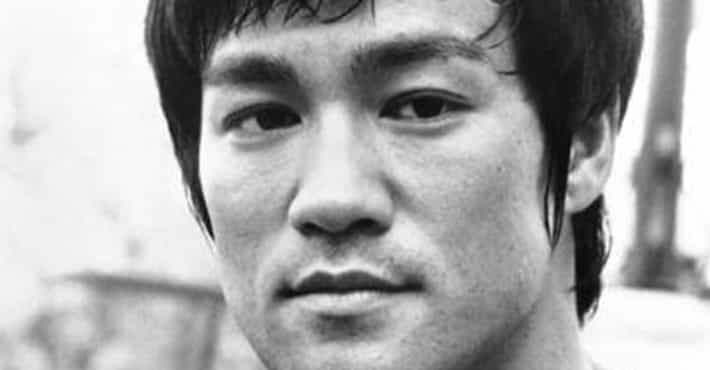
This month, the Pickwick rolls back the celluloid reels, showcasing four motion pictures starring Bruce Lee — who was born in 1940 & passed on July 20th, 1973 — movies in which the Chinese martial artist played a legendary role.
S P R I N G
D O C U M E N T A R Y
* * * *
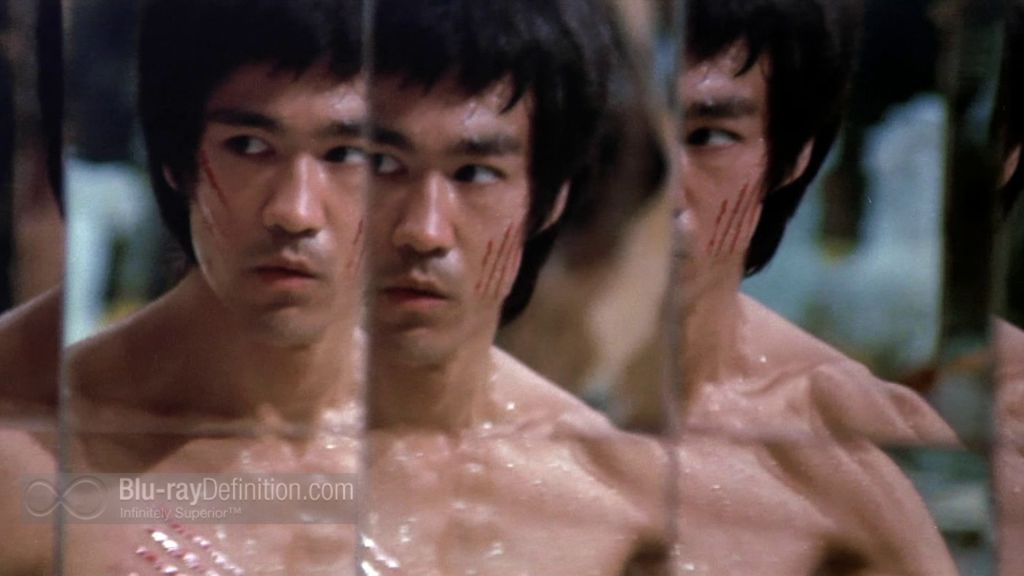
I Am Bruce Lee
2012 | NOT RATED | 95 minutes | d. Pete McCormack | ed. Tony Kent | s. Pete McCormack
* * * *
* * * *
It can’t be written with more gravity: I’m indebted to my mother & uncle for my love of movies. They were responsible for introducing me to everything that I still cherish today:
Lucas. Spielberg. Coppola. Kathryn Bigelow. Spike Lee. John Hughes. Tarantino – to name only a few. And I can only imagine where I would be today without their cinematic influence, but it probably comes down to the few filmmakers whom I discovered on my own.
And I discovered those cinema-smiths only because they were so ubiquitous in pop culture – whether by name or likeness – and the repetitious reminder of these figures forced me to eventually seek them out on my own: Brando, Ingrid Bergman, Chaplin, Marilyn Monroe, Hitchcock, and Bruce Lee – and the list pretty much ends there, because so much of my continued love of film really started somehow with Bruce Lee, because he was one of the first filmmakers who wasn’t a gift passed down from my family, but belonging only to me, discovered by me.
Bruce Lee was my own, first totem — and remains my spirit animal — alongside his talents, his tenacity, his personality, his messaging.
By the time that I discovered Bruce Lee, I had already learned so much about & from other filmmakers, but nothing could prepare me for what I would learn with Bruce Lee serving as my teacher.
So after seeing his image on so many t-shirts on the street – his image hanging out in the background of some film or TV show – I sought him out, to determine what manner of pebble could cast such wide circles in the pond of pop culture.
And like the completist & chronologist that I am, I started at the beginning. And like any good student, I did it by cheating, starting my education in 2012 – the Year of the Dragon – with a documentary film that seemed to have all the answers.
I Am Bruce Lee – written & directed by Pete McCormack – is so far the most engaging documentary about Lee’s life and remains one of the most notable entries of cinematic biography for the Dragon. Joined by Lee’s widow Linda Lee Cadwell & daughter Sharon Lee, a number of fans & devotees, friends, and industry icons, I Am Bruce Lee begins with Lee’s birth & childhood, leading the viewer through the early delinquent years of Lee’s life in China that resulted in his transplantation to America, through his unsteady start there, to his whirlwind life of filmmaking.
But in addition to exploring Lee’s introduction to pop culture through CBS-TV’s The Green Hornet (1966-1967) — and through the singular three films that Lee would make and see released during his lifetime (because both Enter the Dragon (1973) & Game of Death (1978) were released posthumously) — the documentary briefly explores the racial adversity of Chinese-Americans in the 1960s but ultimately leans into the radicalism that Lee’s martial arts represented.
Possessed of the same cultural radicalism associated with Muhammad Ali (whom Lee legendarily hoped to fight one day) & Malcolm X (rightfully perceived as the counterpoint to civil rights activist Martin Luther King, Jr.), Lee also embodied the same creative, artistic radicalism like that of Bob Dylan, of Steve Jobs, of Jimi Hendrix, of James Dean, of Taylor Swift.
Lee would not, for example, bow down to what most would consider sacred cows, without apology and without equivocation. When told by Chinese nationalists — then, as a kung fu instructor in San Francisco — that he must stop instructing Caucasian students in martial arts or suffer the closure of his school — Lee didn’t consider that as an option, even for a moment. And — in doing so — Lee introduced jeet kune do to the world — a widely American form of kung fu, admittedly recognized by Lee himself not as a concrete style of fighting but as a motion of movement that must evolve over time.
“[Jeet kune do] can be taught, but it can’t really be standardized,” friend & former student Dan Inosanto says in the documentary. According to Lee, kung fu styles of fighting had become law — stagnant, even, or too long — scriptures of fighting that must be strictly adhered to — when Lee’s most famous aphorism was to “be water,” allowing oneself to adapt & respond to the situation, whether in a streetfight, acting in a dramatic scene for a movie, or lost in thought while writing an essay about Bruce Lee.
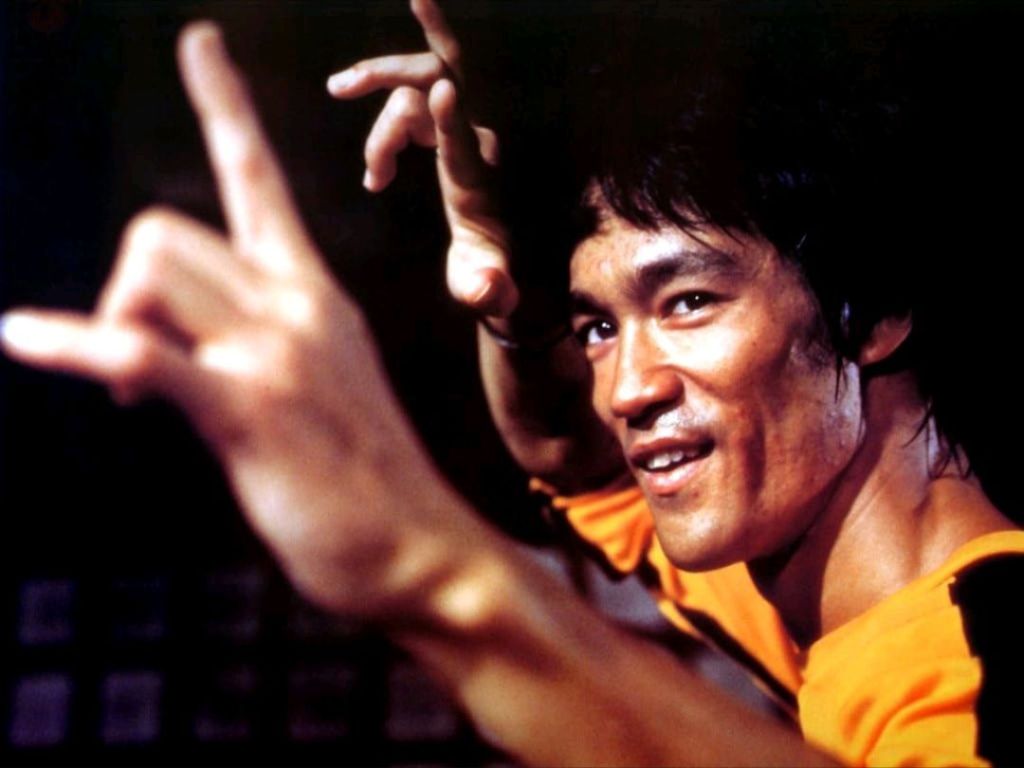
And that’s the philosophy of Bruce Lee that I embrace the most, even as I watch him take on a small army of martial artists in The Chinese Connection or ascend level after level of “big bosses” in Game of Death.
For me, Bruce Lee has always represented that act of “being water,” of meeting the world at a very specific moment & responding to that moment — organically, honestly — by becoming the moment.
I do so even as I write these words.
And, according to Lee, this essay will look nothing like the same essay, were I charged to write it again next year. That’s the “Be Water” Bruce that I discovered in I Am Bruce Lee and then, later, in the roles that he played in five major motion pictures.
Ultimately, perhaps you won’t feel an ownership of this tremendous artist, and perhaps you shouldn’t feel an ownership of him, because Bruce Lee doesn’t belong to me any more than he belongs to you – any more than Bruce Lee’s ideologies didn’t really belong to him but were cultivated through all that he’d learned from life from the world around him.
It’s a lesson as good as any to learn from the greatest teacher — and I even cheated in the learning of it — but, even when it meant taking a detour in order to achieve his ambitions, teaching was central to Bruce Lee’s spirit …
… My spirit animal.
* * * *
I Am Bruce Lee is streaming on YouTube.
S U M M E R
MARTIAL ARTS / REVENGE
* * * *
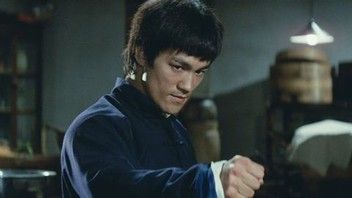
Fist of Fury [The Chinese Connection]
1972 | R | 106 minutes | d. Lo Wei | c. Chen Ching-chu | s. Lo Wei
* * * *
* * * *
As it’s already been suggested – in interviews onscreen or on the printed page – one can learn a lot from Bruce Lee, despite the fact that Bruce Lee’s students were so remarkably different, one from the next.
As an example, without a class roster, it can be comfortably theorized that Lee taught hundreds of students while working as a teacher in Seattle, Oakland, and Los Angeles. And Bruce Lee’s own wife learned gung fu from Lee as one of his students. And celebrities like James Coburn, Steve McQueen, Roman Polanski & his wife Sharon Tate, and Kareem Abdul-Jabar, among others, sought out Lee as a martial arts instructor – not necessarily to learn the art of martial arts, a form of fighting that would have little use in their professional careers but to center their bodies & minds so that they could – like Bruce Lee insisted – express themselves honestly, in what endeavor they attempted, whether for profit or simple life-long prosperity.
Whether as a martial arts instructor in a major city or as a movie star (and Bruce hated that word: “star”) or as a would-be philosopher, Bruce Lee would spend his brief life as a teacher.
I could lay bare for too long what Bruce Lee has taught me: about myself, about my immediate community, about the world, and about life.
Teaching would remain a motif of Bruce Lee’s life as audiences around the world were learning that there was a new star in martial arts films with the release of Lee’s first major motion picture The Big Boss (1971), remaining the highest-grossing Hong Kong film for approximately a year. It should be no surprise, then, that teaching figures so prominently in Lee’s second film Fist of Fury (known by its US release as The Chinese Connection). Upon its release in 1972, Fist of Fury would unseat The Big Boss as Hong Kong’s highest-grossing film.
The motion picture is the story of Chen Zhen (Lee), who returns for his master’s funeral but remains singularly suspicious of his teacher’s cause of death, told by those closest to him to move on from his grief. Zhen, however, finds that impossible to do, tracing his master’s death to a rival Japanese dojo, where he uproots a conspiracy of imperialism, nationalism, and – ultimately – murder.
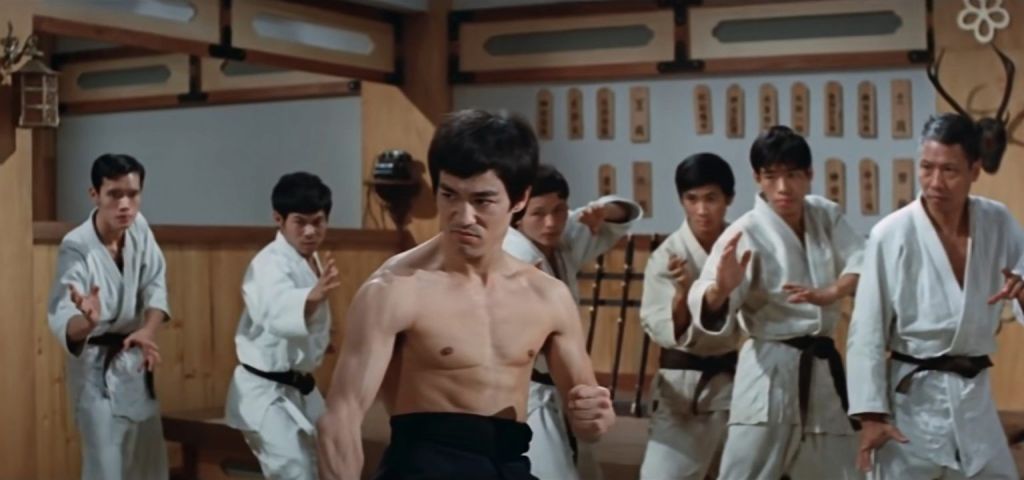
Here, the motif of the teacher or one’s self-awareness & one’s responsibility to his teacher — even as it relates to my own responsibility to my teacher Bruce Lee — resonates in the film, but the motif here is more aggressive than its insinuations in The Big Boss, as Zhen commits to avenge the murder of his former instructor.
And – like that – Fist of Fury becomes yet another treatise by Lee to actualize on film his cultural fortitude. The son of a murdered father-teacher figure, Zhen remains responsible not only for exacting vengeance for the murder of his teacher but also for standing up to the Japanese occupiers in his native China. And – suddenly – there again is the cultural radicalism that Bruce Lee would forever be famous for: starring as the mourning Chinese student of a slain teacher figure, forced to stand up to his mentor’s faceless, Japanese murderer.
And while this notion of cultural identity would play a lesser role in Lee’s future films, the notion never played a miniscule role in Lee’s everyday life, positioned as he was as a motion picture star (and there’s that word again, that Bruce Lee hated: “star”), capable of discovering fame as much in Asia as North America.
At all times, then, on- & offscreen, Bruce Lee was living a life of two worlds.
“Do you ever think of yourself as Chinese, or do you ever think of yourself as North American?” famous TV journalist Pierre Berton asked Lee in an interview, and the martial artist’s response was important insomuch that it captured so much of what bubbled beneath the surface of Fist of Fury, a film about a Chinese student standing up against the Japanese predators that threatened to control an entire community.
“You know what I want to think of myself?” Bruce Lee asked Berton in response. “As a human being. Because – I mean – I don’t want to sound, like, so Confucius say … but under the sky … under the heavens … there is but one family.”
“It just so happens,” Lee concluded in the interview, “that people are different.”
And that’s not an incredibly difficult lesson to be learned.
* * * *
Fist of Fury [The Chinese Connection] is is streaming on Fandango at Home.
A U T U M N
MARTIAL ARTS / ACTION
* * * *
Game of Death
1978 | R | 110 minutes | d. Bruce Lee & Robert Clouse | dp. Tadashi Nishimoto | s. Bruce Lee
* * * *
* * * *
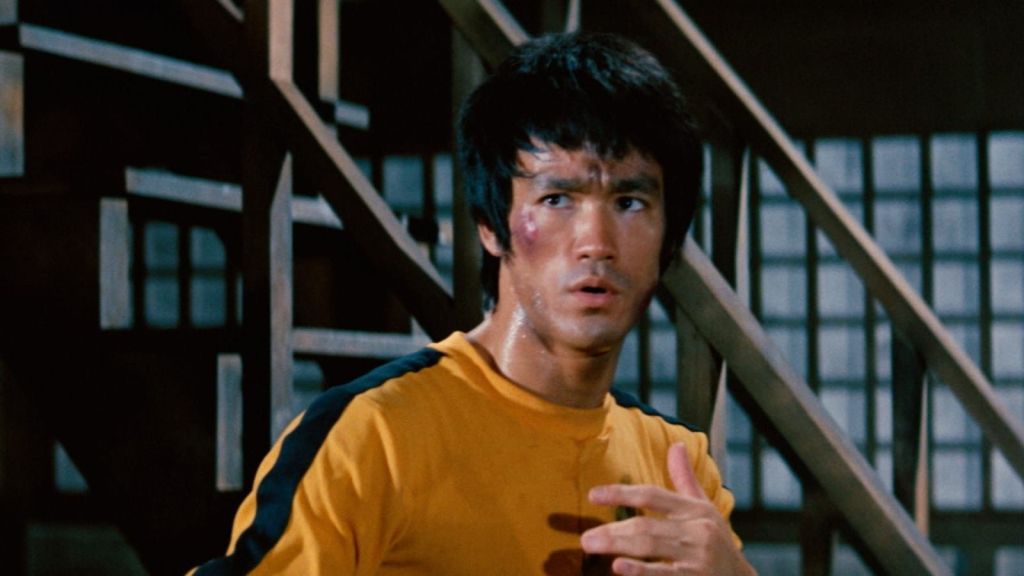
By the time Bruce Lee’s final major motion picture — Enter the Dragon — was released, audiences had already lost the big game, losing Bruce Lee one month before the film’s release. An explosive entertainer had passed from this world, and audiences were left now with what could be collected from Lee’s last unused footage, if it could somehow be transformed into a full-fledged motion picture.
The result was Game of Death — but first, let me tell you this:
Brainstorming a Four Seasons feature like this one – like any one – comes with its own set of challenges, none of which are easy.
First & foremost, one must distill a moviemaker’s career down to four films – and that can be hard enough, depending on the filmography. But each of those films must then in some way pair nicely with the season in which each one exists. Rounding out this feature with autumn & winter, I arrived at two of Lee’s possible films. I could select Enter the Dragon (1973) – Lee’s truly last film – fully realized & debuting in theaters only one month after Lee’s death. Or I could select Game of Death – Lee’s truly posthumous film – pieced together from archival film footage from other Bruce Lee films, including only 11 original minutes starring Lee that were actually filmed for the movie, and sequences of both drama & action starring two Bruce Lee body doubles (and, frequently, not very believable body doubles) and released a full five years after Lee’s death.
It was a significantly difficult decision to make.
In making my decision, watching Game of Death – for some Bruce Lee enthusiasts – could represent a difficult endeavor to undertake as well, produced as the motion picture was.
While the film includes some of the best martial arts sequences of Lee’s career, what remains of Game of Death feels a bit like a betrayal — something untrue, both to Lee on a personal & professional level and to the legacy of Lee’s film career — like a magic trick that never quite concludes with that sense of wonder, with the audience’s demand to understand precisely how the magicians pulled that off.
But here’s the trick: Game of Death is the story of Billy Lo (Lee), a tremendous martial artist & action movie star who has achieved international fame. But when Lo refuses to be intimidated by a criminal syndicate (led by Hugh O’Brian), Lo’s assassination is ordered, and one of the organization’s hitmen “Stick” (Mel Novac) – disguised as a stuntman – shoots Lo while an on-set production scene is filmed.
But the assassination attempt on Lo proves non-lethal, merely disfiguring him. This life-changing turn of events allows him to fake his own death & undergo plastic surgery that will make him unrecognizable to his would-be killers so that Lo can exact his revenge without suspicion that may fall immediately upon him or put those loved ones in his life in danger.
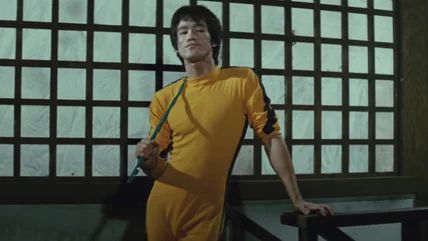
During Bruce Lee’s lifetime, he had shot about two hours of footage intended for Game of Death – mostly the fight sequences that make up the last 11 or so minutes of the film – before he got a call from America with an opportunity that he couldn’t refuse: to make Enter the Dragon with Warner Bros. Pictures. It would become one of the biggest martial arts films produced by an American studio at that time. Lee did so, pausing production on Game of Death, with every intention of returning to the project when he could. Unfortunately, Lee passed just after completing Enter the Dragon & before he could complete Game of Death.
Two other iterations of the 1978 movie exist – Game of Death Redux (2019) & The Final Game of Death (2023). And while both attempt to tell their own variations of the original production — filling in gaps here & deleting the newer footage there, including a Q&A here with an audience & looking more like a documentary there — the 1978 motion picture is widely considered the legitimate final film of Lee’s legacy.
But looking at Game of Death through these remarkably different prisms – alongside the context that can only come with time – it’s hard for me to remain as objective as possible when viewing it.
Even as I write these words, Bruce Lee’s ultimately final film doesn’t share the same DNA with its four big screen siblings – and there are multiple reasons as to why I may feel that way.
In more ways than its production background alone, Game of Death simply looks like a different motion picture from each of Lee’s other films, with the exception of perhaps Enter the Dragon, which was not a Hong Kong film. There is a rather guerilla look to those Hong Kong films, something something improvisational & impossible to cage, that looks more like an independent record store in Minneapolis, MN, than a Tower Records in Los Angeles, CA. Lee’s first two major Hong Kong films were, after all, made with independent producer Raymond Chow for $15K each. That’s a shoestring budget even in terms of the early 1970s. But the casting of Colleen Camp, Hugh O’Brian, and Gig Young — beautifully recognizable faces — also imbues Game of Death with a much more Western look. In Lee’s Hong Kong catalog, the movies are torn from the streets, populated by people whom you’ve never seen, characters whom you’ve never known but lives about which you care.
There is something hand-held & organic in Lee’s other motion pictures that — for better or worse — Game of Death seems to purposely avoid, trading in grassroots filmmaking for the production quality of the film’s opening credits, more stylized than any other film, perhaps an effort on the part of Golden Harvest to legitimize a film that could be seen as exploiting the late legend.
I suppose any one of these reasons makes me respond to Game of Death differently than I responded to the others. So, yes — the filmmaking could be the culprit.
But even the storytelling in Game of Death remains otherworldly when compared to the rest of Lee’s filmography. As Game concludes, the audience is met with a certain triumphance – even jubilance – that is largely uncharacteristic for a Bruce Lee picture. Game doesn’t end with a certain air of ambiguous or even corrupted justice like The Big Boss. Game assuredly doesn’t end like Fist of Fury. And it doesn’t end with the quiet resignation to uncertainty as The Way of the Dragon (1972) does. The final moments of Game are perhaps even a little too easy, lacking the same gravitas as Lee’s other finales. Perhaps that’s why the movie remains one of the more unpopular films in Lee’s major motion picture catalog, breaking with the personality of other motion pictures that were remarkably ripped from Lee’s own psychology, a worldview that includes unpredictability, ambiguity, unchecked political corruption, ana restless maculinity. Arguably, this break from Lee’s creative ideology could be what sets Game of Death apart from the rest – and not for the better. We know as an audience of I Am Bruce Lee that these four qualities were baked into Lee’s real life, so it’s strange to encounter a narrative that seems to contradict those ingredients, perhaps the clearest sign that Lee was not the co-master of this particular ship.
And then — quite simply — there’s the matter of taste. With the film’s blatant use of archival, recycled footage of Bruce Lee’s real-life funeral to dramatize Billy Lo’s own funeral which fakes his own death, there is simply something unsettling about seeing Lee’s open-faced casket in a work of cinematic fiction. And unlike a funeral, it doesn’t end there.
In the opening moments of Game of Death, there runs Bruce Lee as Billy Lo through cavernous passageways, scenes ripped from Enter the Dragon, even fighting a strawberry blonde in a coliseum in a movie supposedly starring Bruce Lee as action star Billy Lo – but those scenes are photocopied here from The Way of the Dragon. And the inciting incident of Billy Lo’s onscreen assassination at the hands of “Stick” – why, those are the [SPOILER ALERT] final moments of Fist of Fury. It is likely not the first official use of something on par with the use of articial intelligence in pop culture, but the movie’s use cannot be far off.
These trespasses against Lee’s filmography don’t so much as resuscitate the late film star as they keep him merely on life support, kept alive for a moment or two at best …
… In anticipation of the final death that’s certain to come, a death that will likely feel as or more painful than Lee’s death in 1973.
I don’t know – I can’t pinpoint what makes Game of Death so much a Catch-21 for me. Growing up when I did – far removed from the brief, real world odyssey of Bruce Lee – perhaps I bristle at Game of Death because I can see it all now in retrospect. The Master Bruce Lee likely never needed this final film. He is remembered as much for the remaining four major motion pictures, the volumes of written biographies, and the hours of documentaries that have been devoted to him.
Today, I can write that I never needed Game of Death, but if I could have been alive during Bruce Lee’s reign of motion picture houses, his death may have meant so much more to me that I would have invited one more audience with the Dragon:
One more assault on the Big Boss. One more punch from the Fist of Fury. One more Way of & one more entrance by the Dragon.
And perhaps in my grief I would have asked Hollywood or Golden Harvest to go so far as to manufacture – and I don’t use that word lightly – a motion picture wherein I could spend just a little more time with Bruce Lee, even if only for two hours more — whether to keep him with me or to finally let him go.
And, likely, the producers of this film vacillated between making the picture or simply moving on from it, of keeping Lee’s cinematic legacy relevant or of simply letting Lee finally & ultimately go. I hope it was a hard decision to make, for them, as it should be.
These are difficult questions, difficult choices, that ask me – and you – to settle upon one reason that casts Game of Death as so uniquely alien to the rest of Bruce Lee’s career.
But often, making decisions like that comes with its own set of challenges – none of which should be easy – significantly difficult, in fact.
* * * *
* * * *
Game of Death is available to rent or purchase on Fandango At Home.
W I N T E R
MARTIAL ARTS / THRILLER
* * * *
Enter the Dragon
1973 | R | 199 minutes | d. Robert Clouse | dp. Gilbert Hubbs | s. Michael Allin
* * * *

* * * *
Sometimes, the door in which we exit a place is the same door that we should have entered …
… And all doors were leading here.
The best thing about seeing Enter the Dragon is knowing that you’re seeing one of the best martial arts films of all time.
No other martial arts movie will ever really measure up.
And the worst thing about seeing Enter the Dragon for the first time is knowing that you’re seeing one of the best martial arts films of all time.
No other martial arts movie will ever really measure up.
These truths – I suppose – are the consequences of our actions, which include seeing Bruce Lee’s penultimate motion picture.
In the film, Lee stars as – well, Lee – a martial arts instructor of the Shaolin temple, who is asked by British intelligence to investigate Han (Shih Kien), a former student of the temple who is now suspected of drug trafficking & prostitution. Lee’s “investigation” leads him to a tournament hosted by Han, where Lee will contend not only with the martial arts opponents of the event but also with his efforts to expose & defeat Han, one of the most dangerous criminal masterminds in the world.
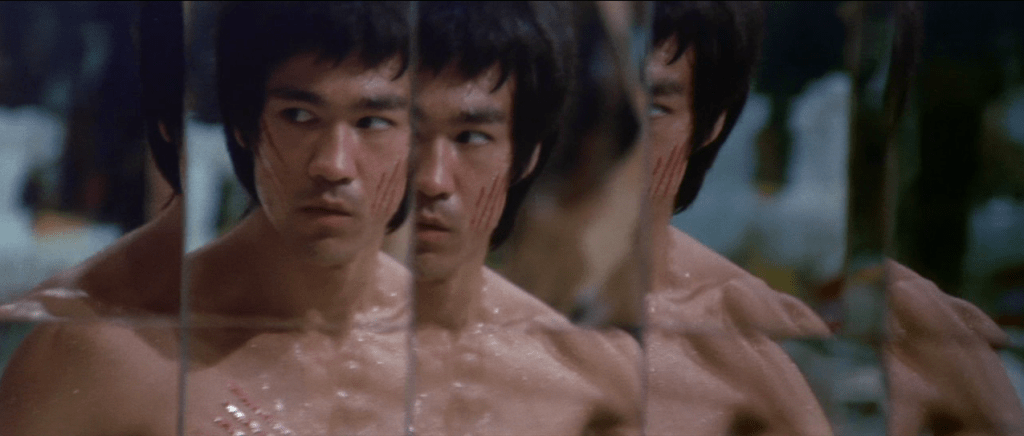
This is the film for which Bruce Lee would be remembered – and rightfully so. Enter the Dragon possesses action, possesses drama, and possesses a fortitude that remained largely absent from the big screen in 1973 & remains mostly (but not entirely) absent from the big screen today.
What’s curious about this film – Warner Brothers’ first major martial arts picture & the film that would ultimately bring kung fu movies to the Western world – is the picture’s effort to bring Bruce Lee to the Western world without necessarily destroying the artist’s filmography that had come before it.
When Lee couldn’t discover the acclaim that he deserved through his work in television’s The Green Hornet (1966-1967) or Longstreet (1971-1972), he returned to Hong Kong in order to build a catalog of film that would demand Warner Brothers to knock at his door. Bruce Lee stood at a point in his career upon which he could continue making movies in Hong Kong or catapult himself to the height of what would be – for him – the apex of his career thus far with an American venture. It could have been so easy for Lee to lose the street-level aggression that existed in The Big Boss and Fist of Fury, but Enter the Dragon – despite its roots in Western moviemaking in 1973 – either embraces Bruce Lee’s storytelling sensibilities or entirely steps aside so as to allow Bruce Lee’s ideologies to become the face of an entire studio. There’s poverty in Enter the Dragon. There’s police corruption. There’s the assault on women.
What would be Bruce Lee’s final (yes, final) film rails against what is wrong with the world, reminding its audience that action movies are not merely a vehicle of fists & feet but of commentary & criticism.
And one can only surmise where Bruce Lee’s star would shoot to next, had he lived more years, made more films. Martial artist Jackie Chan served as a stuntman on both Fist of Fury & Enter the Dragon, going on to build an entire career of filmmaking, making critically-acclaimed motion pictures like Police Story (1985) & box office blockbusters like Rush Hour (1998). Meanwhile, Bruce Lee more than likely would have continued to star in more dramatic martial arts films than comedic ones – one would think, but one can never know. And – having already discovered himself – Lee may not have likely negotiated with genres like science fiction & historical epics as martial artist star Jet Li has done, who both starred in the multiverse-jumping action film The One (2001) & the historically-grounded epic Once Upon a Time in China (1991), an entire 20 years earlier.
In the end, we can only imagine what Bruce Lee could have done in cinema had his life not been cut so short. And — in the end — we can only measure Bruce Lee’s art by what he left us …
… And what he left us in only four major motion pictures remains incredibly significant.
But early in the film, Bruce Lee’s character in Enter the Dragon is asked to intone the 13th commandment of the Shaolin temple. “A martial artist has to take responsibility for himself and accept the consequences of his doing,” the film’s protagonist says.
And across the breadth of his films, Bruce Lee did precisely that.
I cannot think of a death match that I would want to fight more.
* * * *
* * * *
Enter the Dragon can be rented or purchased on Amazon Prime.
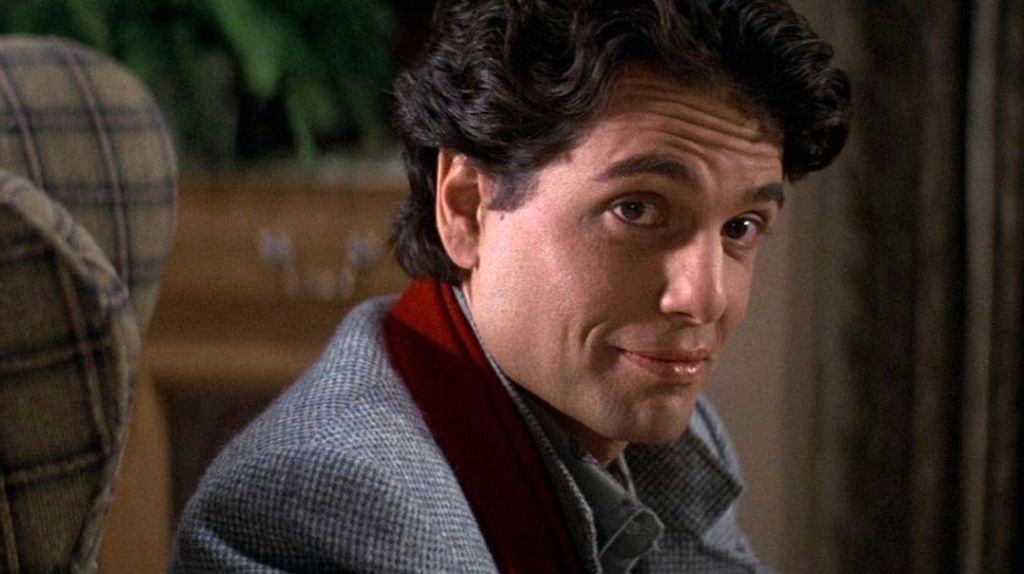
Chris Kaine is the most amateur film essayist whom you may ever imagine. He earnestly contends that he was named after the actor Chris Sarandon, because he was either conceived while his parents watched Fright Night (1985) in his paternal grandparents’ basement, or because of their love for The Princess Bride (1987), which stars a character by the name of “Humperdink,” which is pretty funny, if you think about it.
 Late-Night at the Pickwick Drive-In
Leave a comment