email: latenightpickwick@gmail.com
In this space, the Pickwick Drive-In examines motion pictures through which a singular artist played an important part, large or small. Four Seasons is an exploration of four films — four brief moments, like the seasons themselves, representing birth, growth, time, and finality — with the contribution of a unique star, whether in front of the camera as a movie star; playing a supporting role in the production’s cast; or behind the camera as a cinematographer, director, writer, and more.
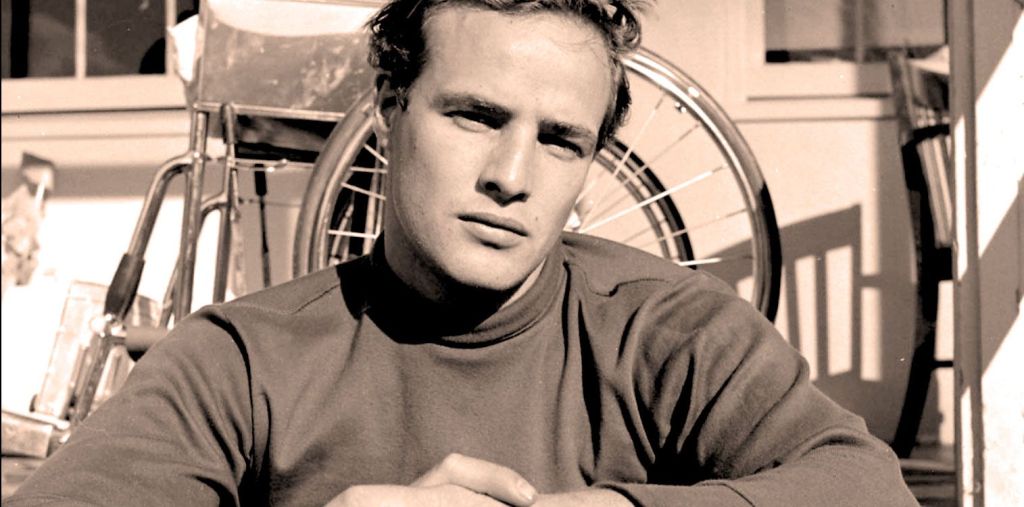
This month, the Pickwick rolls back the celluloid reels, showcasing four motion pictures starring Marlon Brando — who was born in 1924 & passed on July 1st, 2004 — of which the actor played a memorable role, in films pocketed between the acclaim of On the Waterfront (1954) & legacy of The Godfather (1972).
S P R I N G
W E S T E R N
* * * *
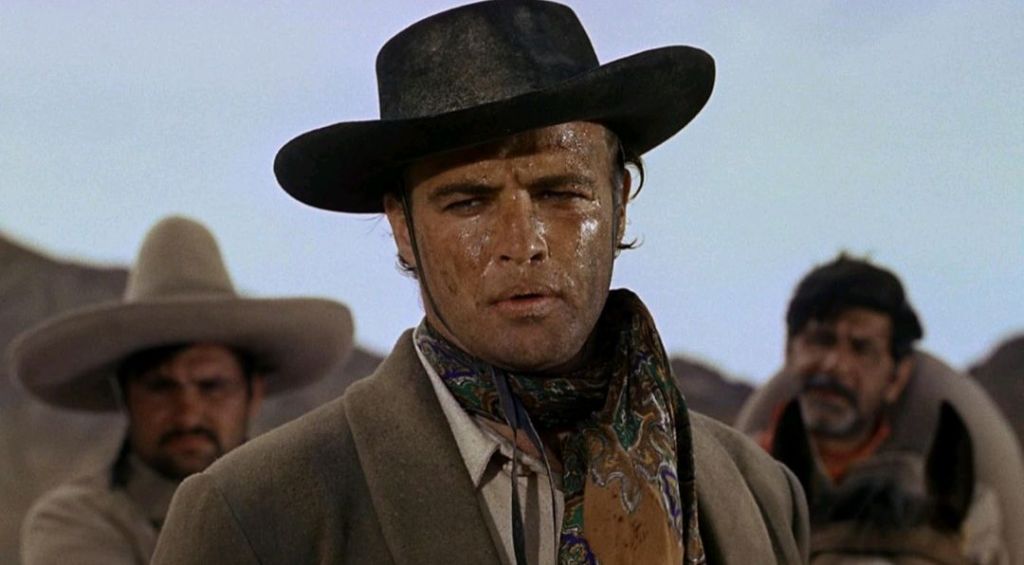
One-Eyed Jacks
1961 | NR | 141 minutes | d. Marlon Brando | s. Guy Trosper & Calder Willingham | c. Ellsworth Fredericks
* * * *
* * * *
I was first introduced to Marlon Brando in high school when I was assigned to read Tennessee Williams’ ‘A Streetcar Named Desire’ in my senior year English class. I’d never read something like that before, but the conversational, visceral ‘Streetcar’ — I learned — is not meant to be read, but seen.
And when I saw the film adaptation starring Brando, I’d never seen something like him before. He came off the page — even off the screen — like a genie released from a bottle after eons of imprisonment.
Because I knew that the wishes of film fans who had seen Brando for the first time in 1951 — just as I saw him in my senior year English class — had come true.
But always be careful what you wish for, I also learned.
And fresh off my Elia Kazan-directed ‘Streetcar’ screening, my uncle encouraged me to see The Godfather (1972), and I loved it so much, even though it was a very different Brando from ‘Streetcar,’ Brando more than 20 years older. The completionist that I am, I returned to the beginning, and The Men (1950) — his first film — was next, the story of a WWII veteran paralyzed from the waist down & tasked with both reentering the “normal” world & confronting the discrimination that he met there. Then, Viva Zapata! (1952) — also directed by Kazan — and I started reading about Brando behind the scenes at that time, how Brando & Quinn didn’t necessarily get along on set. Suddenly, I was learning for the first time about the veil that exists between what we see on the screen & what is left behind closed doors.
I skipped Julius Caesar (1953) at that time, because I was done with school, and that included Shakespeare. I then watched The Wild One (1953), which taught me that I was probably right in abandoning school & Shakespeare. And then I saw On the Waterfront (1954) — directed by Kazan as well, and knew then that maybe school was a good idea. Whether you need school or not, I’d rather write than work on the docks.
But there was Karl Mulden from ‘Streetcar’ again … so One-Eyed Jacks was the next natural touchstone, a fully-fledged Western starring Brando. Directed by Brando. And co-starring Mulden. The band was back together again.
In the film, two criminals – Rio (Brando) & Dad Longworth (Mulden) – are besieged by Mexican authorities after a bank heist. Escaping atop an aging horse, the couple agrees that Longworth will ride ahead, trading their single horse for two healthy ones that will guarantee their escape. But Longworth inevitably abandons Rio altogether, leaving him to do hard time in prison. Five years later, Rio emerges from his confinement to exact his revenge against Longworth, only to discover Longworth serving as the sheriff of a small town. There, Rio & Longworth will play a game of wills against one another in order to determine which one of them will ride into the sunset.
From The Godfather on, a motif reappeared in Brando’s films in which he took on roles where he played characters physically, psychologically, or emotionally abused by others, sometimes at his own unspoken request.
Perhaps it was coincidence on the part of the project — perhaps it was wish fulfillment on the part of Brando himself. I’m certain a psychiatrist would have a field day with some of Brando’s career choices, but starting with the assassination attempt on Vito Corleone after the murder of his son (James Caan), I found that Brando’s self-scourging selection of roles began much earlier than 1972.
As Johnny in The Wild One, Brando is mercilessly beaten by vigilantes for his supposed assault on Kathie (Mary Murphy), and — as Terry Malloy in On the Waterfront — Brando perhaps most famously takes on union bosses of longshoremen, enduring a brutal beating in the film’s finale, serving as a martyr for the abused working class of a corrupt system of employment. In The Fugitive Kind (1960) – as Valentine “Snakeskin” Xavier – Brando plays a guitar-playing convict attempting a new chapter in his life, but in light of the ongoing corruption of the town, Valentine dies in a confectionary fire, a sort of Christ figure dying for the sins of those around him. And this subliminal self-mutilation that Brando commits through his onscreen roles plays out in Jacks as well.
Brando’s roles — in this way — serve as that veil itself, between what we see on the screen & what should perhaps remain behind closed doors.
But, like a genie, Brando likely couldn’t be confined to the big screen, couldn’t allow himself to be imprisoned behind closed doors.
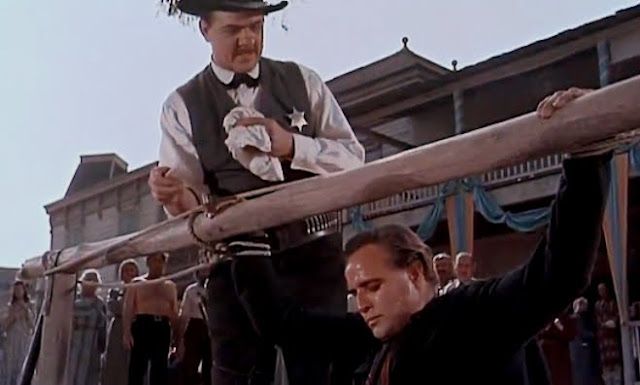
And more than the iconic roles that have ensured Brando’s place as one of the most unforgettable actors in Hollywood history — more than the star’s box office blunders that almost ensured that Brando would never land the role of the Godfather –– One-Eyed Jacks represents a true sliding door moment in Brando’s career.
And it’s a moment not far off from the movie’s plot, asking the viewer to imagine how events would have played out differently had Rio himself ridden ahead to secure two able-bodied horses for the means of escaping Mexican authorities with Dad.
But watching this motion picture, one can only imagine what would have become of Brando’s career had he not continued simply acting, rather than also pursue directing, as he did with Jacks. As if Brando’s process of acting could ever be called simple.
But movies like Mutiny on the Bounty (1962), Bedtime Story (1964), and Candy (1968) likely wouldn’t have existed had Brando pursued a career as a director, whether he starred in the picture or not. The 1960s weren’t a complete wash for Brando, as evidenced by this watchlist, and during that decade, one’s chances of seeing a good Brando film versus a bad one were about 50-50 at worst, 75-25 at best. Those aren’t the worst odds, certainly better than the 20-20 vision it requires to examine a moment – psychologically, emotionally – whether in or out of it.
It’s certainly better than one’s odds of drawing one of two one-eyed Jacks from a deck of 52 playing cards.
Singularly rare — a feat like that — just like Brando’s only film as a director.
* * * *
One-Eyed Jacks is streaming on Tubi.
S U M M E R
T H R I L L E R
* * * *
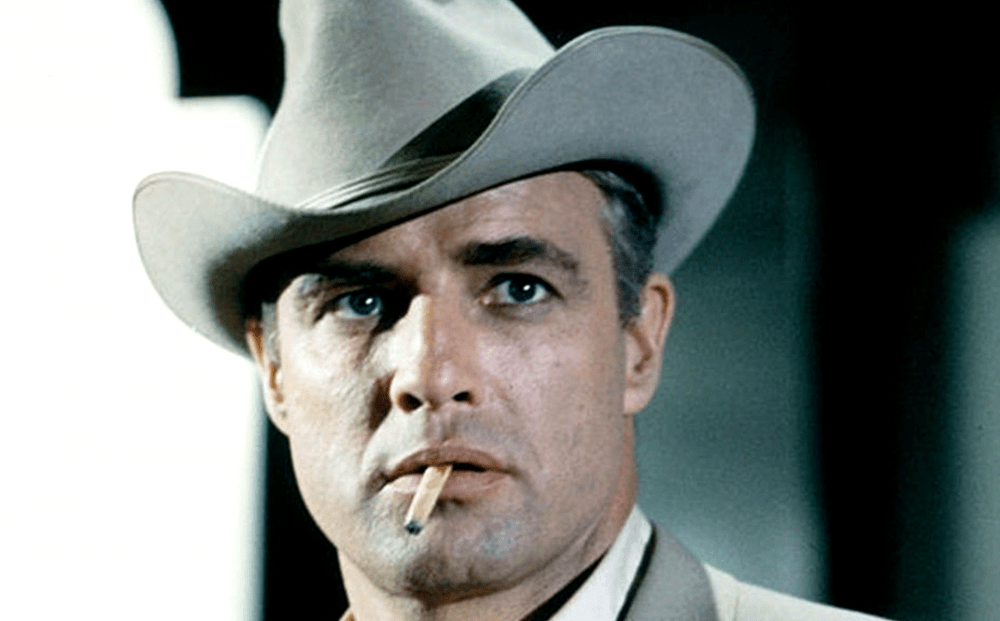
The Chase
1966 | NR | 134 minutes | d. Arthur Penn | s. Lillian Hellman | c. Joseph La Salle
* * * *
* * * *
Directed by Arthur Penn (Bonnie and Clyde (1967) & Little Big Man (1970)), The Chase wasn’t Brando’s first flirtation with movies that addressed racial injustice. Brando would most famously address the inequalities of American people when he was awarded the Oscar for Best Actor in a Leading Role for his portrayal of Don Vito Corleone in The Godfather, when a Native American woman, Sacheen Littlefeather, dressed in traditional clothing – to abbreviate the story – ascended the Oscar stage & calmly announced that Brando would not accept the award due to “the treatment of American Indians today by the film industry – and on television – in movie re-runs, and also with recent happenings at Wounded Knee.”
When I learned about Brando’s rejection of the Oscar — and his logic behind it, even the repercussions of his doing it — I thought it was so punk rock. It led to news media outlets descending upon the Wounded Knee reservation, where they hoped to find Brando waiting. What they instead found there were the dehumanizing conditions of Wounded Knee, like so many American Indian reservations, conditions that had for too long gone unreported or investigated or simply unknown. The exposure by the media to those conditions would bring some change to human life in America.
Brando, meanwhile, was nowhere to be found when the media arrived at Wounded Knee. He was at his home in the Hollywood Hills, using his celebrity from there to bring light to the conditions of American Indians in the U.S.
But Brando’s widescreen protests in support of racial equality started long before his non-acceptance of the Oscar for The Godfather.
Despite Brando’s rather (by today’s standards) racially-insensitive portrayal of Sakini in The Teahouse of the August Moon (1956), even as his rather racist character in Sayonara (1957) – his role in The Chase finds Brando confronting racial inequalities as well. In the picture, Brando plays Calder, a sheriff overwhelmed with the everyday corruption of this town, telling his wife (Angie Dickinson) that he refuses to bring children into a world governed by the local jail, where he one night must imprison an innocent black man (Eddie Smith) only so that vigilantes won’t lynch the man in the night. As the evening progresses, the darkest aspects of the community are dragged into view, exposing a world that Calder realizes that he will never be able to bring justice to or affect.
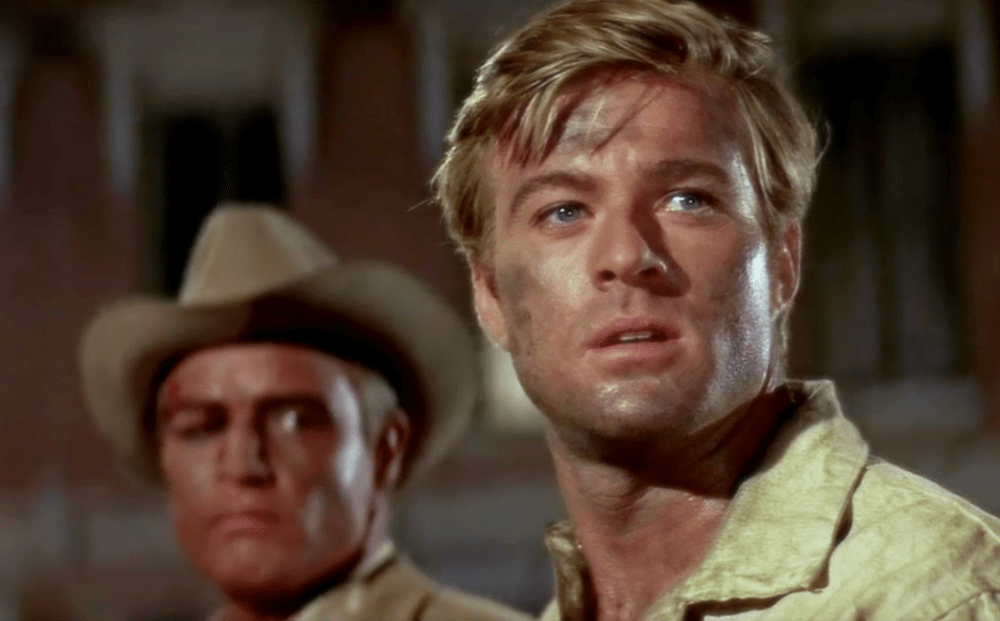
But more than that, I started — with The Chase — to catch glimpses of Brando’s activism in other films & grew to love the motion pictures a little more than they deserved because of the civic voice that he brought to them.
But The Chase deserves all of it: a star-studded portrayal of a community breathing its last gasp of respectability, the moment just before its inevitable fall.
It’s compelling that the film’s title is immediately linked with the law enforcement agents in pursuit of Bubber (Robert Redford). But a chase can also represent the pursuit of something – a thing – a thing, like the moral fortitude of the people in that small, nameless town in Tarl County. Perhaps that thing has been forever lost, incapable of being caught, never to be subdued. It’s a predicament that puts Calder in a uniquely trying position, when – at the end of the film – he must make the difficult decision to abandon the town altogether, his moral system intact; or, remain there for the rest of his career & life, potentially putting his own belief systems in peril by way of proximity.
The Chase, in that way, presents the viewer with an interesting approach to solving many of the social ills that it demonstrates: running from them, or – by running at them – confronting them.
I’m not sure that there’s a single, easy explanation.
And perhaps that’s the point: if you were ever chasing a singular answer.
* * * *
The Chase is streaming on Amazon Prime.
A U T U M N
W A R
* * * *
The Young Lions
1958 | NR | 167 minutes | d. Edward Dmytryk | s. Edward Anhalt | c. Joseph MacDonald
* * * *
* * * *
I’m a life-long learner – whether about science or nature, literature or mythology – I’ve never turned away from an opportunity to learn.
Historically, for example, the Third Reich – meaning “Third Empire” – was utilized as a piece of propaganda that framed the Reich’s takeover of the world during WWII as the third successor to two previous – and very successful – German empires.
That’s history. That’s fact.
Meanwhile – from a naturalist’s standpoint – lion cubs are characteristically defined by the spotted camouflage of their fur coats, making them difficult to discover in the wild. And yet despite their anonymity, lion cubs remain ferociously dependent upon their pride – those immediately close to them, those who may be capable of immediately protecting them – for survival for the first few years of their lives. That is, until they experience a critical transition that forces them into adulthood, into maturity.
(Don’t forget that part. It propels the plot of The Young Lions.)
That’s nature. That’s fact.
And yet the Pickwick Drive-In is only concerned with movies, with the making of them, with make-believe, even — of sorts.
If only.
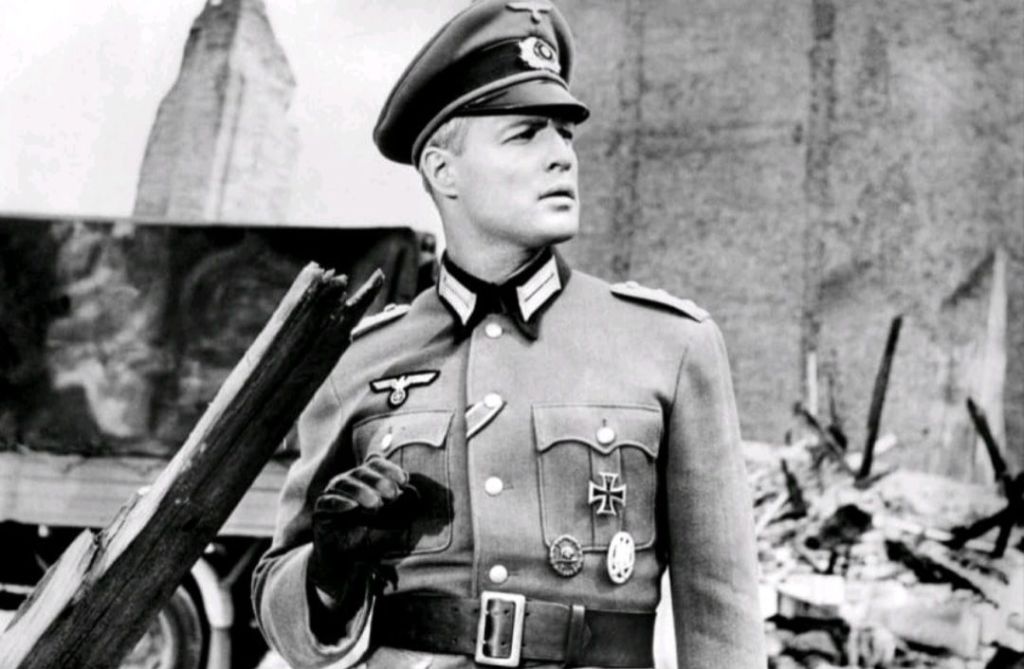
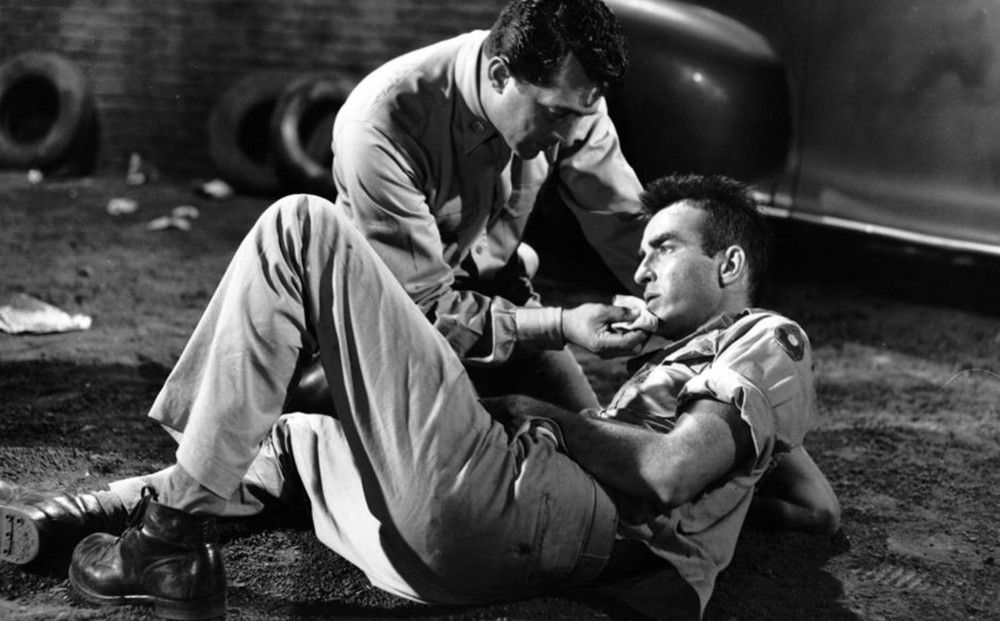
In The Young Lions, the year is 1938. The Reich has already executed the first stages of its Final Solution to eradicate Jews, homosexuals, and more from the European landscape. The Global Theater will enter WWII in only three years – and will affect millions – but, until then, Lions focuses on three men who will feel the shockwaves of the world war. Brando plays a German ski instructor & devotee of Hitler’s ideologies — Christian Diestl — and when the war breaks out, he joins the German army & becomes a lieutenant. Meanwhile, Michael Whiteacre (Dean Martin) has subsisted as a show business entertainer for so long that being drafted into the U.S. military could mean the end of his career — even his life. He has held on to the hope that his celebrity would keep him out of politics, out of the war — at the very least, safe from getting shot — but, alas, Whiteacre is going to war. And finally, Noah Ackerman (Montgomery Clift), a Jewish-American department store clerk – having earned the blessing of his gentile girlfriend’s father – willfully enlists in the U.S. army, whether because of the faith that his would-be Christian father-in-law has in him or because of his need to simply do the right thing. As a soldier, Ackerman will endure some antisemitism within his ranks but demonstrate that he’s a willful soldier.
These three lives will be forever changed throughout their time in WWII, and their lives will intersect before the film’s conclusion, asking each of them to reckon with their individual roles in a worldwide conflict.
If Brando was consciously or unconsciously attracted to roles that asked his character to be emotionally, physically, or psychologically abused on the big screen, he was also consciously or unconsciously attracted to playing roles that demonstrate a moral ambiguity.
Later in his career, Brando’s turns as Don Vito Corleone (The Godfather), Paul (Last Tango in Paris, 1972), and Colonel Kurtz (Apocalypse Now, 1979) all demonstrate roles at a crossroads with their mortality, their morality, their masculinity. His role as Christian Diestl represents – in 1958 – Brando’s latest turn of a similar personality since Terry Malloy (On the Waterfront), but more recently since Maj. Lloyd “Ace” Gruver (Sayonara). In The Young Lions, Christian alienates himself for the same moral ambiguity that will color future roles in Brando’s career. “I’m not a Nazi. I’m not political at all,” he tells Margaret (Barbara Rush) in one of the film’s opening scenes – just as the clock rolls over to 1939 – ever closer to WWII. “But I think [the Nazis] stand for something hopeful in Germany.” And Christian admits that his foresight regarding Hitler’s intentions is limited. “I think we should not discuss this, because I don’t know all the answers,” he quietly intones. “I know you don’t know all the answers, and with political discussions, we go round & round & round, and nothing is ever settled.” This reluctance to identify as a Nazi yet sympathize with the party’s promise of a New World alienates Margaret from him, in some way leading him to his career in the German army. Later, Christian – confronted by Françoise (Lilane Montevecchi) – becomes very aware that he killed her husband in 1940, and is told that she would only entertain seeing him again when the “gold” has worn off a little, after he no longer represents the murder of her husband by the Nazis.
In time, Christian learns to comprehend his faith to Hitler more fully. Despite the assistance of Clift & Martin, The Young Lions is ultimately Brando’s film, but the motion picture remains incredibly prescient today, when — like Christian — Americans metaphorically respond to their Constitutional right to vote by insisting that their attendance at the ballot box will make the nation better — even great again, when even Margaret asks him for a moment: “Is the world you live in so bad?”
Moreover, the movie resonates today as the film’s three protagonists represent identifiable archetypes of a nation’s people: the patriotic, sometimes blindly faithful to his country; the ostracized, willing to rise above his anonymity to enact change in his country; and the disillusioned, incapable for now of understanding the role that he could play in his country.
And – for better or for worse – each of the film’s main characters come to an understanding of their role in the world, even the universe.
Whether it’s a long life or a life cut short, that’s still life-long learning, as I understand it.
That’s life. That’s fact.
* * * *
* * * *
The Young Lions is streaming on Amazon Prime.
W I N T E R
H I S T O R I C A L D R A M A
* * * *
Burn!
1969 | R | 112 minutes | d. Gillo Pontecorvo | dp. Giuseppe Russolini & Marcello Gatti | s. Franco Solinas & Giorgio Arlorio
* * * *
* * * *
By 1969, the Role of Box Office Poison As Played by Marlon Brando had taken deep root in Brando’s career. The 1960s simply weren’t kind to Brando, and – according to sources – Brando wasn’t kind to film productions during the 1960s, often cited as temperamental & difficult to work with. On the heels of films with mixed reviews (The Ugly American (1963) & Reflections in a Golden Eye (1967)), and films largely panned by critics (Morituri (1965), A Countess from Hong Kong (1967), The Night of the Following Day (1969), and The Nightcomers (1971)), Burn! represents one of the last films that branded Brando’s career before he could be taken seriously enough to play Don Vito Corleone in The Godfather.
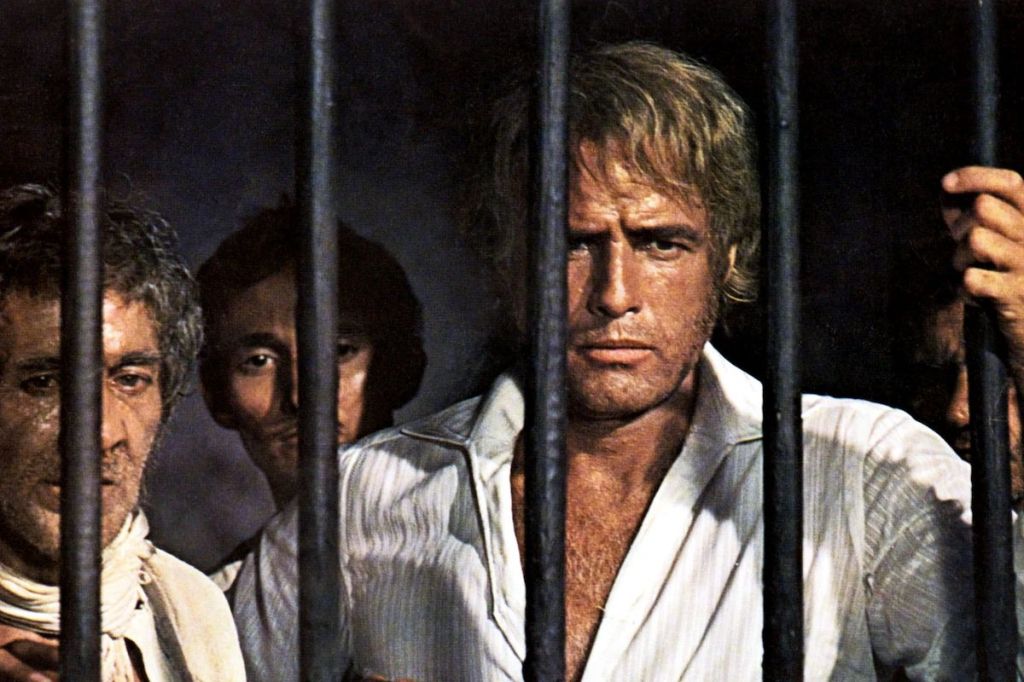
The film tells the story of Sir William Walker (Brando) – partly based on the activities of William Walker (an American filibuster & after whom Brando’s character is named), as well as other figures in American politics. As the film begins, Walker is sent in 1844 to the island Queimada (literally translated as “Burnt” or “Burned”) – a Portuguese colony – by the British Admiralty. There, Walker is tasked with inspiring an uprising of African slaves against the Portuguese regime, which the British then intend to replace with a government that includes more cooperative white workers. Walker is successful in his mission, but when tensions rise once more at Queimada, Walker will be emotionally & psychologically tasked to reckon with the consequences of his actions.
Again, Brando was drawn to a project that possessed a heart of civil rights activism — having recently attended the funeral of Martin Luther King, Jr., in 1968 — and Burn! wouldn’t be the last film in which Brando flexed his advocacy muscles on the big screen.
It certainly wouldn’t be the last time Brando seized upon an opportunity in the public eye to demonstrate his sympathy for disenfranchised peoples.
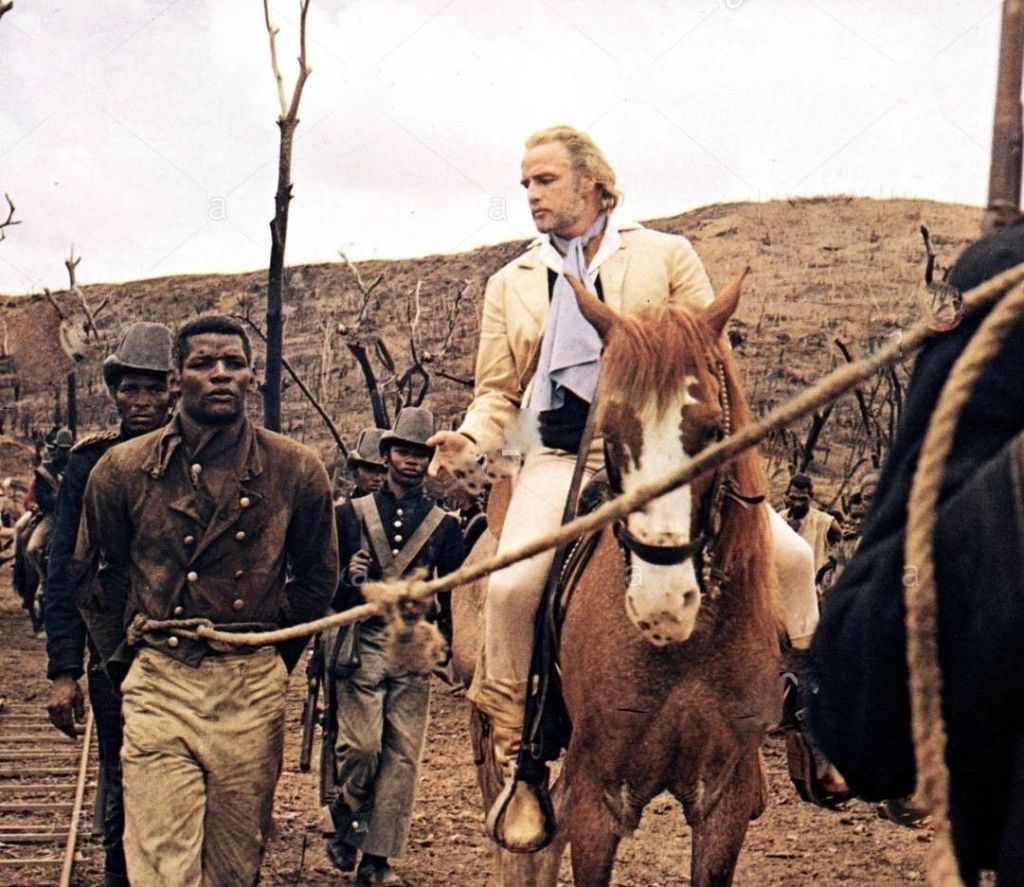
Following his famous activism at the 45th Academy Awards ceremony, Brando notably handed over 40 acres of his property near Agoura, CA, to the Survival of American Indians Association in 1974, and, at the ceremony, Brando apologized to Hank Adams – the organization’s director – & those in attendance for being “400 years too late” in returning the land to Indigenous peoples.
Brando — rightly or wrongly — scourged himself on camera once more, in public view, in real time, when he admitted that he was late to joining the battle to defend disenfranchised American people, just as Sir William Walker recognized too late that he could have done more in service to the the world, rather than in service to his immediate livelihood.
It’s Brando’s acknowledgment of those “400 years” that seasons Burn! so poetically.
More than 50 years after Brando relinquished that land to America’s first citizens, I would have to imagine that were Brando alive today – behaving as he did throughout the 1960s & 1970s – he would be criticized by certain media outlets for getting involved in politics when his career is very much that of an entertainer. Such is the narrative, as they would frame it, that Brando would still be respected as an actor if only he would stick to acting & resist the urge to venture into political territories with which he is woefully unfamiliar.
“Stay in your lane,” critics popularly say today.
But examine Brando’s resume, and you will find that Brando’s politics of otherness, of inclusiveness, and of progressive thinking were baked into many of his film’s narratives, if only Brando’s critics would take a closer look, keeping in mind that Brando was at all times playing in some ways himself on the big screen —
— Not the veil that fell between what audiences saw on the screen & what should be locked away behind closed doors —
If only.
* * * *
Burn! is streaming on Amazon Prime.
Chris Kaine is the most amateur film essayist whom you may ever imagine. He earnestly contends that he was named after the actor Chris Sarandon, because he was either conceived while his parents watched Fright Night (1985) in his paternal grandparents’ basement, or because of their love for The Princess Bride (1987), which stars a character by the name of “Humperdink,” which is pretty funny, if you think about it.


Leave a comment