email: latenightpickwick@gmail.com
I grew up on horror, on science fiction, on thrillers, on existential drama. But, moreover, I grew up on storytelling, and Rod Serling – who passed away this month in 1975 – remains central to that. While directed by various filmmakers, Rod Serling’s work remains clearly at the heart of storytelling itself. Serling – who wrote 92 of the original series’ 156 episodes – didn’t necessarily see his vision take shape through the directorial process. But Serling’s writing for The Twilight Zone was the most essential element of the process.
This month, the Pickwick Drive-In examines the small screen of filmmaking by looking at six episodes of the very cinematic television program.
The Twilight Zone remains a memorable, acclaimed anthology television series that explored the human condition through stories that were science-based, supernatural, otherworldly, and otherwise impossible.
These six episodes – emblematic of the slightly more than 60 decades that The Twilight Zone has haunted our psyches or simply by virtue that Serling passed in June (the sixth month of the year) represent stories that universally resound with so many or uniquely resound with a few – and the Pickwick hopes all six will resound with you – whether you’re revisiting them again or seeing them for the first time …
… in the Twilight Zone.
#6
“Probe 7, Over and Out (S5E09)”
Original airdate 29/11/1963 | TV-PG | 25 minutes | d. Ted Post | dp. Robert Pittack | d. Rod Serling
* * * *
For fans of Biblical allusions, cautionary tales of nuclear war, human relationships, and space exploration.
* * * *
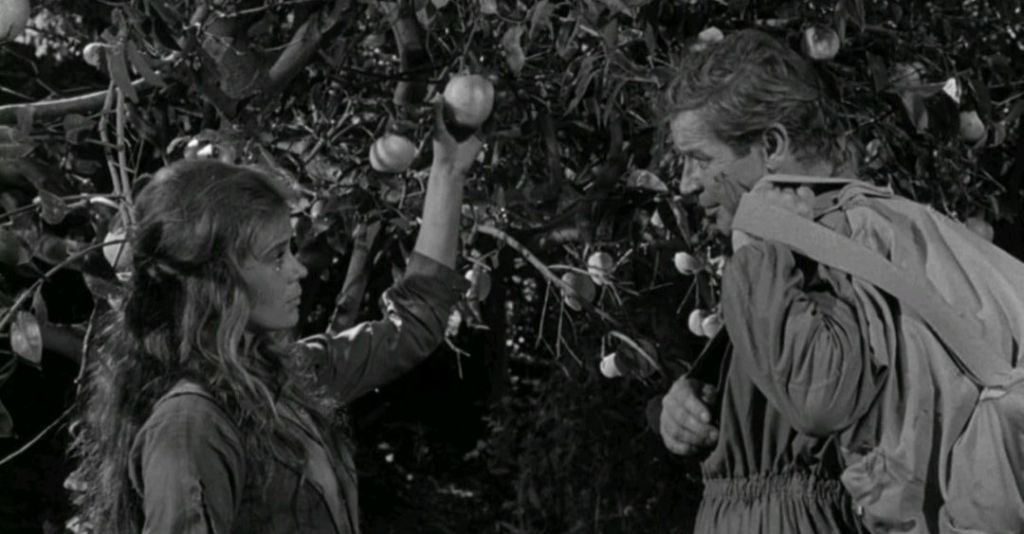
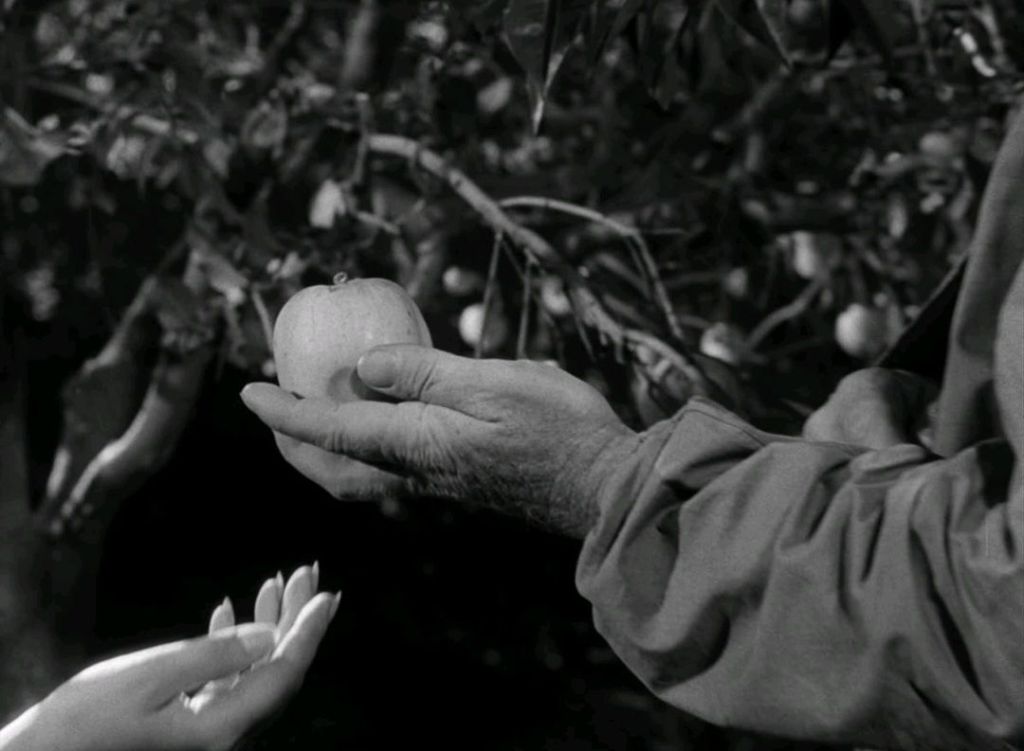
Colonel Adam Cook (Richard Basehart) – despite the injuries he’s endured upon his outerspace crash landing – should be celebrating his near-fatal crash, his discovery of a planet that may be able to sustain life. But when he discovers that world war threatens the destruction of his planet back home, he must strike a tentative kinship with one of the inhabitants (Antoinette Bower) — who is also likely the sole survivor from another civilization — of this new, fresh world.
Historically, it’s interesting to note that at this stage in its original five-season run on CBS, The Twilight Zone – with its fifth season – had returned to a 30-minute format. When Serling was up for renewal for the anthology TV program’s fourth season, CBS pushed for a 60-minute format.
Whether Serling felt that an additional hour of run-time would ultimately affect his paycheck or the series’ episodes as a whole, CBS got what it wanted: a weekly, full hour of The Twilight Zone.
But the fourth season episodes were notably long-winded in their storytelling, a creative break from the tight narratives of the series’ first three seasons. There was a dip in Season 4 viewership, and the series’ fifth season rightly returned to its original structure. (After the final season of The Twilight Zone, Serling would continue to write for television in the hour-long anthology series Night Gallery, but the format of that program provided a more actualized opportunity for more complex stories, as as multiple, shorter vignettes over the course of a single episode.)
But personally, so many young fans of The Twilight Zone likely discovered it through the Sci-Fi Channel’s annual New Year’s Eve marathon, which began in 1995 and continues today, but I discovered the series one late Saturday night when I saw “Probe 7, Over and Out” in its syndicated form on one network or another that I cannot recall.
What I remember most, though, is startling my mother awake to tell her about the episode. I had never quite seen a story told in that fashion before. Never a religious person – and not to discourage anyone’s religious faith – I saw the Bible from even a young age as a work of fiction, as a means to make sense of how one lives their life. Here, Serling used science fiction to write his story of creationism.
“Probe 7, Over and Out” doesn’t disregard the Bible’s origin story of Adam & Eve on a humanistic level, and it certainly doesn’t contradict the Bible’s assertion that Adam & Eve were Earth’s first man & woman.
The episode simply frames the story in a different way, providing a twist that remains the foundation of narrative.
It’s ironic, then, that I was so inspired to watch The Twilight Zone through a creation story. According to my mother’s account, you would have thought it was the end of the world, the manner in which I shook her from her sleep, as awed as I was that night.
The Twilight Zone, in its way, made me a believer, a devotee of what storytelling could do.
#5
“The Night of the Meek (S2E11)”
Original airdate 23/12/1960 | TV-PG | 25 minutes | d. Jack Smight | dp. Tom Schamp (as lighting director) | s. Rod Serling
* * * *
For fans of a bottomless bag of children’s gifts, cherry brandy, Christmas cheer, and department store Santas.
* * * *
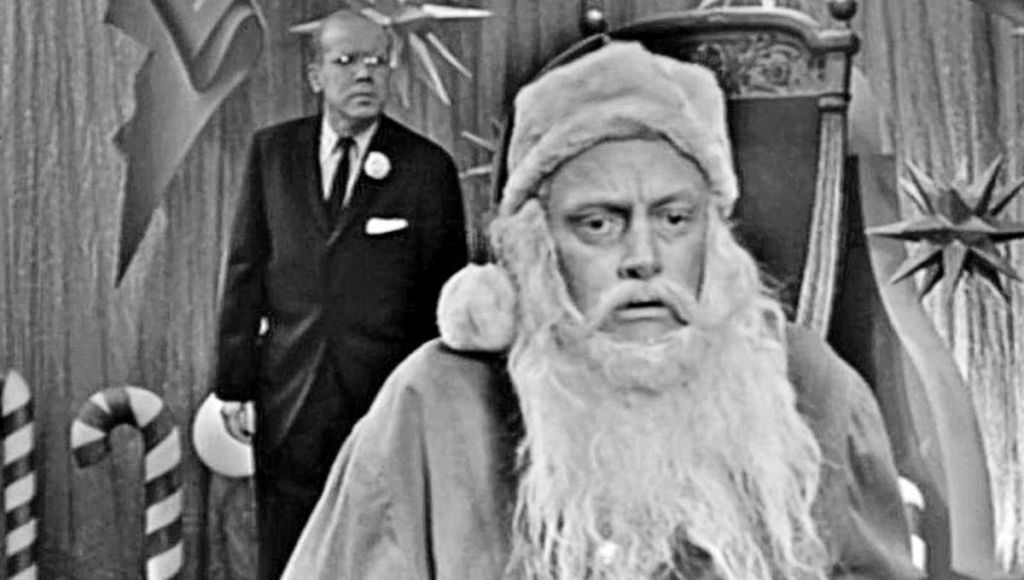
Once more, it’s the Christmas season, and while most people are preoccupied with buying gifts for their loved ones – from the seemingly insignificant to the unnecessarily extravagant – a disillusioned, alcoholic department store Santa Claus Henry Corwin (Art Carney) wishes that he could deliver Yuletide joy to a world desperately in need of it.
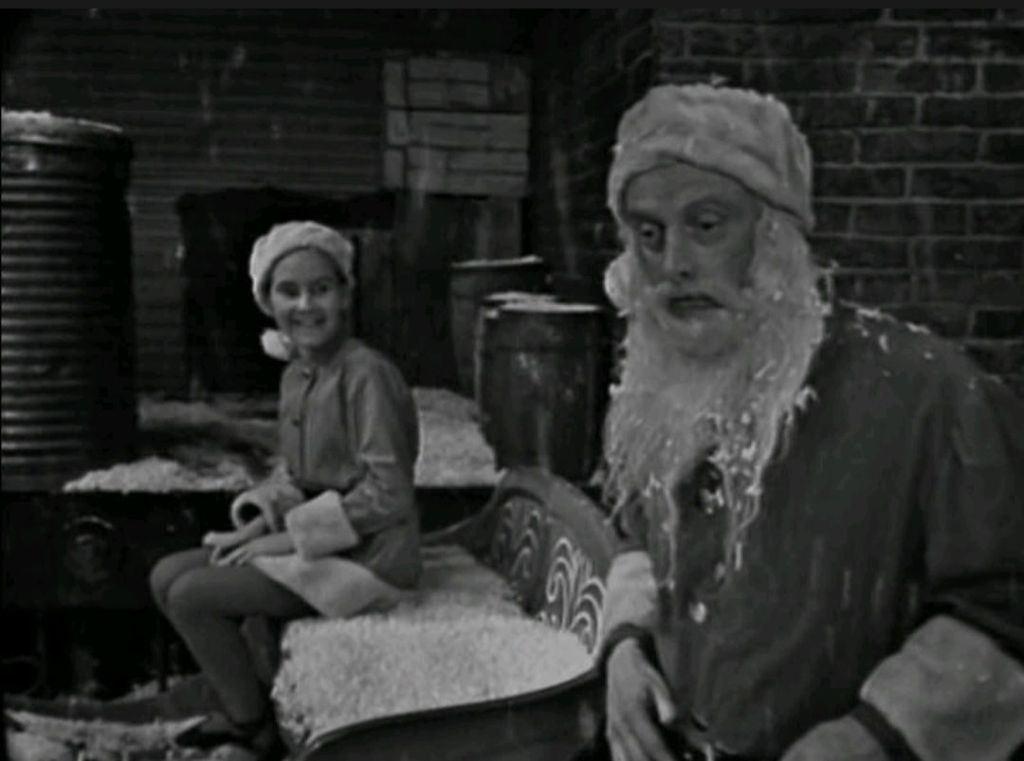
“Why isn’t there a real Santa Claus?” Corwin first asks the bartender (Val Avery) who has served Corwin six drinks and a sandwich but can’t serve up a response to Corwin’s question. This is a Santa Claus who wishes that he could deliver a lot more than he does as a department store symbol of the gift-giving season. “Christmas is more than barging up and down department store aisles and pushing people out of the way,” Corwin later tells his boss Mr. Dundee (John Fiedler, the voice of Disney Studio’s animated Piglet).
“I’m an aging, purposeless relic of another time, and I live in a dirty rooming house on a street filled with hungry kids and shabby people,” Corwin — desperately dressed as Santa Claus — tells his boss, “where the only thing that comes down the chimney on Christmas Eve is poverty.”
But what “The Night of the Meek” gifted me every year – SyFy marathon after SyFy marathon – was an encouragement to do a little more for my fellow man … and not just during the Christmas season. In the 11th episode of the series’ second season, there’s a strange absence of a cinematographer. Corwin’s climactic exit as a modern-day Santa Claus aboard his newly-discovered sleigh seems poorly shot by any cinematic standard. And even the bluray transfer looks like you’re watching a live broadcast from 1960, not a 4K reconstruction in the 21st Century …
… But the narrative still holds up so well, possessed as it is with a hopeful image of the holiday season, with an imagination that the world could be a better place.
* * * *
The Twilight Zone is streaming on Paramount+.
#4
“Time Enough at Last (S1E11)”
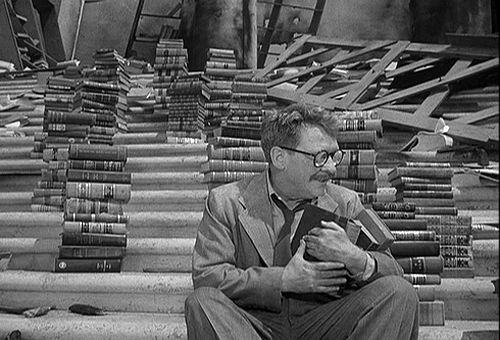
Original airdate 20/11/1959 | TV-PG | 25 minutes | d. John Brahm | dp. George T. Clemens | s. Rod Serling & Lynn Venable
***
For fans of “alone time,” customer service, literature, and optometrists.
* * * *
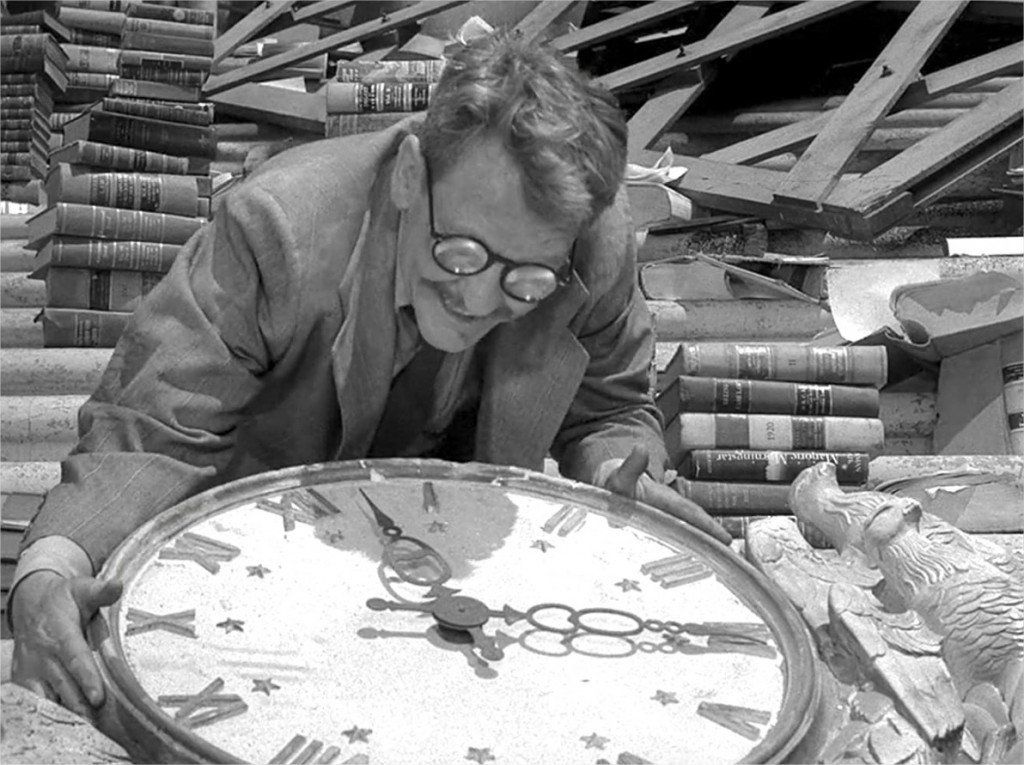
To those who know him – his wife, his boss, and others – Henry Bemis (Burgess Meredith) must look like an open book, and all Henry Bemis would like to do with his every waking moment is read books, from the classics on up. But while taking his lunch break in the bank vault, Bemis not only survives a nuclear apocalypse but finds himself with all the time in the world to read books …
… Which may turn out to be the worst scenario for him.
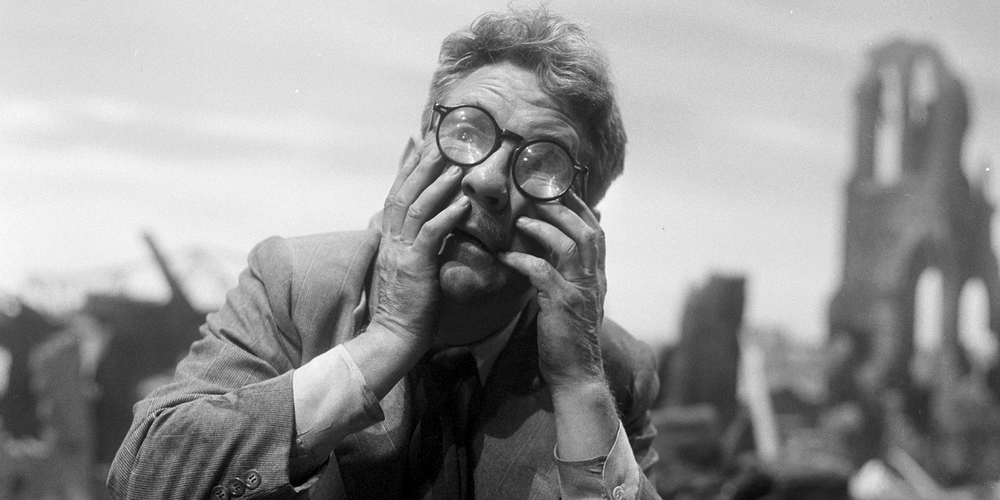
Starring in the eighth episode of the original series’ first season, Burgess Meredith would become a staple of the Twilight Zone, starring in no less than four episodes in total & serving as the narrator of the 1983 motion picture Twilight Zone: The Movie – which would dramatize three of the original series’ episodes & development a new, original segment specifically for the film, though it captured a number of the TV series’ major themes. (Only Jack Klugman starred in significant roles for as many episodes of the TV series.) Directed by John Landis, Steven Spielberg, Joe Dante, and George Miller, the film did moderately well at the box office & has received mixed reviews over time.
But Meredith plays a unique role here as an enthusiast of literature starring in a television medium that was culturally turning its back on reading, and it wouldn’t be Meredith’s only small screen flirtation with the written word. Meredith starred in another episode, “The Obsolete Man” that – like much of The Twilight Zone – was both prescient & ahead of its time, perhaps anticipating a contemporary America where books are banned for their content. In the second season episode, Meredith plays Romney Wordsworth – a librarian sentenced to death – living for now in a totalitarian state, sentenced to death, in a society where literature & religion have been banned.
It’s interesting that The Twilight Zone commented on so many social themes that one would hope to be merely archaic (like the Spanish Inquisition) or simply historical but bygone (like the fascism of the 1930s), even if merely a remnant of the world today …
… But The Twilight Zone was always commenting on so much of the world’s past, and – in doing so – was also commenting on the present state of the world, even anticipating its future.
#3
“Third from the Sun (S1E14)”
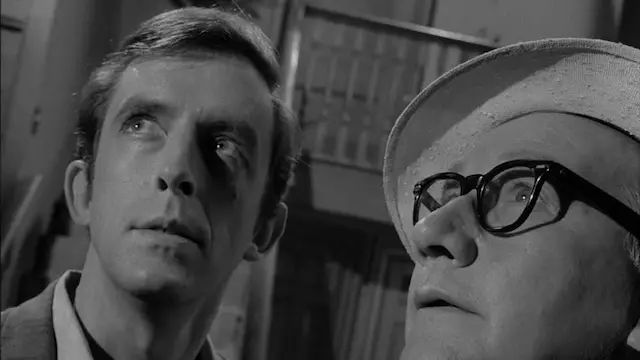
Original airdate 8/1/1960 | TV-PG | 25 minutes | d. Richard L. Bare | dp. Harry H. Wild | s. Rod Serling & Richard Matheson
* * * *
For fans of card games, cold glasses of lemonade & nighttime strolls on a summer night, space exploration, and wristwatch repair.
* * * *
The world is on the brink of nuclear destruction. It is almost assured that within 48 hours, the world will be a smoldering remnant of what it once was. So on this warm summer night, two families plan to hijack a top secret spacecraft in order to flee the planet – if they’re not arrested before they do so – and if their destination proves to be as hopeful as they suspect.
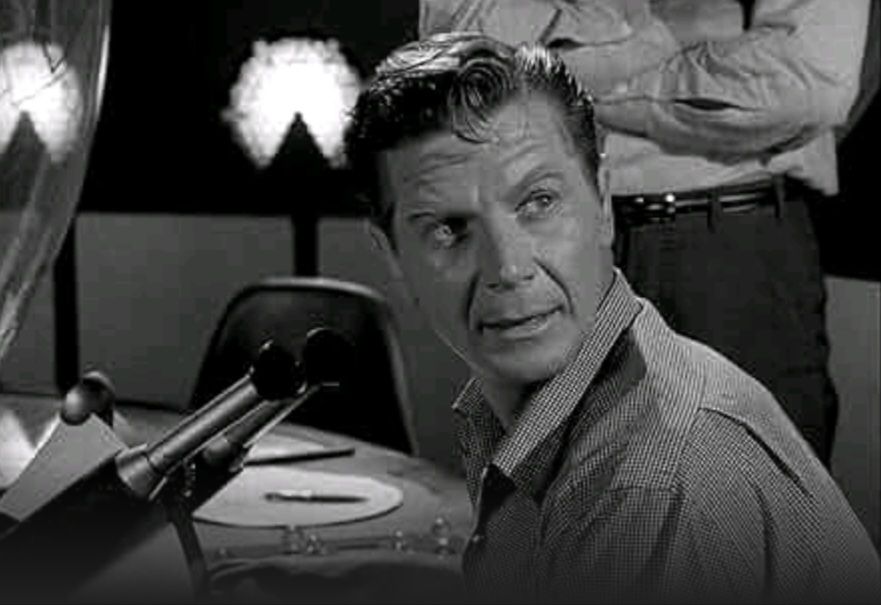
Irony was frequently at the heart of The Twilight Zone, and the 14th episode of the original series’ first season would not disappoint. Almost each of the 36 episodes of the series’ first season dabbled in a subterfuge of outwitting the audience, of leading the audience to a destination that they didn’t immediately anticipate, just as this episode’s cast hopes to discover a destination that will save them from the holocaust that threatens to destroy their world.
“Third from the Sun” was only the second episode of the series co-written by Richard Matheson, who cut his teeth in fiction as the author of I Am Legend (1954), The Shrinking Man (1956), and A Stir of Echoes (1958), among others. Matheson would write 16 episodes of The Twilight Zone in total.
What’s prophetic about “Third from the Sun” is that the families that seek to escape a planet doomed to whatever form of weaponized destruction, is that these two families (led by Fritz Weaver & Joe Maross) are fated to land on Earth – the third planet from the sun – where they remain in danger of being destroyed by nuclear-powered political war, by ideologies that would put lives in danger.
(Weaver also starred as the dictator of a fascist future in the series’ second season episode “The Obsolete Man.”)
These two families may have avoided a world-ending war on their home planet, but they face a similar fate on planet Earth.
A planet destroyed by political ideologies is not confined to Earth alone, according to The Twilight Zone.
The Twilight Zone consistently remained an image of what the world could become but also consistently remained an image of what the world would – unfortunately – always be.
* * * *
The Twilight Zone is streaming on Paramount+.
#2
“The Monsters Are Due on Maple Street (S1E22)”
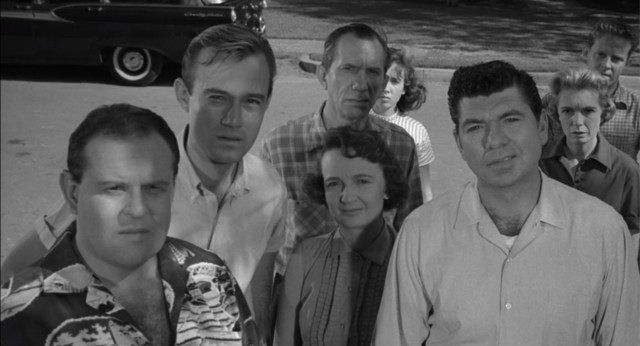
Original airdate 4/3/1960 | TV-PG | 25 minutes | d. Ron Winston | dp. George T. Clemens | s. Rod Serling
* * * *
For fans of alien conspirators, electric blackouts, H.A.M. radio, insomnia, and pulp science fiction novels
* * * *
In the late hours of a Saturday afternoon on Maple Street, a power outage leads members of the neighborhood to believe that one of their seemingly friendly neighbors may be responsible for the disturbance. Suspicion soon turns into paranoia when the culprit may be something far more innocent than the neighbors themselves.
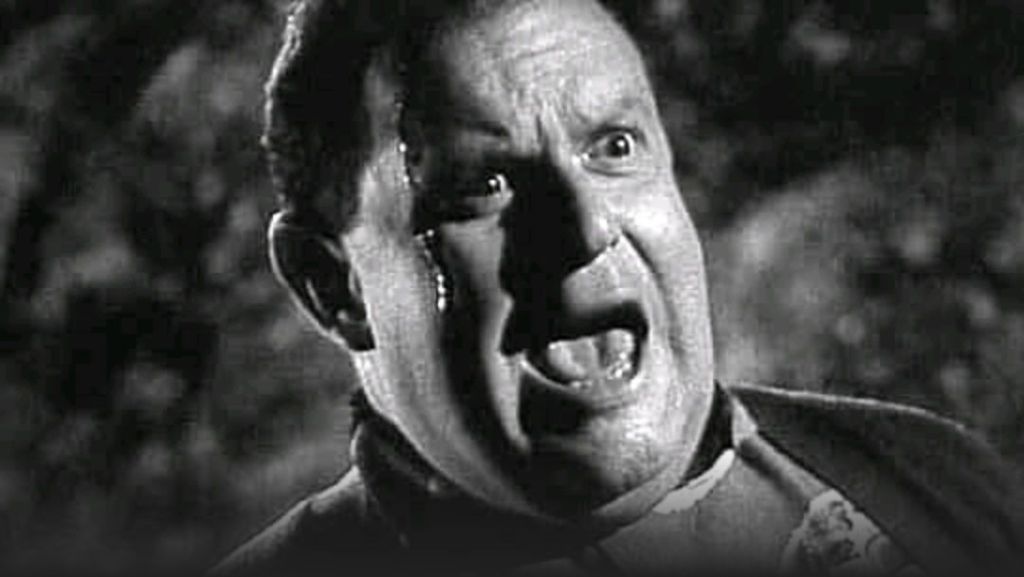
Yes, there is something prescient about “The Monsters Are Due on Maple Street.”
America is 250 years old this year, and the notion that the only thing we have to fear is fear itself has never been more obvious, and that’s the central ingredient that made The Twilight Zone so important then & so important today, always commenting upon where the world has been, where the world is, and where the world is going.
There’s little that needs to be written about this episode here. A similar Maple Street hysteria dates back to the Spanish Inquisition (1478 – 1834), the Salem Witch Trials (1692), the Satanic Panic of the 1980s, and the anti-Muslim sentiment following the terrorist attacks against America on September 11th, 2001. Today, the world is filled with enough monsters on Maple Street — even on your street — fearing one another for all of the wrong reasons.
Serling clearly understood the assignment when he wrote about the world embraced by the ironies & tragedies of the Twilight Zone — knowing what he did of real world history — before he wrote about it as he uniquely did.
But he also understood that the narratives of the Twilight Zone & the real world as we know it wouldn’t change much — more than 50 years later — would that it could.
“The tools of conquest do not necessarily come with bombs and explosions and fallout,” Serling wrote in the conclusion of this episode. “There are weapons that are simply thoughts, attitudes, prejudices … to be found only in the minds of men. For the record, prejudices can kill, and suspicion can destroy, and a thoughtless, frightened search for a scapegoat has a fallout all of its own … And the pity of it is, that these things cannot be confined only to The Twilight Zone.”
#1
“Walking Distance (S1E05)“
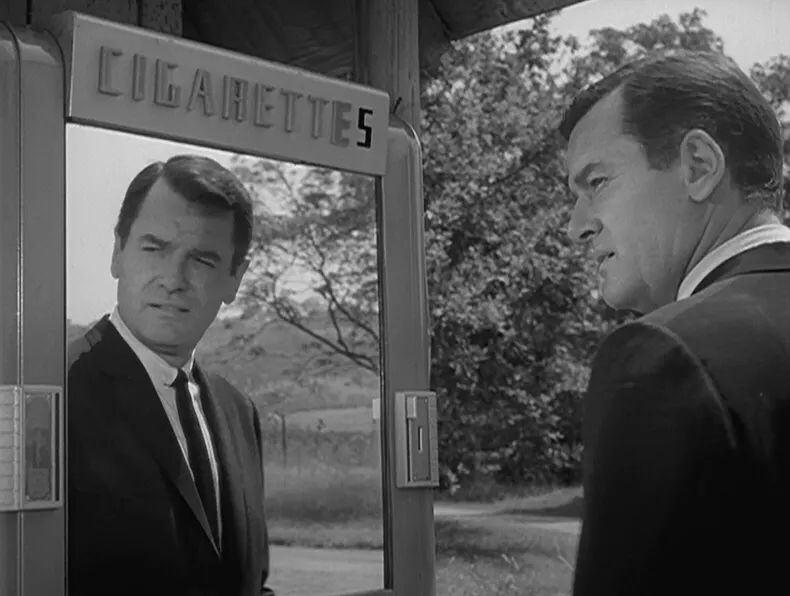
Original airdate 30/10/1959 | TV-PG | 25 minutes | d. Robert Stevens | dp. George T. Clemens | s. Rod Serling
* * * *
For fans of carousels, getting away for , hometowns, ice cream milkshakes, and jacks & marbles
* * * *
Disillusioned business executive Martin Sloan (Gig Young) embarks on a momentary road trip in order to escape the rat race that has become his day-to-day life of brokering & negotiating, only to find himself back in Homewood — his childhood hometown. Once there, he finds himself literally transported to the world of his youth, where he may have a second chance to appreciate the joys of his early life that he long ago left behind him, despite the emotional, psychological, and even physical damage that it might cost him in doing so.
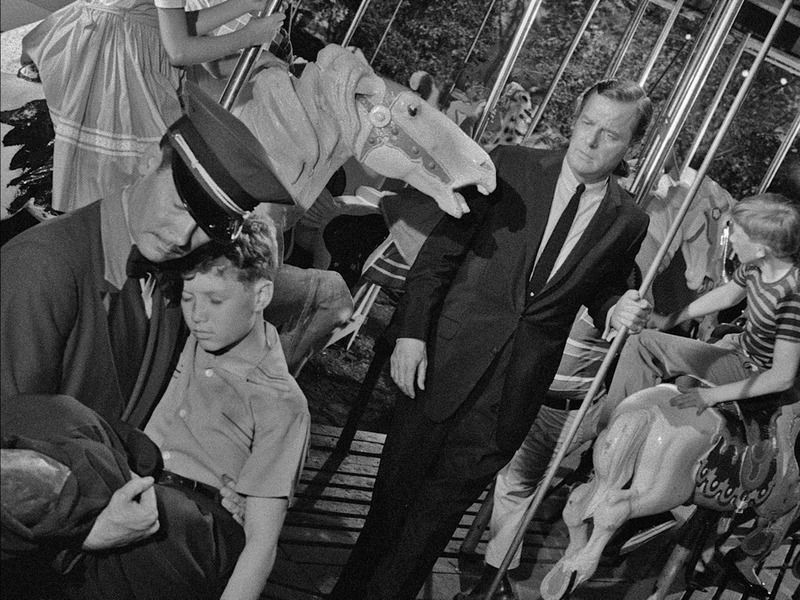
“You can’t go home again,” author Thomas Wolfe famously wrote in his 1940 novel of the same name, and yet the illusory reality of the statement is this: You can go home again. The only difference is that — by & large — the home that you return to will appear remarkably unchanged from the home that you last visited.
What has ultimately changed upon this second visit is you.
There’s something Gatsby-like that this first season episode of The Twilight Zone taps into, and the themes of the episode remain some of the most basic & true to the human experience. At one point or another, everyone imagines returning to a moment or place in their lives when the world was simpler, devoid of the bittersweet, even harsh realities of the adult world.
This was always the catalyst that inspired Serling in creating & writing the stories of The Twilight Zone: its ability to relevantly reflect the street-level challenges of human life over time, as if no time had passed in the process of Serling’s airing of it (1959) & your viewing of it (today).
Decades after an episode airs, The Twilight Zone still resonates with viewers as a mirror to 21st Century lives. And — if the Twilight Zone permits it — the timeless television program will resonate with viewers in the next century as well.
A century from now isn’t a long time, in the Twilight Zone. One could even say it’s within walking distance.
* * * *
The Twilight Zone is streaming on Paramount+.
Chris Kaine is the most amateur film essayist whom you may ever imagine. He earnestly contends that he was named after the actor Chris Sarandon, because he was either conceived while his parents watched Fright Night (1985) in his paternal grandparents’ basement, or because of their love for The Princess Bride (1987), which stars a character by the name of “Humperdink,” which is pretty funny, if you think about it.


Leave a comment