email: l8nightpickwick@gmail.com
WARNING!
SPOILERS AHEAD!
If you haven’t seen The Lost Boys (1987), see it before reading this feature — otherwise, many key elements of the film will be spoiled for you. If you’ve seen the film, perhaps revisit it — then, come back here & give us a look.
We’ve got some rules around here — and those are the rules.
* * * *
“Don’t ever invite a vampire into your house, you silly boy,” Max, played by Edward Herrmann — the patriarchal vampire of director Joel Schumacher’s The Lost Boys — insists, as if that fact is so incredibly unfamiliar to even pedestrian viewers of horror movies, especially vampire films. “[Inviting a vampire into your home],” Max promises, “renders you powerless.”
Those are the rules, simple as that.
And I can’t judge. Parents today seem content that their kids should be raised or babysat by digital devices, and — again — I can’t judge.
My mom, with some deviation, allowed movies to raise me. Some would see that as a problem. Other times, she allowed my uncle to raise me, which my grandparents would see as a bigger problem.
But I think I turned out okay, even when I write today that some of the motion pictures that educated me the most were horror movies.
I would have worse teachers over the course of my lifetime, but — whether Ms. Strike in 5th grade math or the horror films of 20th Century Fox or Hammer or Universal or others — I always followed the rules of the classroom.
Rules have gone hand-in-hand with genre movies for a long time. Televised Hallmark Christmas movies have established it as a general rule that the two dissimilar, wildly would-be lovers cannot profess their passion with one another until the snow starts falling … usually in the film’s last five minutes. Meanwhile, a staple of mystery movies is that the culprit must always be introduced to the audience early, and the sleuth can never be the ultimate culprit. And slasher films in the horror genre have come with their particular set of rules, mostly immortalized in the Scream franchise (1996 – present).
But Warner Bros.’ The Lost Boys made hearty use of rule-making, rule-following, and rule-breaking in 1987, and it’s precisely the motion picture’s different rules that the Pickwick would like to explore this month.
It’s an exploration especially important in October, when there remain central, non-negotiable rules that one must obey in order to navigate the witchiest evening of them all: Halloween —
— As well as those rules that appear appropriate beyond the spooky season, in everyday life. The Pickwick Drive-In has rules for those days, too.
* * * *
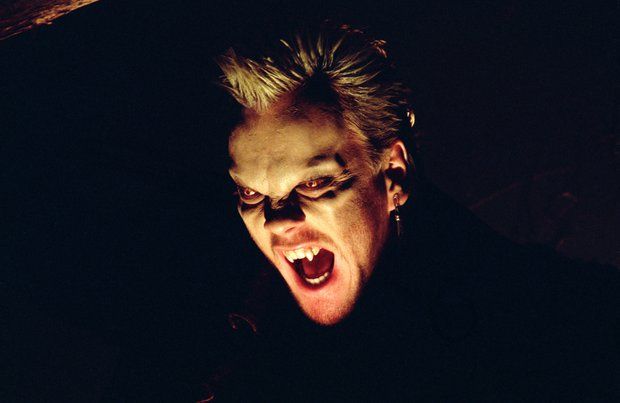
In the film, divorced mother of two Lucy (Dianne Wiest) transplants her two sons — Michael (Jason Patric) & Sam (Corey Haim) — to Santa Clara, CA, allegedly the Murder Capital of the World. But it’s not all bad news. They now get to live with their eccentric Grandpa Emerson (Barnard Hughes), and Michael wastes no time in falling head over heels for the alluring local Boardwalk siren Star (Jamie Gertz). Unfortunately, this would-be romance also brings Michael into collision with a local biker gang led by the enigmatic David (Kiefer Sutherland), and all evidence suggests that Michael is now an initiate into a cabal of teenage vampires. His family’s life at stake & his own soul in danger, Michael may be able to break the spell if he can discover the true identity of the Head Vampire & destroy Him before Michael’s transformation is ultimately complete.
That’s how you save someone from becoming a vampire.
Those are the rules.
Grandpa
* * * *
In the film …
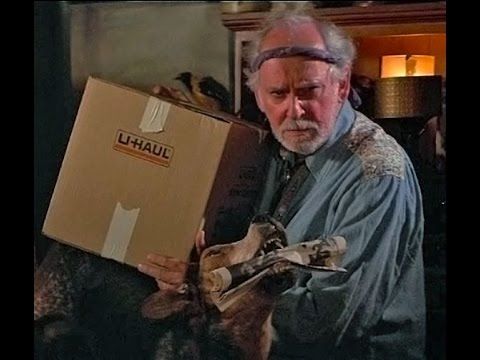
There’s no better place to begin with rules than with Grandpa’s house — mostly, because it’s his house, the epicenter of this undead adventure of allegedly teenaged vampires. Either abide by Grandpa’s rules or hit the road.
“Rules! We got some rules around here,” Grandpa tells Michael & Sam when they first arrive in Santa Clara, CA. And when it comes to rules, Grandpa has a litany of them:
#1
Don’t touch anything in the house. Everything is precisely where Grandpa wants it to be;
#2
The second shelf of the fridge belongs to Grandpa – don’t eat his double-thick Oreos, and don’t drink his root beer;
#3
When the TV Guide arrives on Wednesday (and if you read the TV Guide, you don’t need a TV), you might find that the address label is curled up a little bit. You’ll be tempted to tear it off – don’t. You’ll only wind up tearing the cover;
#4
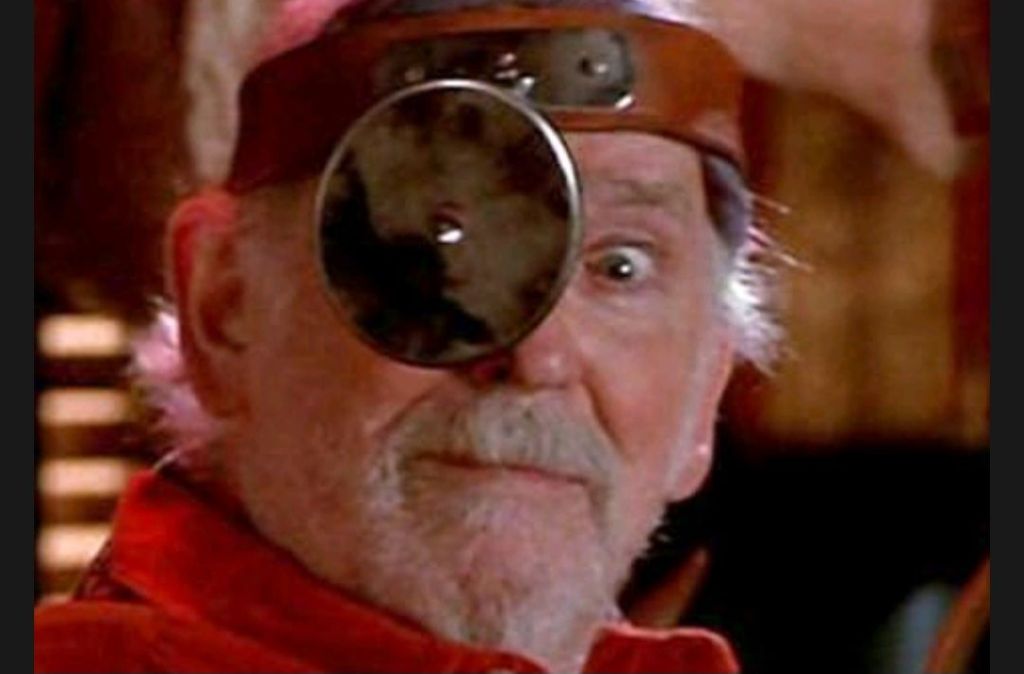
“And stay out of here!” Grandpa shouts as he closes the door to his workshop in the faces of his two grandkids, and it’s likely for the best.
Grandpa’s workshop is filled with his in-progress taxidermy displays or with his completed taxidermy displays, and you don’t want to wake up with either one of them next to your bed.
Barring that, Grandpa’s workshop will likely also be filled with deadly tools, whether in the process of development or entirely meant to dispatch vampires from this world to the next, though no audience would suspect it in the first 15 minutes of the film.
Either way — stay out of Grandpa’s workshop;
#5
And do you know the rule about filling up the car with gas when you take it without asking?
Well, now you do.
* * * *
* * * *
In Reel Life …
If you’re someone’s houseguest, you have to adhere to their rules. If your nature dictates that you can stomp around the living room in your street shoes, the fact that you’re a houseguest in someone else’s home prohibits you from doing so — leave your street shoes at the door.
Always respect your hosts.
You may have been invited into the home, but that doesn’t mean that you’re impervious to the magic of the house — unless you’re a vampire.
Lucy
* * * *
In the movie …
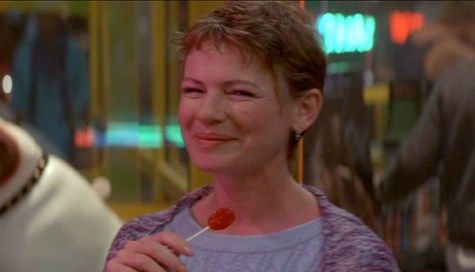
As the film begins, it’s been a tough year for Lucy, having moved her sons to Santa Clara, California. And though unemployed, one would think that Lucy’s divorce & relocation is the first step in making a better life for herself.
Those are the rules, one would think, but one would be wrong.
“Lucy, you’re the only woman I ever knew who didn’t improve her situation by getting divorced,” Grandpa tells her, and – for a moment – the two imagine what divorce means to a married couple. Lucy didn’t want to endure an embittered legal battle that would scar her boys, and she says so. “I was raised better than that,” she admits to Grandpa, and how Lucy was raised is clearly connected to the rules she lives by today.
Later, in a moment of playful vulnerability, Lucy explains to Sam that she didn’t have the support of loved ones – namely, her ex-husband – when she especially needed it. “You know, I can never sleep with the closet open either, not even a crack,” Lucy confesses to him as she tightly shuts his bedroom closet door so that he can sleep soundly that night. “Sam, this is a terrible thing to admit, but I think that one of the reasons I divorced your father was because he never believed in the closet monster.” Here, Lucy quietly intones that she was the one who broke the bond of marriage with Sam’s father, breaking the rules that marriage vows underscore, but it was a departure from those particular rules that became necessary for Lucy’s survival.
There was obviously more to the disintegration of Lucy’s marriage than imagined closet monsters, but her narrative brings the power of family into focus, because a family should support its members: whether in the belief of closet monsters or in the belief that divorce is the best possible option at that time …
… whether in the broken family of Lucy & her two boys, simply trying to survive day to day life …
… or in a family of vampires, one of which may have existed for years, even, decades, and even centuries.
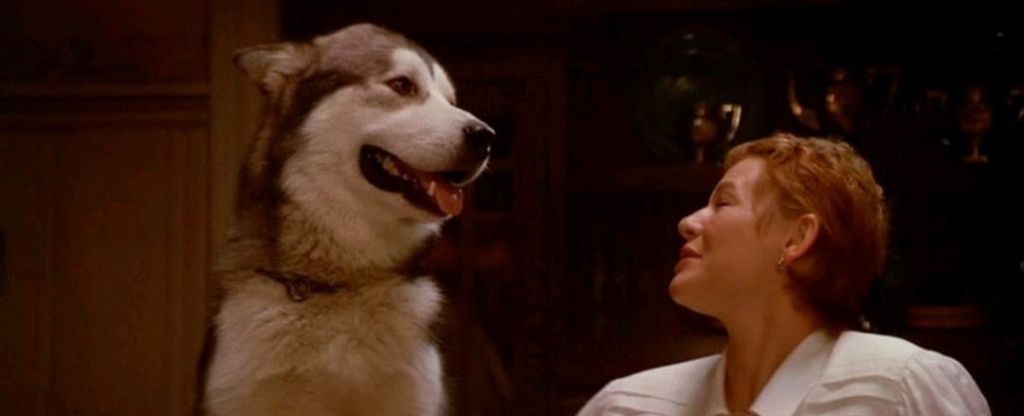
Even the vampiric Max warns Lucy that kids Sam’s age need discipline – it’s a staple of his own blood-sucking family, keeping David & the other Lost Boys out of the Boardwalk video store. “Otherwise,” Max says, “they run all over you.”
But Lucy doesn’t parent – or family – like that, a hippie at heart, despite the fact that Max later insists that boys need a mother. Yet even as a mother, Lucy is a humanist at her core. And perhaps her beating heart is precisely what Max ultimately sees in her.
* * * *
* * * *
In reel life …
Family is the answer — the beating heart — to any concern one might have in life: whom to trust, whom to care for …
… whom to appreciate on those summertime car rides that never really take you into town (because that’s as close to town as Grandpa likes to go) …
… and whom to count on when the days get really dark.
Sam
* * * *
In the movie …
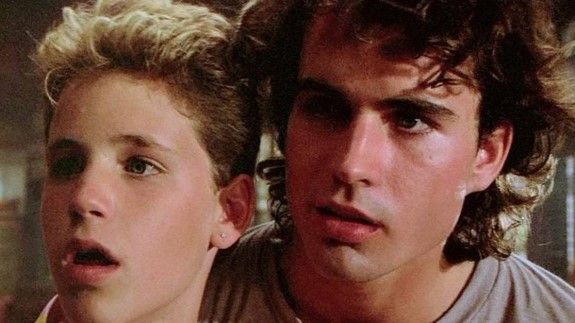
I would hope that everyone sees The Lost Boys as I saw it: at about the same age as Sam in the film, because he’s the proxy by which the entire experiment of a movie about teenage vampires succeeds or fails. Sam is the young storyteller through which this world either absolutely makes sense or absolutely falls apart.
And through the acting of Corey Haim as Sam, The Lost Boys absolutely makes sense …
… only by respecting the rules.
But don’t misunderstand: the rule of law in Sam’s world isn’t amorphous but much more grounded for a teen in 1987, and Sam announces his grounded approach to the universe as soon as he arrives at Grandpa’s house in Santa Clara, immediately understanding where the family’s predicament have landed them.
“What’s wrong with this picture?” Sam asks big brother Michael as they move their things into Grandpa’s rather off-grid home. “There’s no TV. Have you seen a TV? I haven’t seen a TV, Mike. Do you know what it means when there’s no TV? There’s no MTV.”
Even Grandpa’s house dictates the rules, and Sam — without direct verbalization — understands them.
Sam comes off at first as a bit pampered & privileged as the motion picture begins — but take any contemporary teenager & drop them into a horror film today without the aid of Instagram, Life360, Spotify, and TikTok, and you’ll see a horror film of the highest existential horror.
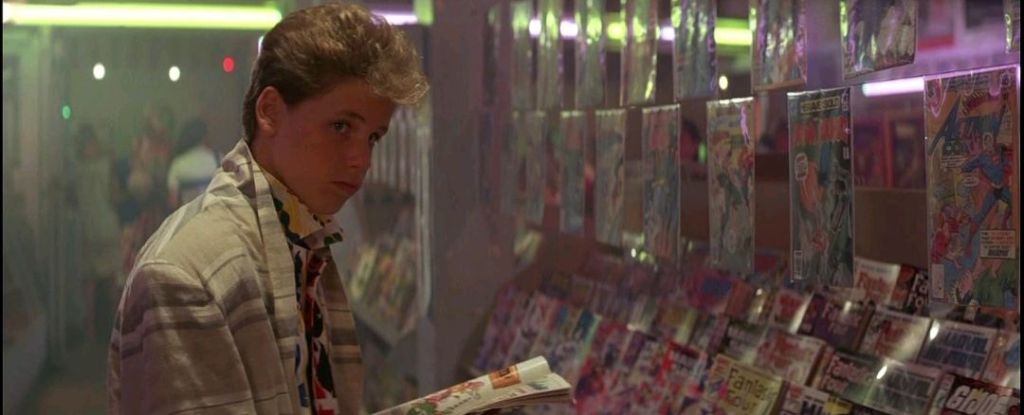
And – curiously – Sam’s roots in pop culture are what make him so distinguishable as a would-be hero in a Dracula film multiplied by about four. As someone so in love with pop culture lore, one would think that Sam would adapt more quickly to a small town world infested with vampires, but Sam’s strict understanding of the world – whether in real life or in comic books – is first disputed when he visits the Boardwalk comic book store seemingly managed by the Frog Brothers (played by Corey Feldman & Jamison Newlander) and tells them that he’s simply looking for a copy of DC Comics’ Batman #14.
As Edgar (Feldman) indicates, that’s a very serious book, and having asked for it, Sam seriously demonstrates his pop culture know-how but doesn’t stop there in demonstrating his grasp of pop lore. “Look,” Sam gently lectures the Brothers, “you can’t put the Superman 77’s with the 200’s. They haven’t even discovered red Kryptonite yet.” Sam goes on, despite the quiet indignation of the Frogs. “And you can’t put the 98’s with the 300’s. Lori Lemaris hasn’t even been introduced.”
There are, after all, rules.
Yet as much as Sam is attuned to understanding Michael Jackson’s history with the Jackson Five as understanding the difference between the Super Friends and the Justice League (and, yes, there’s a distinct difference), when Sam is offered a complementary comic book from Edgar, Sam’s true understanding of the rules of horror — his affinity for world-building — meets its limit. Never a fan of horror comics, Sam will need to educate himself quickly – on the means by which to kill a vampire, on the hounds of Hell that allegedly protect vampires as they sleep throughout the day, and more – if he intends to save his family — which includes his big brother — from bloodsuckers intent on taking their lives.
* * * *
* * * *
In reel life …
Know your stuff.
There’s a chance that what you know about the world is going to help you in the long run. And when you don’t know something, learn it — even if you think that you won’t need it for later.
Come for the roller coasters & the root beer.
But stay for the education.
Michael
* * * *
In the movie …
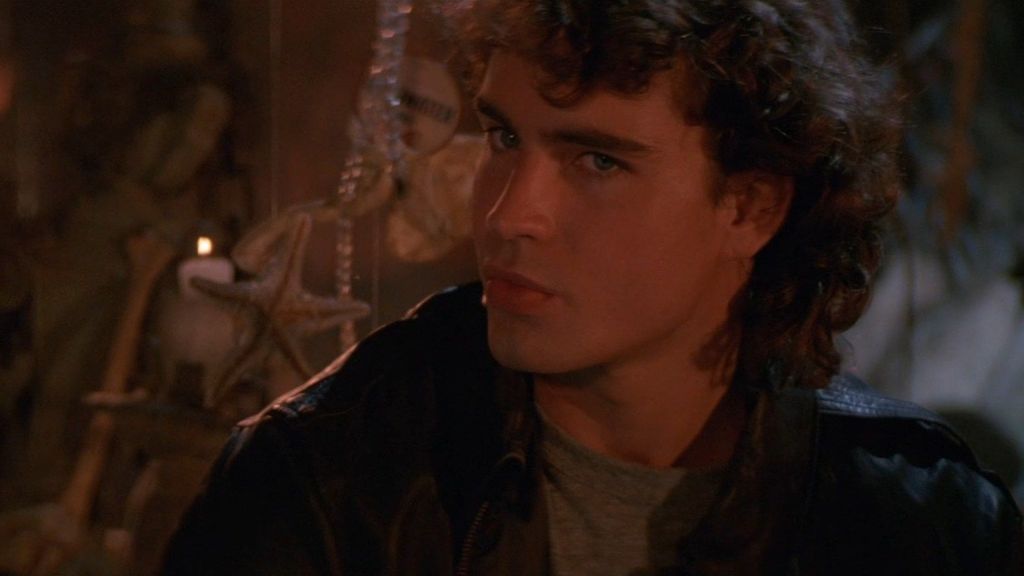
Michael was never one to break the rules, but as soon as the audience meets David & his Lost Boys, it’s clear that they don’t quiver to authority — even they’ve been once or twice by an ill-fated security guard to stay off the Boardwalk. Even they’ve been told by Max that they’re not to enter the Boardwalk videostore.
There are rules, after all.
And while Michael isn’t prone to breaking the rules, he seems to understand that the universe has a way of dispensing justice, even as he meets David on the Boardwalk aloft his bike. Michael quietly admits in their introduction, “I can’t beat your bike,” David having already insinuated that they’re competing for Star’s hand.
But they’re neither going to race over pink slips nor the right to Star’s affection. They’ll race for legitimacy, for an authenticity that Michael understands is the admission price into the company of these Lost Boys.
The cost may be hefty, but Michael believes his acceptance into the ranks of the Lost Boys is somehow tied to a potential romance with Star (Hint: it’s not), and Michael may pay more for his acceptance into the ranks of the Lost Boys than he ever imagined (Hint: he will).
“You don’t have to beat me,” David promises Michael through a grin. “You just have to try & keep up.”
And those are the rules, simple as that.
So driving his bike down the steps of the Boardwalk in order to keep up with David & the others is Michael’s first act of rebellion – breaking the rules – but once situated in the abandoned hotel resort engulfed by the crashing sounds of the surf, Michael is told that he’ll like it there, as if the dilapidated relic is already proffered to him as a New Home. At the Lost Boys’ reappropriated palace, you’ll listen to good music if you ask for the rock box, and you’ll eat good food if you only ask for it. Meanwhile, a marijuana joint is simply an appetizer for a seemingly endless night. All Michael has to do is metaphorically sign his name on the dotted line, and these gifts will be his. “Drink some of this,” David asks, as he hands Michael an ornate bottle of red wine in the Lost Boys’ sunken castle. “Become one of us.”
But upon drinking the wine, Michael has no understanding that he must give up more than just his mortality. Upon drinking, in the long-term, Michael also resigns the relationship that he’s had with his younger brother & mother. So Michael drinks. And upon doing so, he also loses his individuality.
“You’re one of us now,” Michael is told both at the hotel resort & hanging from the train track overpass by the strength of his fingertips. At the overpass, Michael hangs there for his dear life, but he no longer risks the danger of losing his own life — becauses Michael is no longer a singular being but a member of a hive.
“Let the good times roll,” Michael is told, and those times would certainly roll, all the way up to the beachside night when Michael watches as David & the Lost Boys slaughter a campfire crew of party-ers & punk rockers. It’s the film’s most violent scene, justifiably so.
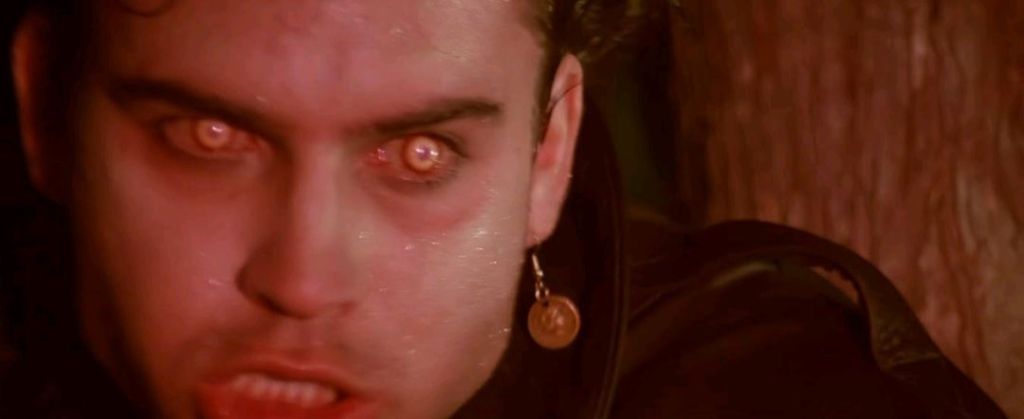
Until this particular evening, the motion picture’s bloodlust remains decidedly off-screen, the audienxe never fully meant to understand the ferocity of which the Lost Boys are capable. But when the vampire gang returns from that blood-splattered beach party, the audience (as well as Michael) is fully apprised of what this season change in Michael’s life represents.
“Now you know what we are. And now you know what you are,” David snarls. “You’ll never grow old, Michael. And you’ll never die.”
And membership to a club like this one clearly has its privileges, until David provides that caveat at the end:
“But you must feed.”
There are rules, after all.
So after Michael’s transformation into a vampire commences, he has greater things on his mind than horror comics, or he might have learned that even the unassuming Max – were he a Creature of the Night – would be immune to the Frog Brothers’ vampire test. But just as Michael sets out for the evening – to find comfort from Star, to confront David, or both – he meets Max standing at the Emerson home’s threshold.
“Well, you’re the man of the house,” Max assures him, which likely assuages any hesitation that Michael might have, “and I’m not coming in until you invite me.”
So Michael invites Max in, where every subsequent horror movie challenge thrown at him over the course of dinner – garlic, glowing in the dark, casting a reflection in a mirror, holy water – strongly indicates that Max is simply a harmless video store owner.
But Max is not harmless – in fact, far from it. Unfortunately, no one will learn that fact until after Michael’s teeth-gnashing showdown against David in the Emerson home. As Michael accuses David of turning him into a killer & David confesses to Michael that a killer is precisely what Michael is … as the two bounce one another off the walls of the Emerson home like pinballs in a Boardwalk game that costs no more than quarters – here – David assures Michael of one truth that he should ultimately accept before his transformation into a vampire becomes complete.
“It’s too late,” David growls at Michael. “My blood is in your veins!”
And just before Michael counters David’s life-threatening attack, Michael manages to counter with a truth of his own: “So is mine!”
Thus, David is defeated. But Michael must still face down the Head Vampire …
* * * *
* * * *
In reel life …
When Michael joins the club — whether to prove to Star his worth or to prove to himself that he isn’t merely the new kid in town, raised by “Mom” Emerson, Michael gave up so much of his being as a result, so much of what made Michael … Michael.
In this way, The Lost Boys roots itself very much in American Transcendentalist writings & writers — Thoreau, Alcott, Fuller, Emerson, and more.
In his essay “Self-Reliance,” Emerson peppers seemingly countless aphorisms — brief, clever statements that ultimately express a universal truth about life or how one should live it. For example:
Grandpa
To be great is to be misunderstood. Grandpa embodies this very notion. Though some would look at his taxidermist hobby & his idiosyncrasies regarding everyday life as strange, Emerson (the literary transcendentalist) would argue that only those individuals who break with social conformity & confidently demonstrate what makes them unique can be considered great. No one in the world was ever remembered for living her or his life precisely as everyone else in the world.
* *
Lucy
Nothing can bring you peace but yourself. Nothing can bring you peace but the triumph of principles. Lucy, the divorced mother of two, took a significant step in reclaiming her life by divorcing the father of her two sons — and she was absolutely right in doing so. Moving her small clan to Santa Clara & even momentarily considering that a courtship with Max — the Boardwalk owner of a VHS store — is the next best step in her life may be a gamble, but Lucy has doubled down on greater gambles before, as evidenced by her last marriage.
And Lucy may be wrong in her thinking for the moment, but Emerson — the 19th Century writer, not the teenaged vampire — wrote that to truly discover peace, one must trust in their principles each day thereafter.
Lucy satisfies that sentiment — as Emerson wrote, “Speak what you think today in hard words and tomorrow speak what tomorrow thinks in hard words again, though it contradict every thing you said today” — cementing her position as one of the truest transcendalist voices of the blood-splattered film.
* *
Sam
Insist on yourself; never imitate. Dropped into Santa Clara, it’s only natural that Sam would cling to Michael as a proverbial fish out of water. But as Michael first tracks Star on the Boardwalk that night, he asks Sam, “Don’t you have something better to do than follow me around all that?” And Sam certainly does — as his eyes fall upon his own Boardwalk beauty: the Frog Brothers’ comic book shop. Star & the comic book shop represent the moment in the Emerson brothers’ lives where their paths will diverge. The shop becomes the place where Sam meets his first friends in Santa Clara, defends his “big city” wardrobe, and even momentarily refuses to entertain the idea of ever reading horror comics until he is convinced by the Frogs that they might serve better as survival manuals than sophomoric entertainment. When brusquely encouraged by Edgar that the best, easiest solution to Sam’s dilemma is to simply shove a wooden stake through Michael’s heart, Sam resists. It’s his brother, after all, and Sam still senses that Michael — no matter the transformation that he might be undergoing — is still salvageable, contrary to the Frog Brothers’ scorched Earth approach to vampires.
And perhaps this is where the film resonates with me. I didn’t grow up with a big brother. I didn’t grow up as a big brother. The Lost Boys sinks its teeth into a bit of my brain & my heart by the sheer fact that it includes a relationship that seems so fairy tale-like, to me — and not just because it includes vampires. Yes, other films illustrate a family dynamic that I can’t fully comprehend — but this one does it through the so-called red-headed Hollywood stepchild known as horror.
So even as Sam, Michael, and the Frog Brothers descend upon the Lost Boys’ underground beachside resort in an effort to rescue Star & the young Laddie (Chance Michael Corbitt), Michael prohibits Sam from entering what the audience will soon understand is a giant coffin, replete with the sleeping Lost Boys, menacing even in their daytime sleep. “Look, this isn’t a comic book, Sam,” Michael warns. “These guys are brutal killers.”
“So are the Frog Brothers,” Sam promises, and a brief pause of silence interrupts their exchange, until Sam asks, “Look, who would you rather go down there with — them or me?” And the camera comedically cuts to the Frog Brothers as they melodramatically & strategically check to ensure they’re both properly equipped to battle blood-sucking creatures of the night.
But if Michael cannot convince Sam of his imminent peril through their vampiric targets, Michael will convince him through his own inability to protect Sam, and from what I’ve gathered of stories about brothers through film & literature — having never had one — saving a younger brother is simply one of the rules.
“If something happens down there,” Michael tells Sam, “I’m not going to have the strength to protect you.”
And here, Sam breaks the rules: “Well, this time, I’ll protect you, bud,” he promises once more. “Even though you’re a vampire, you’re still my brother.”
In saying & doing so, Sam never becomes the cold vampire killer that the Frog Brothers encourage.
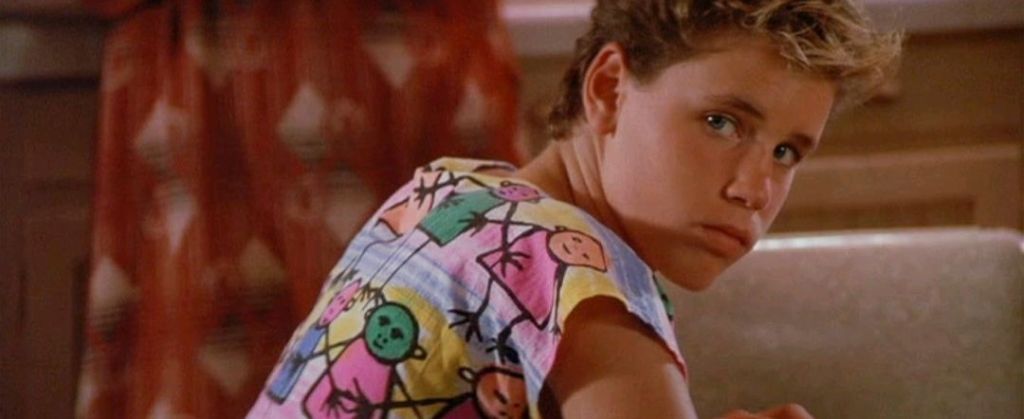
He also never stops wearing those late-1980s displays of fashion that have long since been extinguished, like vampires once meant to rob everyone of their lifeblood.
* *
Michael
Trust thyself: every heart vibrates to that iron string. Perhaps it’s only coincidence that the Emerson family shares the same name with founding father of transcendentalist thought Ralph Waldo Emerson, but I would like to think that the reference was fully intended.
It’s significant to understand that before his vampiric transformation began, Michael shared a much more intimate relationship with his mother — one of friendship, Lucy would call it. And no matter the Boardwalk bewilderments that he may have discovered along the way, Michael always intended to be an anchor for his younger brother.
These points are significant reminders that despite the physiological & psychological changes that Michael endured over the course of his transformation, some tent poles were never loosed as the winds raged. Even in the final moments of his showdown with David …
… when Michael assured Davis that David had intended to make him a killer, when David promised Michael that Michael was a killer …
… Michael’s triumphant response to David — that he would not be defined as a killer, that he would not be defined as a vampire, that his own blood still coursed through his veins — persisted as Ralph Waldo Emerson’s “iron string.”
No greater chord could be played upon that string, demonstrating that the monstrous mask that David hoped to eternally place upon Michael’s face could be removed, evidence that the connections Michael had already made in his young life would never be overshadowed by a dismal dark.
* * * *
The Lost Boys (1987) is streaming for rental & for purchase on platforms like Amazon Prime.
Chris Kaine is the most amateur film essayist whom you may ever imagine. He earnestly contends that he was named after the actor Chris Sarandon, because he was either conceived while his parents watched Fright Night (1985) in his paternal grandparents’ basement, or because of their love for The Princess Bride (1987), which stars a character by the name of “Humperdink,” which is pretty funny, if you think about it.


Leave a Reply