email: latenightpickwick@gmail.com
In this space, the Pickwick Drive-In examines motion pictures through which a singular artist played an important part, large or small. Four Seasons is an exploration of four films — four brief moments, like the seasons themselves: spring, summer, autumn, and fall, representing birth, growth, the passage of time, and finality — with the contribution of a unique star, whether in front of the camera as a movie star; playing a supporting role in the production’s cast; or behind the camera as a cinematographer, director, writer, and more.
This month, the Pickwick rolls back the celluloid reels, ignoring the Hollywood history-making Citizen Kane (1941) & some later, great motion pictures, to showcase four films that confront the singular artistry of Orson Welles — who was born in 1915 & passed on October 10th, 1985 — movies that capture the mercurial magic of a truly unique filmmaker.
S P R I N G
D R A M A
* * * *
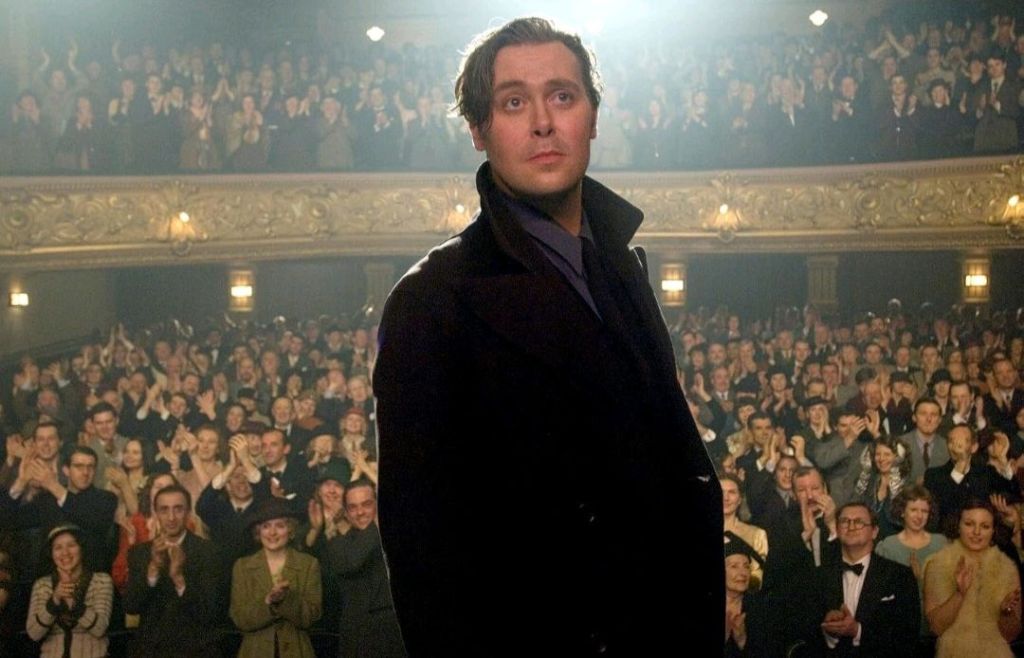
Me & Orson Welles
2008 | PG-13 | 114 minutes | d. Richard Linklater | dp. Dick Pope | s. Holly Gent & Vincent Palmo, Jr.
* * * *
* * * *
“Every true artist must, in his own way,” actor-writer-director Orson Welles once said, “be a magician – a charlatan.”
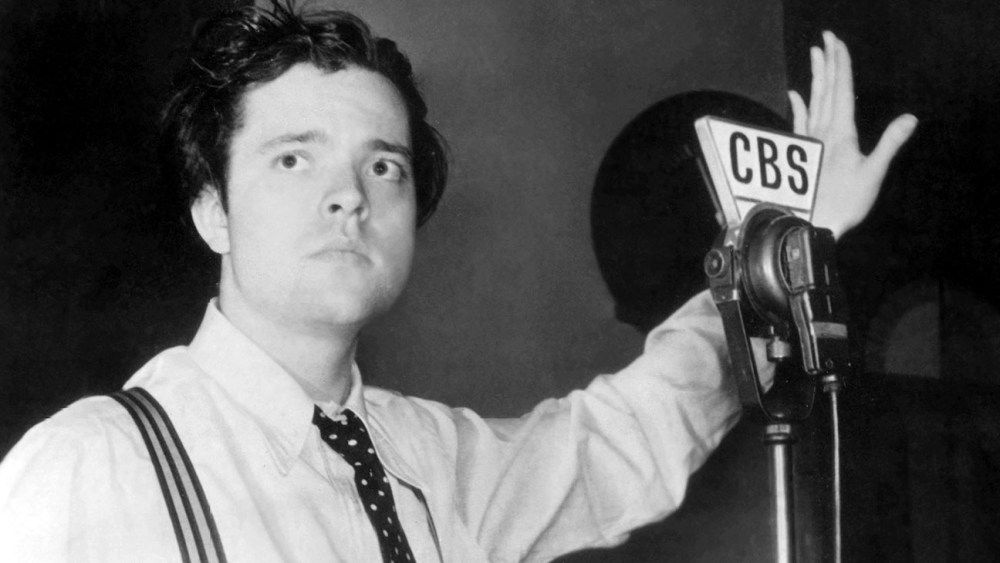
Examine the beginning of Welles’ career, and you’ll glimpse the origins of his illusion: the man was genuinely a magician, a charlatan. As early as 1938, Welles produced the infamous CBS radioplay adapted from H.G. Wells’ The War of the Worlds. And that broadcast allegedly convinced listeners that the world was under attack by Martians from outer space.
But it depends upon whom you listen to, in the storytelling.
And at the end of his career, Welles directed an experimental docu-like film, F for Fake (1973), as much about historically famous art forgeries as about the illusory nature of art, and some contend today that Welles — as an actor, as an artist, as a filmmaker today — was through that particular film passively aggressively exposing his decades’ long deceit to the world, outing himself as little more than a forger of true art.
But, once more, it depends upon whom you listen to.
And I listened at least a little to my senior year English teacher, where we watched Citizen Kane during class for an entire week as a lesson about symbolism. (It was a rather long lesson to arrive simply at the meaning behind Charles Foster Kane’s final words.) So in preparing for this month’s feature, I didn’t necessarily want to start with a documentary about Welles & certainly didn’t want to start (or even finish) with Citizen Kane. I decided that I could play the role of a charlatan as well, by introducing my readers to Welles through a film that doesn’t even have Orson Welles in it, technically speaking.
Directed by Richard Linklater, based upon a screenplay by Holly Gent & Vincent Palmo, Jr., Me & Orson Welles is a creative non-fiction film about Welles’ time working with his Mercury Theatre contemporaries on an off-Broadway stage adaptation of William Shakespeare’s Julius Caesar.
From a non-fiction perspective, what’s important about this period in Welles’ life is that he was having great success as a radio actor, funneling all of his earnings into the Mercury. This is Welles at his most ambitious, it would appear: pre-War of the Worlds & certainly pre-Kane. But what’s more significant about this “yet another Shakespeare adaptation” is that Welles intended to re-imagine Caesar through the lens of 1937 itself, staging the play not in Rome but in Nuremburg, Germany, turning the Great Bard’s historical tragedy into an anti-fascist statement about the state of the world, as America watched through the headlines Germany’s takeover of Europe, which would ultimately lead to WWII, after the events of Pearl Harbor.
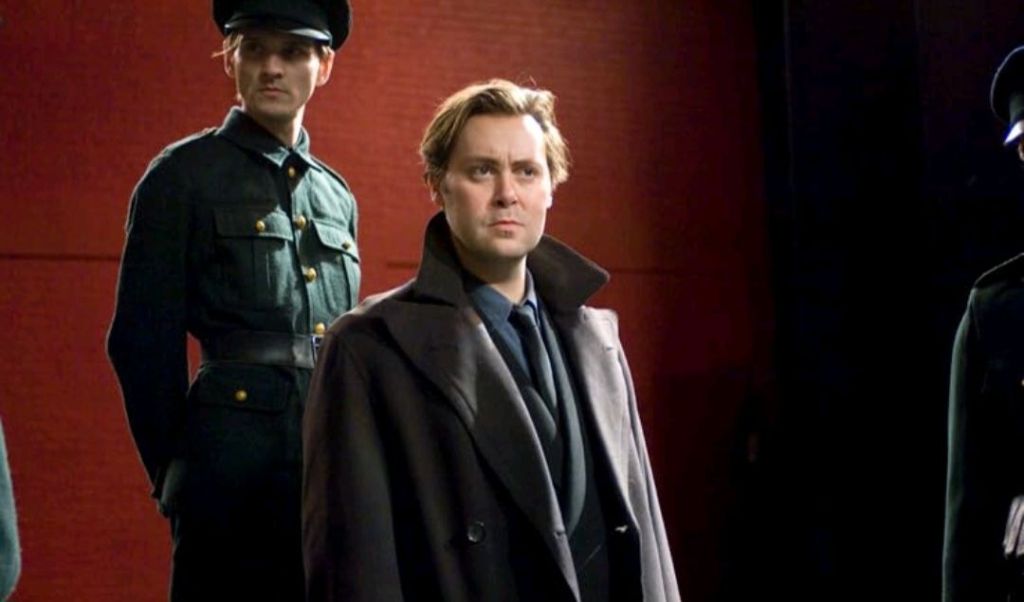
And from a creative perspective, Me & Orson Welles is really the fictitious story of Richard Samuels (Zac Efron), a promising high school teenager who is hired to star in Welles’ (Christian McKay) provocative production of Caesar. Richard gets a true taste of theatrical life by working with Welles but also gets a true taste of real life when he falls for Sonja (Claire Danes) — Welles’ assistant — an ambitious young woman who understands how to leverage the game in her favor in the theatrical community. And, over the course of the film, Richard will learn as much about the inner workings of a stage production as he will about potential, romance, and Orson Welles himself.
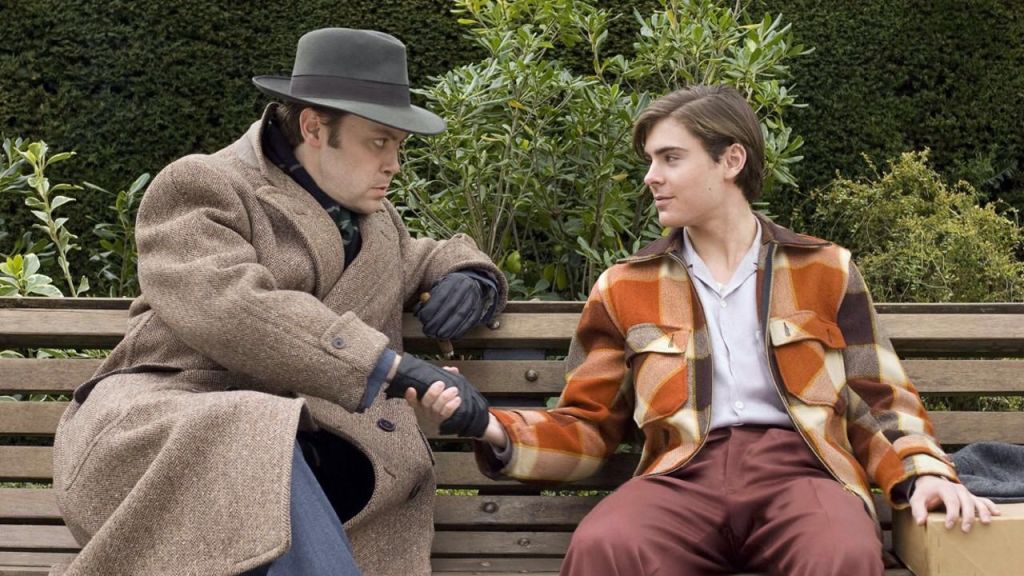
Graduating from the High School Musical series, Efron truly begins to demonstrate his dramatic chops here, and McKay embodies the perfect proxy for Welles, something between an impersonation & an invocation. Based upon this film alone, here are two actors foundationally revealing their talents to the world.
And — for better or worse –– Me & Orson Welles doesn’t paint Welles in the best light. And it shouldn’t. Welles was frequently cruel to his actors. He was often blinded by his vision of the production’s “perfect” opening night. And yet these behaviors led to creative accomplishments you or I could never imagine.
Read any number of biographies about Welles & you will arrive at a few simple truths, of which each biography will agree: Welles was driven by ambition. He was driven by art. He was driven by an understanding that he was called at a young age “a genius,” and that label fueled much of his career, because he had to live up to that summation.
But Welles was never the creative collaborator with which you would want to frequently work. As a document of Welles’ Mercury Theatre adaptation of Julius Caesar, the film Me & Orson Welles plays its part remarkably well, including references of the experience that are corroborated in the documentary film The Battle Over Citizen Kane (1996). And as an introduction to the artist himself, Linklater’s movie does a capable job in demonstrating the artistic spark that would lead to Kane. But as an introduction to Orson Welles — the man — Me & Orson Welles ultimately leaves the viewer feeling alone, perhaps befittingly so, because with Orson Welles — at least at this stage in his career — is the last place one would want to be …
… Depending, of course, upon whom you listen to.
* * * *
* * * *
Me & Orson Welles can be rented or purchased on Fandango.
S U M M E R
T H R I L L E R
* * * *
The Stranger
1946 | NOT RATED | 95 minutes | d. Orson Welles | c. Russell Metty | s. Anthony Veiller
* * * *
* * * *
Having directed the two films that most film historians would characterize as the greatest achievements of Welles’ career – Citizen Kane (1941) and The Magnificent Ambersons (1942) – at the beginning of his film career no less, one would imagine that Hollywood was forever Orson’s oyster.
But Kane – despite its critical acclaim – failed to recoup the finances that the motion picture’s production cost, and the slightly obvious or ever-so-obvious parallels between Kane’s widescreen life & the real-life life of yellow journalist William Randolph Hearst – the most powerful newspaper publisher in the world – found Welles Public Enemy #1 to RKO Pictures. For better or for worse, Welles still held a multi-picture deal contract with the studio, so future films from RKO & Welles were yet to come.
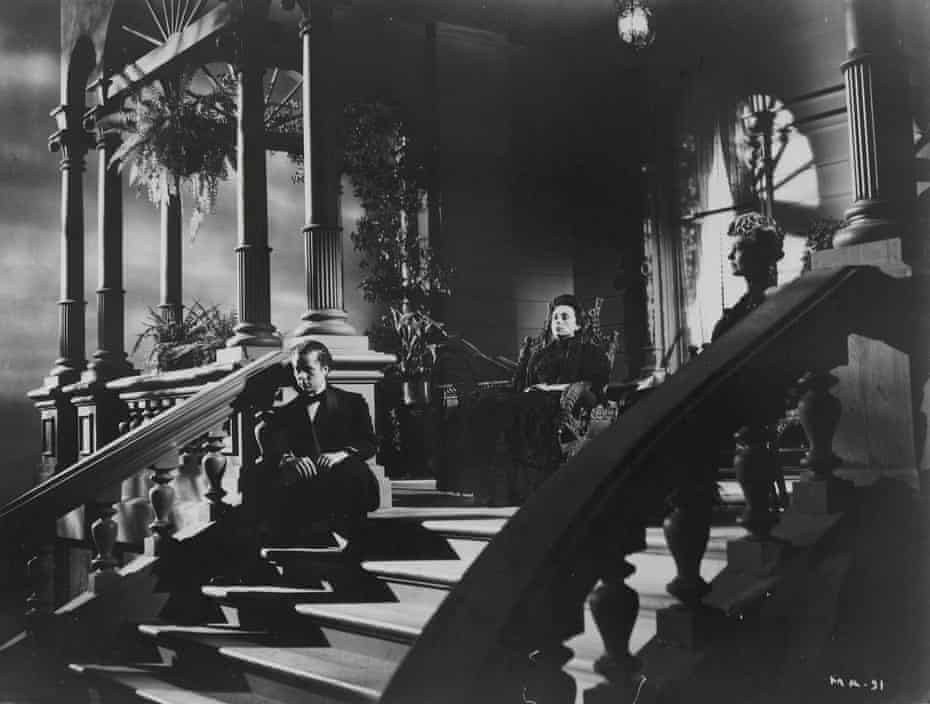
Unfortunately, while it’s still regarded as one of the greatest films of all time, Welles’ intentions for Ambersons were also lost. The director was robbed of all control of the movie’s final cut, a contractual right that Welles possessed with Kane. As a result, the motion picture was reduced to a runtime of little more than 90 minutes (versus Welles’ 131-minute cut), and while notes still exist outlining Welles’ original cut, all of the footage was destroyed. After only two feature credits to the director’s name, it was a bittersweet start to what looked like such a tremendous filmmaker’s career for Orson.
But The Stranger (a noir film — and it wouldn’t be Welles’ last) was the first glimpse into the filmmaker’s career that he was prepared to make a film — any film — in order to finance the productions (onstage or on the silver screen) that he hoped to produce in the future.
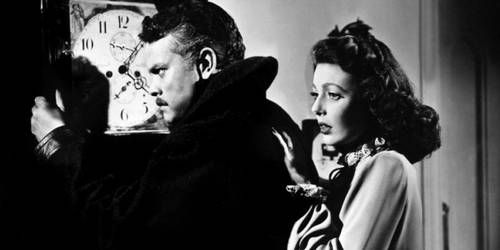
In proper fashion, The Stranger begins as the story of Mr. Wilson (Edward G. Robinson), a United Nations War Crimes Commission agent in pursuit of Franz Kindler (Welles), a Nazi & war criminal. The only clues as to Kindler’s current location is only known to Wilson & the UNWCC through Kindler’s unhealthy fascination with mechanical clocks.
But when Wilson’s investigation leads him to the town of Harper, he discovers that Kindler has assumed a new identity – “Charles Rankin” – a teacher at a local prep school, about to marry Mary Longstreet (Loretta Young), the daughter of a Supreme Court Justice (Philip Merivale). “Rankin” also happens to be involved in repairing a 400-year-old Habrecht-style clock mechanism in the community.
From there, time is running out in order to determine if Wilson will expose “Rankin” and whatever “timely” machinations “Rankin” has planned for the small town.
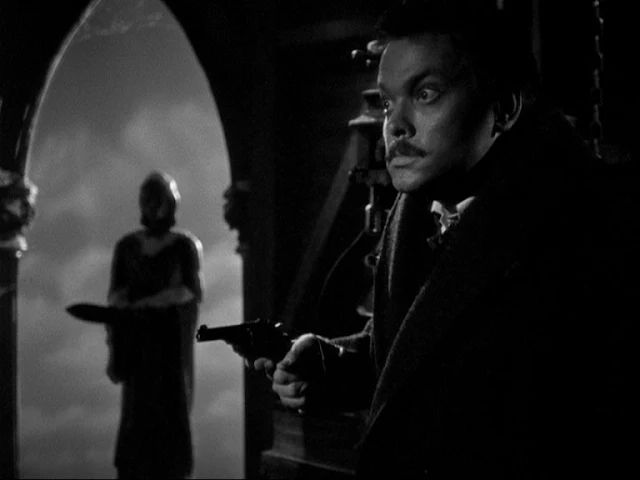
It’s strange, then – or perhaps just a significant coincidence – that The Stranger was Welles’ most commercially-successful film of the artist’s career. Not that box office receipts are synonymous with a filmmaker’s success, but it wouldn’t be the artistry of Kane nor the pageantry of Ambersons nor even the mystery of The Lady from Shanghai (1947) or the thrilling nature of The Third Man (1949) that would ultimately win over audiences in the theater.
As a matter of fact, The Stranger had something in common with each of Welles’ previous films, despite the fact that Stranger was allegedly Welles’ most reviled motion picture, by the filmmaker himself.
Welles may have abandoned the philosophical discussions about the effects of great power & wealth with Kane, but with Stranger, Welles was still exploring a man’s understanding of his truest self.
And he may have left behind the grandiose spectacle of Ambersons, of an entire family trying to deceive itself into believing that it was still somehow inextricably linked to the aristocracy, but with Stranger, Welles was still flirting with the notion that though a man imagines that he has fooled the world into believing that he is something that he is not, someone has captured glimpses of his true self.
So while The Stranger seems unadorned of the big ideas of both Welles’ big screen debut & his sophomore production, it only appears so because the movie frequently lacks the widescreen presentation of those films, both of which look even today like the efforts of a filmmaker to announce his art to the world, to welcome the critical acclaim, to receive lavish award after award.
The Stranger remains a truly compelling film, meant to lure human bodies into theaters, and it did precisely that. Of Welles’ career, The Stranger was the only commercially-successful & critically-acclaimed film upon its immediate release.
All other Welles films would demand the benefit of time — Welles’ motion pictures would either be recognized as genius decades later or, sadly, not recognized at all.
Oher movies in Welles’ filmography would be recognized as great over time, but only The Stranger delivered immediately, costing the studio a little more than $1M to produce, earning $3.2M after only 15 months of its release, and maintaining a 97% on Rotten Tomatoes today. At the time of its release, critics praised Welles for his ability to show that he could, in fact, make a mainstream motion picture, welcoming Welles into the ranks of other similar films.
Unfortunately, despite even the movie’s contemporary acclaim today, the motion picture only demonstrated to Welles that – despite the fact that he imagined himself some different, alien, even strange to everyday filmmakers – Welles had been exposed to the world.
Now, there was no doubt to the artist that the world in which he performed his illusions was fully aware of who he was as a moviemaker – and what he would be allowed to become – in Hollywood.
And that was the last sort of illusionist Welles wanted to ever be.
* * * *
The Stranger is streaming on Tubi.
A U T U M N
D R A M A
* * * *
The Immortal Story
1968 | NR | 58 minutes | d. Orson Welles | dp. Willy Curant | s. Louise de Vilmorin & Orson Welles
* * * *
* * * *
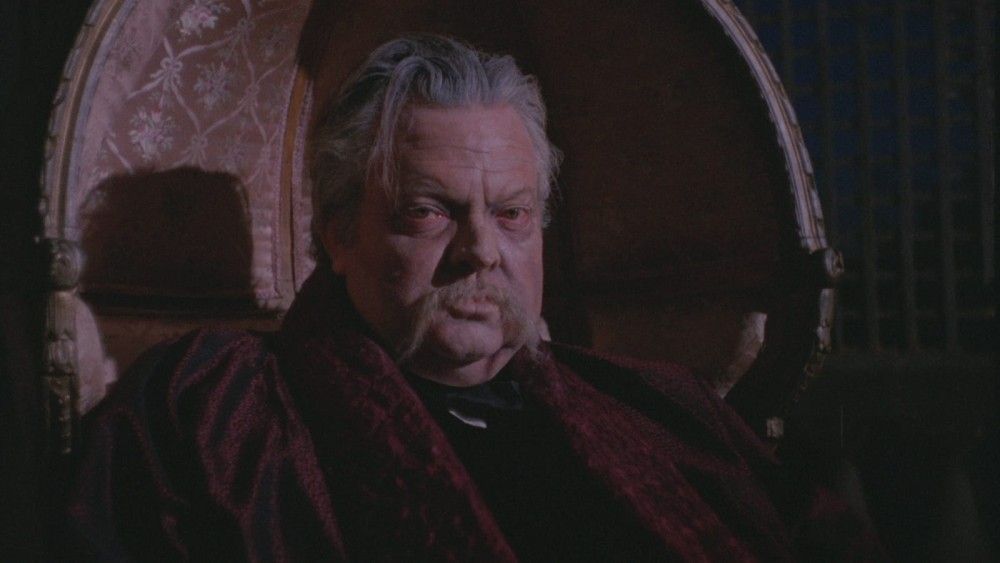
Welles had lived many lives by the time he directed his first motion picture in full color. As Michael O’Hara (The Lady from Shanghai, 1947), Macbeth (1948), Harry Lime (The Third Man, 1949), Othello (1951), Hanks Quinlan (Touch of Evil, (1958), Falstaff (Chimes At Midnight, 1965), and more, it was clear that Welles the artist would outlive many who had worked in entertainment for as many years. But when Welles directed The Immortal Story, he was once again back to his old tricks, attempting to hypnotize the audience into believing something that they shouldn’t.
In the film, Welles plays a wealthy, deteriorating, old man named Clay who begins to tell a unique parable to his bookkeeper (Roger Coggio) about an old man who offered a broke sailor five guineas in exchange for impregnating his wife. Clay’s story is cut short by Levinsky, who finishes the narrative, demonstrating there is nothing singular about this story – it is, in fact, a tale told for all time. Discouraged by the apparent banality of the story, Clay obsessively hopes to make the story come to life, with a real-life sailor, with a real-life woman. But unbeknownst to Clay, his compulsion will teach the audience a thing or two about real life.
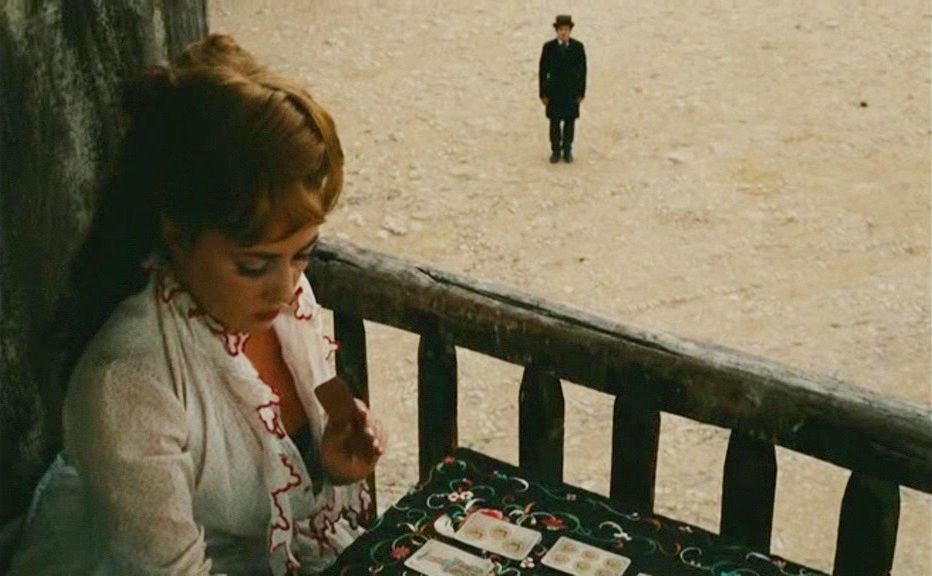
In this 1968 film originally produced for French television & only later released in theaters, there are distinctive qualities that make The Immortal Story truly memorable as a piece of Welles’ filmography. The production in color rather in black & white is the first, most obvious – filming in color was only a part of Welles’ financial contract, despite the fact that Welles would say in a later interview that he hated color cinematography. Color, Welles said, enhances every element of the film except for the actors themselves. (And yet The Immortal Story would not be Welles’ movie filmed in color.)
And Welles’ own ego as a filmmaker is evident in The Immortal Story. Just as any filmmaker wants full control of his vision, Welles effortlessly demanded the same over the course of his career. “You move at my bidding,” Clay tells his would-be lovers in the movie, altogether announcing that he is the Supreme Being responsible for bringing his art – the parable of the sailor & the housewife – to life, like a magical illusion.
We know now that Orson Welles isn’t God. And we hope that he would agree. But Welles at all times as a filmmaker wanted to be Him.
In many ways, Welles was doing the same thing over the course of his career, making art that was a reflection of the real world, whether as he knew it or as he would like to see it.
The real world, Welles would likely scoff, but it’s true, just as the snow sled Rosebud becomes a symbol of the youthful innocence of a young boy corrupted by wealth & power, and there remains more examples throughout Welles’ career.
The Immortal Story exists today as a timeless example of a person intent on using power & influence in order to shape the world in his image. Welles was certainly accused by critics of returning to this theme again & again in his motion pictures.
Welles’ filmography is hoisted on the tent poles of widescreen men trying to manipulate the world in order to satisfy their own vision of the world, even of themselves. Kane did so in building Xanadu, a menagerie of wild beasts & a museum of art, illegitimately transforming the yellow journalist into a custodian of nature & Neoclassicism. Ambersons did so in maintaining that the shifting tides of industrial & social change could have long-lasting effects on a long-revered family’s social power. The Stranger toys – like a game of cat & mouse – with the notion that its protagonist (played by Welles, also the antagonist) can see everyone in the immediate community but himself that what he’s doing is for the betterment of everyone. Even Macbeth – based upon the play by William Shakespeare – explores a character who is foretold that he will be King of Scotland by the ambiguous prophecies of Three Witches & sets about to ensure that that prophecy rings true, that he will be crowned the King of Scotland, no matter the cost to his friends, his family, his soul. Welles’ films have always winked at one’s identity & its place in a world that likely won’t accept it, and this filmmaker’s movie is no different.
The Immortal Story exists today as a fable about the attempt by some — even many — to control the world through whatever means they have, whether money or power or art.
Whether through oils or pencils or clay or pastels or photographs or words, one of Welles’ final films demonstrates the futile attempt by someone to create a waking portraiture of art. Even Welles understood at this stage in his life that he was ultimately impotent to manipulate the universe through his radio, his stageplays, his films.
That level of control is left to deities, and Orson appeared to understand his artistic messaging — and his artistic mortality — through The Immortal Story.
Would that Welles could do it, it’s one of the most memorable illusions an artist could hope to create over the course of his career, an illusion that perhaps Welles understood even then looked like a paltry magic trick. Because once the charm of the illusion washed off the audience, at first glance, you can suddenly glimpse the strings holding the entire, impossible spectacle afloat …
… As you also see Welles standing stage left, in the shadows, watching the entire performance unravel.
* * * *
The Immortal Story is streaming on the Criterion Channel.
W I N T E R
D O C U M E N T A R Y (?)
* * * *
F for Fake
1973 | PG | 90 minutes | d. Orson Welles | dp. François Reichenbach & Gary Graver | s. Orson Welles & Oja Kodar
* * * *
* * * *
It would be a little more than 30 years before Welles’ most personal film, his first, Citizen Kane – a motion picture about a man contending with his own perceived power in an industry that doubted him, a man at odds with a world of which he no longer had control – would collide with a motion picture about a man contending with his own perceived power in an industry that doubted him, a man at odds with a world of which he no longer had control.
And just like Welles’ gargantuan presence in the room late in life, Hollywood remained the elephant in the room that everyone feared to address. One of Welles’ final films would be a documentary-like motion picture that would – whether the filmmaker knew it at the time or not – hold him to the letter as an artist.
A is for artificial, and B is for backhanded. C is for counterfeit, D for deceptive, and even E for engineered.
And F is for fake.
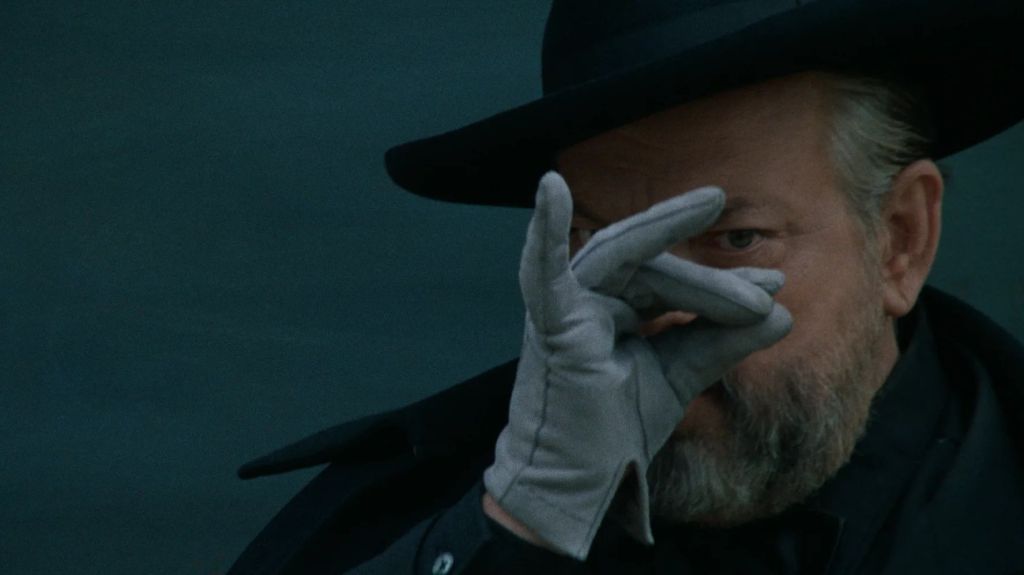
Welles’ last directorial effort is unlike any other motion picture the filmmaker produced. Playing more like a visual essay with the obvious flourishes of a docudrama than a documentary, F for Fake tells the true stories of art forger Elmyr de Hory, hoax biographer Clifford Irving, Welles’ own companion Oja Kodar, and even Welles himself. Ultimately, the film examines the relationship between art & illusion, between a true actualization of life through art & a forgery that convinces people they’re looking at the real thing.
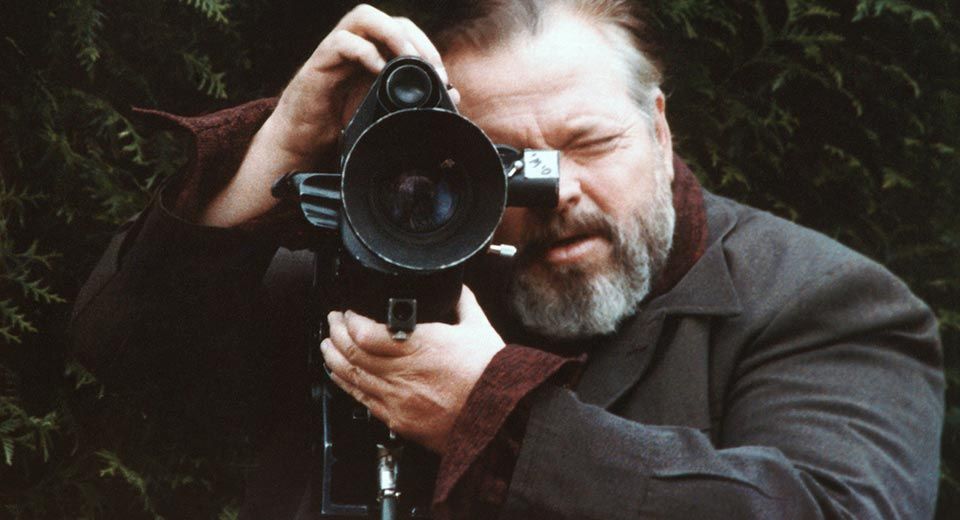
In the making of it, Welles produces a film that not only illuminates a few memorable “fakers” – identifying them as magicians who succeeded in fooling others with their illusion, of utilizing different forms of smoke & mirrors in order to suggest that they are more than they outwardly appear – but also includes himself in the conversation of great fakers who fooled the world.
Throughout F for Fake, viewers will get the sense that they’re not simply witnessing a testimonial provided by a witness who has studied the subjects on trial at great length. In fact, viewers will get the sense that they’re spying upon a confessional, witnessing a man’s exposure of himself, on the record.
When you watch F for Fake, you’re watching two stories unfold simultaneously: the stories of infamous forgeries throughout the artistic & literary worlds & the story of Orson Welles himself, perhaps the greatest faker of them all (though Welles never fully admits it).
One can view Orson Welles’ films – especially F for Fake – and come away with a true understanding of who Welles was before he made that art, who he was when he was making that art, and perhaps even how he hoped that he would be seen. There is something autobiographical of this singular moviemaker in all of his films – even his adaptations of Shakespeare, long removed from Welles’ experience & personality – that promises the audience that when seeing a film by Orson Welles, the audience is seeing a cinematic construct of the man’s anima, then & now. If watching a Welles’ film is like eavesdropping during a Catholic’s confessional, then watching a Welles’ film is also like quietly sitting by while a patient exposes themselves on the tired image of a psychiatrist’s couch.
Watching a Welles film is like being present when an inner monologue becomes a much more outer monologue — an audible one — at that perfect moment when the person with which you’re speaking says the quiet part out loud.
But watching F for Fake – and perhaps any Welles film – it’s difficult to not be struck how one knows nothing at all of this filmmaker, that what has been provided of the artist to the audience remains at all times just in front of the scrim, the performer himself secreted away so that the illusion has the greatest effect.
If any film is a distilled portrait of the director’s state of mind in the making of it, then few would be able to understand Welles as a person – from Kane through Someone to Love (1987) – and perhaps that understanding isn’t meant for anyone in the world. After all, Orson says in F for Fake, quoting Jean-Eugène Robert-Houdin, “A magician is just an actor … just an actor, playing the part of a magician.”
Today, some would simply call Welles a writer or an actor or a director, like the many of whom came before him & like the many of whom would come after him. But some would call Welles a magician of the rarest order.
And perhaps the truest definition of Welles’ career depends upon whom you listen to – but don’t listen to Welles as he would tell it, you silly fool, because his narrative is one of illusion, a sleight of hand that warmly welcomes you — clutching your elbow as you shake hands — and at the same time dismissively patting you on the back as you go, returning you to a world where magic & myth & Orson Welles could never exist forever.
But, again, it depends upon whom you listen to.
* * * *
* * * *
F for Fake is streaming on HBO Max.
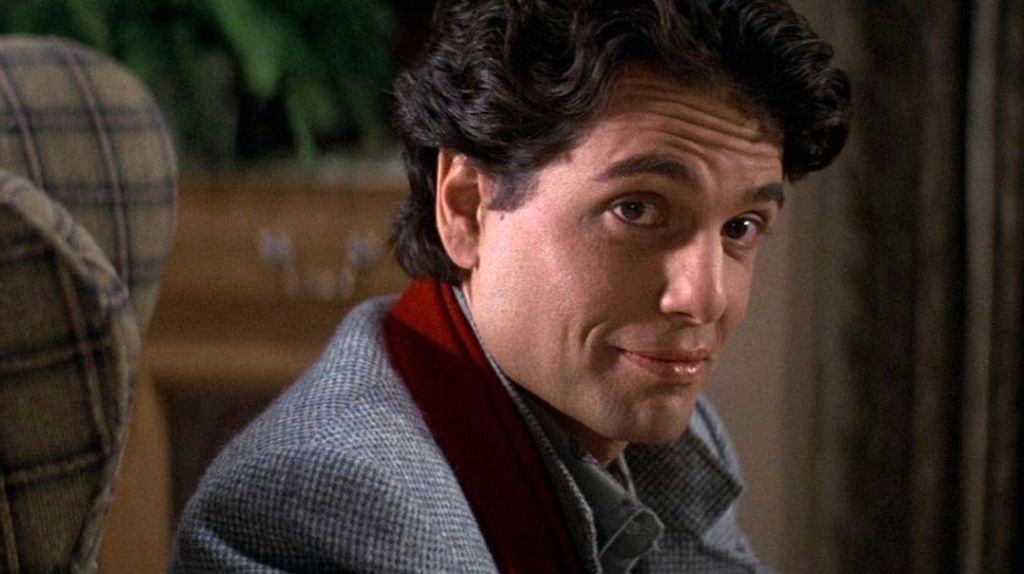
Chris Kaine is the most amateur film essayist whom you may ever imagine. He earnestly contends that he was named after the actor Chris Sarandon, because he was either conceived while his parents watched Fright Night (1985) in his paternal grandparents’ basement, or because of their love for The Princess Bride (1987), which stars a character by the name of “Humperdinck,” which is pretty funny, if you think about it.


Leave a comment