email: latenightpickwick@gmail.com
In this space, the Pickwick Drive-In examines motion pictures through which a singular artist played an important part, large or small. Four Seasons is an exploration of four films — four brief moments, like the seasons themselves: spring, summer, autumn, and fall, representing birth, growth, the passage of time, and finality — with the contribution of a unique star, whether in front of the camera as a movie star; playing a supporting role in the production’s cast; or behind the camera as a cinematographer, director, writer, and more.
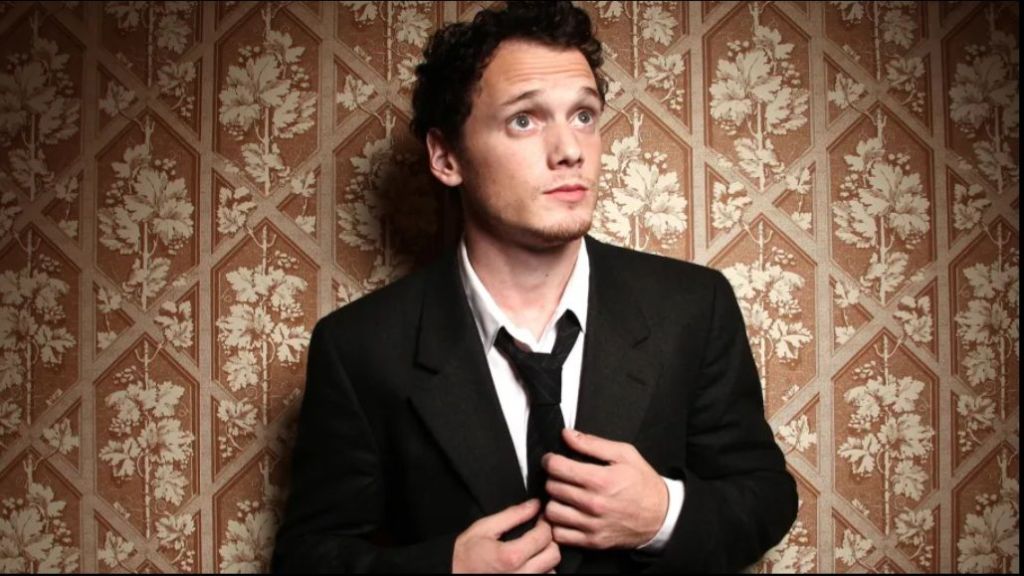
This month, the Pickwick rolls back the celluloid reels, showcasing four motion pictures starring Anton Yelchin — who was born in 1989 & passed on June 19th, 2016 — movies in which Yelchin played a memorable role.
S P R I N G
R O M A N C E
* * * *
Like Crazy
2011 | PG-13 | 90 minutes | d. Drake Doremus | s. Drake Doremus & Ben York Jones | c. John Gulesarian
* * * *
* * * *
It was rather otherworldly, my introduction to the actor Anton Yelchin, whom I first discovered in J.J. Abrams’ reimagining of the science fiction franchise Star Trek in 2009 (only the fourth Star Trek film I’d ever seen: after The Wrath of Khan (1982), The Search for Spock (1984), and The Voyage Home (1986)). In Abrams’ youthful, polarizing, action-packed motion picture, the ship’s computer fails to understand what Pavel Chekhov (Yelchin) is saying, and his Russian slash broken English – incapable of interpretation, despite the advances of that century – is where momentary humor lives. (The Journey Home (1986) flirted with this trope.)
And over the course of the film, Chekhov’s abilities are underestimated, but he manages to save Kirk & Sulu from falling to their death on the surface of the doomed planet Vulcan. In this way, Chekhov is either the source of situational humor or the saving grace for the film’s heroes.
Either way, Yelchin’s role in Star Trek (2009) is one of identity: articulating oneself or defining oneself, both of which are two very different opportunities.
Today, I fully understand it.
Decades from now, we will never fully understand the talent of Anton Yelchin.
Because misunderstood & underestimated is precisely where Anton Yelchin built his career, so the Pickwick Drive-In has no intention of revisiting the action-packed revival of Yelchin’s tenure with the Statship Enterprise. Instead, the Pickwick examines a career that looks like no one could have ventured before, a career that the Pickwick fell in love with, like crazy.
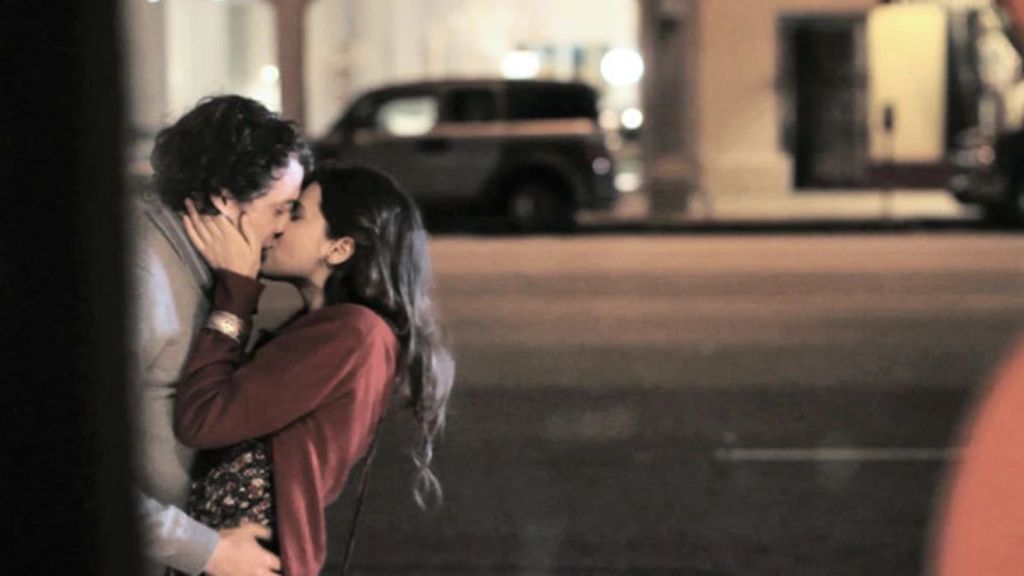
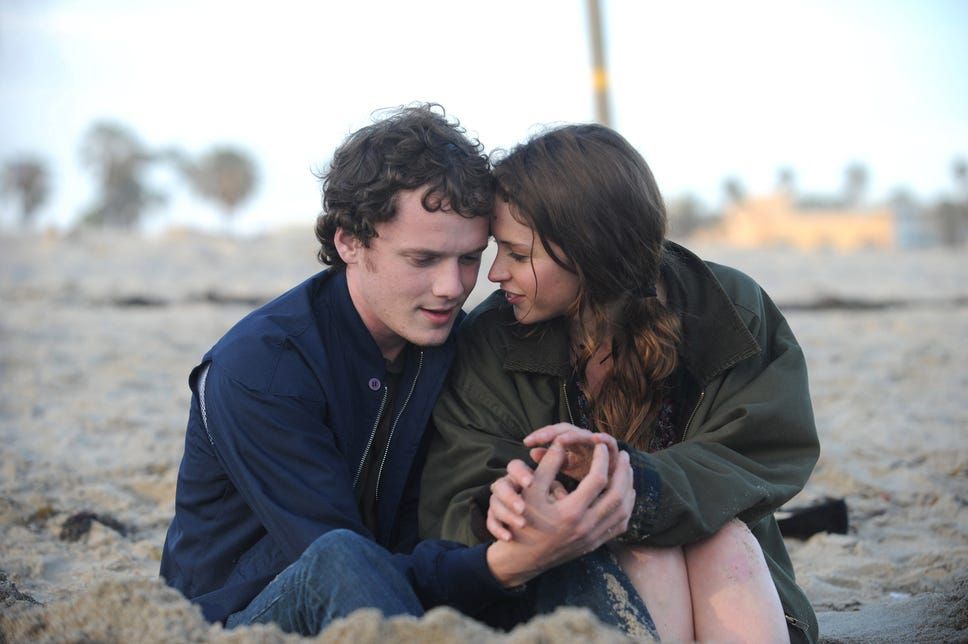
Off his success in Star Trek (2009), Yelchin would have to wait until January of 2012 to begin filming its sequel, and he filled that time with a small screen venture from co-writer & director Drake Doremus in the hand-held indie romance Like Crazy, an opportunity for Yelchin to play something much more down to Earth than a crew member of the Enterprise.
In the film, Jacob (Yelchin), an American student, falls in love with Anna (Felicity Jones), a British foreign exchange student studying in Los Angeles. The couple’s romance is sudden, a thing of fables, but when an expired visa threatens to keep the couple apart, the film explores the challenges of a long-distance relationship, the strength of the human heart, and the limits of incorporeal romance.
Doremus’ film (co-written by Ben York Jones) shares its DNA with a number of other cinematic love stories & onscreen couples that have resonated with me. Over the course of the movie’s 90-minute love affair, you will endure the uncertainty of the future, embodied so memorably in Cameron Crowe’s Say Anything (1989). You will also take that cross-continental train ride, that innocent, cerebral, and heartfelt – but never sexualized – chance encounter of Richard Linklater’s Before Sunrise (1995).
That’s the crazy part, I’ll fully admit, and that observation is not meant to diminish it, as if a narrative like this is nothing new. Like Crazy tells the story uniquely through its intimate cinematography and the performances by Yelchin & Jones. Recall that Yelchin had just come off a role where he played a young man possessed with enough confidence to be a hero in the stars. Here, Yelchin’s character is much more subdued, much more vulnerable in a star-cross’d relationship that may not embrace a fantastical conclusion.
Like Crazy is a quiet motion picture that takes hold of all the senses of romantic moviemaking: awkward, rapturous, insecure, tragic, and — always — honest.
It is headstrong yet vulnerably submissive in its storytelling. It’s unapologetic & yet unforgiving. It doesn’t backpedal in its quiet urgency to tell a story of love as love frequently is – as something so capable of blossoming & yet so capable of withering away – even if audiences arrived to witness love as they truly imagined it to be.
And that’s not the love that Like Crazy illustrates, and it may sound crazy, but that’s sometimes – oftentimes – how it goes.
* * * *
* * * *
Like Crazy is streaming on Pluto TV.
S U M M E R
D A R K C O M E D Y
* * * *
Thoroughbreds
2017 | R | 93 minutes | d. Cory Finley | s. Cory Finley | c. Lyle Vincent
* * * *
* * * *
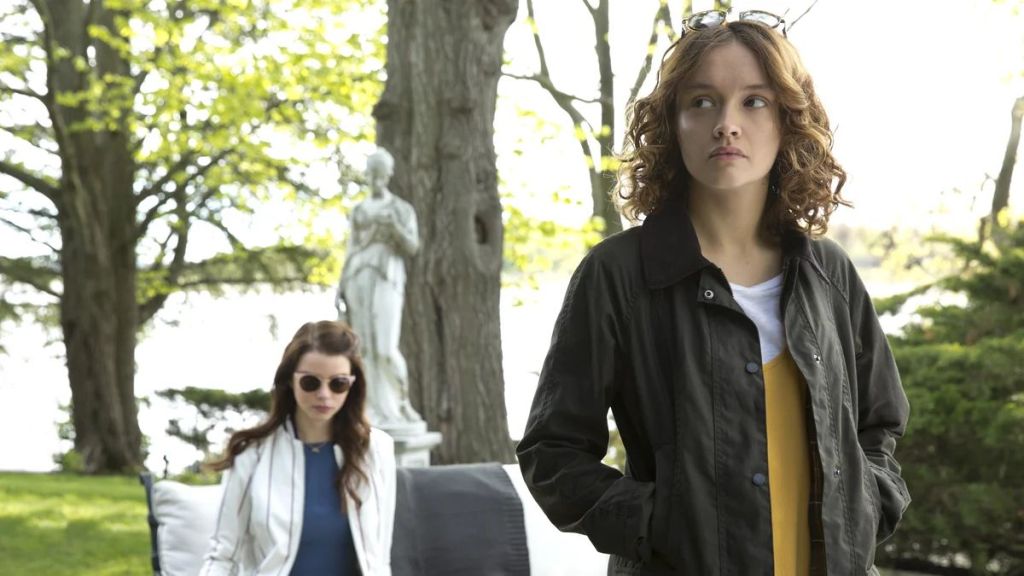
There’s a duality to writer-director Cory Finley’s dark – and I mean, dark – comedy about two upper crust teens (Olivia Cooke & Anya Taylor-Joy) on a rather unsteady mission to kill one of their stepdads by employing a rather unsuccessful drug dealer (Yelchin) to be the trigger man.
It’s a little more complicated than that, but Indiewire called the movie “American Psycho meets Heathers.” The Film Stage said that the film “lapses into listfulness.”
You’ll get that kind of polarization when you read film reviews – which is why I discourage you from doing so – but these criticisms demonstrate a specific relationship that exists at the motion picture’s core.
(Also: Have you ever just thought about killing a film critic?)
Thoroughbreds takes place in suburban Connecticut, where two teenage girls – once best friends before growing apart over time – are reunited when both girls have their sights set on their future lives in college & beyond.
Amanda (Cooke) is aloof & emotionally unfazed by the world, perhaps even too unfazed. She’s in need of some standardized test prep while she awaits a court date for a charge of animal cruelty. Meanwhile, Lily (Taylor-Joy) is in need of an acceptance letter before the fall semester begins, that will take her to a school far away from home, a domicile passive-aggressively governed by her stepfather Mark (Paul Sparks). Lily knows what she needs to do in life to get what she wants, even if she’s prone to emotional sensitivity, perhaps even too much emotionally, and Amanda seems to understand what she needs to do to keep the world turning.
These girls couldn’t be more dissimilar – nothing like the two young girls who called each other best friends once upon a time, but what will bring them closer together is the darkly comic suggestion that they have stepdad Mark murdered, setting about it by entering into a contract with the local, relatively unsuccessful drug dealer Tim (Yelchin).
It’s going to be an eventful summer.
Thoroughbreds can be a pretty perfect hang, wherever you meet it in your life.
Seeing Thoroughbreds as a teen — perhaps not entirely in a similar situation — it’s in a teen’s DNA to sympathize pretty fully with the motion picture’s two protagonists. You will feel like you’re one of these girls — or a marriage of the two, at least.
Perhaps you haven’t contemplated murder in your life, but — as a teen — there’s still time in your life to contemplate murder.
Also, every teen knows an adult who represents everything that should embody an adult archnemesis. But see the movie as an adult, and you’ll likely remain sympathetic to the two girls. You’ll hope – as most mature, emotionally stable adults would – that these girls can sort out their lives & find happiness. Especially before murder is even a kernel of an idea. Meanwhile, the film remains a nice piece of escapism for adults who survived high school & all that.
You’ll get that kind of polarization when you see Thoroughbreds.
But see this motion picture — as I did, in college — and the film may seem pretty perfect, not only as a story but as a piece of cinema. There are subtleties in some of the scenes that will resonate with you, asking you to view the plot from the perspective of both a cynical teen & a concerned parent. But mostly, your viewing will be guided by the fact that you recently passed English 101 and better understand foreshadowing & symbolism & metaphor. (In one scene of the film – while Lily preps Amanda for a standardized exam – they read a passage that alludes to the majesty of horses. It stops Lily in her tracks (and, at that moment, we don’t know why) and she apologizes immediately to Amanda, suggesting a different, shorter passage. Stoic as always, Amanda neither appears bothered by the subject of horses nor accepts Lily’s apology. “It’s only weird if you make it weird,” Amanda confesses. In another scene, in which Amanda details her troubled past with a horse, she narrates the scene in her characteristic monotone while strategically moving giant chess pieces around a large backyard playing board while Lily looks on. And by the time I’ve reached the end of Finley’s film, this chessboard scene becomes inescapably central to the plot. Lily started the game playing against Amanda — Amanda demonstrates that she is literally adept at playing chess — and both players collide in a checkmate that the audience never sees coming. Because over the course of the movie, Amanda will play a metaphorical game of chess as well, even with herself as the opponent. And Lily too will be asked to play a metaphorical game of chess, perhaps against her family, against Tim, against Amanda, and even against herself.
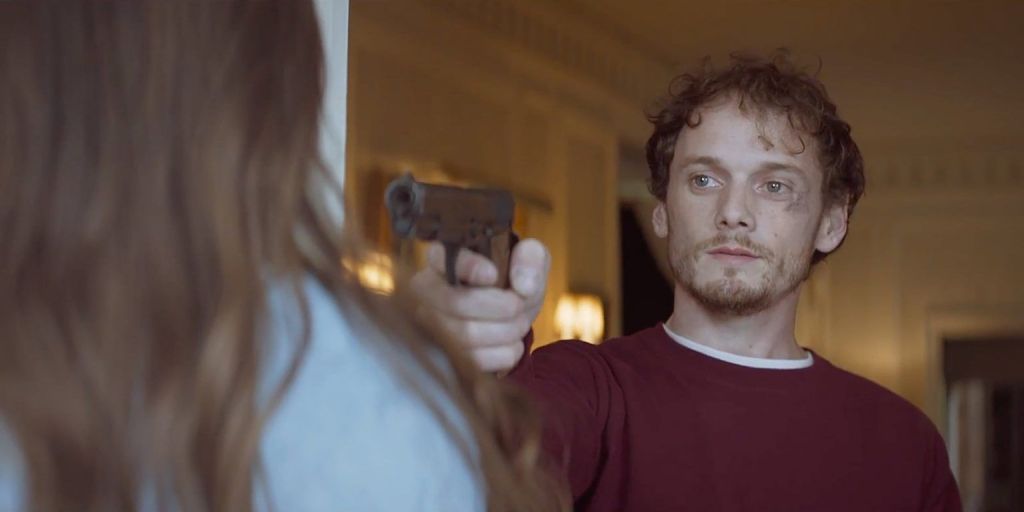
And Yelchin’s hapless Tim remains caught in the middle of it all.
To return to the theme of timing, whenever you see this film, which you should see soon – whether as an angst-laden teen, a more sophisticated college student, or a mature adult – there remains a grown person in your past who behaved like an asshole and there remains hope in young people that they will do the right thing, will be okay in the end.
But one thing that will never change is one’s perception of Tim, the inexperienced drug dealer & convicted statutory rapist, who will remain rather static. Teens don’t want to become him. College students find him ironically hilarious. And mature adults lament the decisions that he’s made in life.
And, oddly, we see the world of Thoroughbreds through Tim’s eyes, just as we saw the world of Jay Gatsby (the man who gives his name to the novel), Daisy & Tom Buchanan, George & Myrtle Wilson, Jordan Baker, and Owl Eyes through Nick Carraway’s outsider eyes.
Nick Carraway was never meant to inhabit & comprehend the West Egg-East Egg universe, and Yelchin’s character was never meant to inhabit & comprehend the world of Thoroughbreds.
This neither suggests that the audience has anything in common with ambitious businessman Nick Carraway — transplanted to West Egg — any more than it has anything in common with Tim, whose accomplishments will be overlooked here, but it’s Yelchin’s performance that grounds the motion picture in some semblance of authenticity, when the narrative’s other characters are sometimes too stylized – too perfectly constructed – in order to ensure that the film concludes as it does.
But here is where I settle upon a thread that I’ve glimpsed in many of Yelchin’s movies, and it’s that of the everyman in an incredible situation. Like the young ensign Pavel Chekhov who must perform with older, more capable crew members on the Enterprise and like the romantic Jacob who will see his love tested by distance, by time, by indiscretions – Yelchin plays here too a metaphorical fish out of water, comedically contributing to an otherwise sinister scene of family tension, young ambition, and teen psychology. (And yet my metaphor reminds me of the rhythmic sound of the ergometer coming from upstairs – the sound of Mark’s rowing machine that he worships like his training bike, his running shoes, his automated tennis court. And it sounds otherworldly to me, like living underwater, like being trapped in the womb, not yet allowed to live.)
Thoroughbreds is a delicious subversion of the coming of age story that has become so common as to be prosaic, and perhaps it’s the film’s title that suggests both Amanda & Lily were meant to symbolize horses themselves, emotionally wounded so as to never run again as the ribbon-winners they could have been. Furthermore, perhaps they’re the titular thoroughbreds because by the end of Finley’s motion picture — after the events of this momentary reunion between two former friends — each girl’s life has been forever changed. One can begin to comfortably feel. The other can begin to feel nothing at all. And perhaps Tim was just caught up in the race: never to be a show-winner, never to win a derby, never to place. The nuances of this film return me again & again to examine Thoroughbreds like I was a college student all over, capable of intelligently breaking down James Joyce’s The Dubliners like no other college freshman, instead of being put out to pasture.
Whatever.
It’s only weird if you make it weird.
* * * *
* * * *
Thoroughbreds is streaming on Starz.
A U T U M N
T H R I L L E R
* * * *
Green Room
2015 | R | 95 minutes | d. Jeremy Saulnier | dp. Sean Porter | s. Jeremy Saulnier
* * * *
* * * *
‘What is my desert island band?’ you might want to know.
Never mind – you didn’t ask.
It’s such a canned question anyway, something that radio DJ hosts & podcasters develop as a tagline or a part of their brand, as if you need to be reminded that you’re listening to this particular DJ host or to this particular podcaster.
But let me think about it for a moment. I want to make sure that I get it right.
Like, Buzzcocks right. Like, Bad Religion right. Like, Fugazi right.
In the meantime, I admit that I was late to the punk rock party, calling – rightly or wrongly – Living Colour punk rock by the simple nature of their look & sound. Then I called Pixies punk rock by the simple nature of both recorded versions of “Wave of Mutilation” – well, and also by the simple nature of Pixies. But, over time, I no longer see punk as a sound as much as an attitude, to coin a rusty term, tarnished with time.
Punk rock, to me, is about turning left when the world expects you to turn right, a rebellion against the status quo. But punk rock is not simply noise & Iggy Pop & spitting on the crowd, though these things are cool too. Nirvana did it with their meditative, acoustic cum orchestral “Something in the Way,” and they did that on the same album that would earn them global stardom, no longer the anonymous rebels of Seattle, WA, but the voice of a new music. And when Green Day apparently sold out with the commercial success of Dookie (and I called them punk rock then), I called them punk rock again when I discovered “Good Riddance (Time of Your Life).” Green Day too went left when the world thought they would keep to the right. With a little research, the leap from the Beatles’ Help! (1965) to Rubber Soul (somehow, also in 1965) became a punk rock movement to my ears. Johnny Cash became punk rock. The BeeGees were so punk rock. That guitar ka-chunk … ka-chunk that interrupts the heartbreaking ballad of Radiohead’s “Creep” was obviously punk rock — but OK Computer after the band’s first two albums? Textbook punk rock.
Today, Jelly Roll is punk rock. Taylor Swift is punk rock. Yee-haw — Beyoncé is punk rock too. Punk rock is more about its ethos than its snare drum, more attuned to its ideology than its guitar riffs. Historically, America itself is punk rock, coming out of the revolution that defined it, just as filmmakers Coogler, Zhao, Bigelow, the Coen Brothers, Spielberg, Kubrick, and others are punk rockers.
And yet they weren’t born punk rock.
Punk rock is a thing to become, a part of evolution, like a teenager, a defiance of the natural order of things, side-eye to what happened yesterday or last month or a generation ago, like electric automobiles or cell phones or outer space exploration or the Civil Rights Movement.
Whatever the track in question — that sounds great to me.
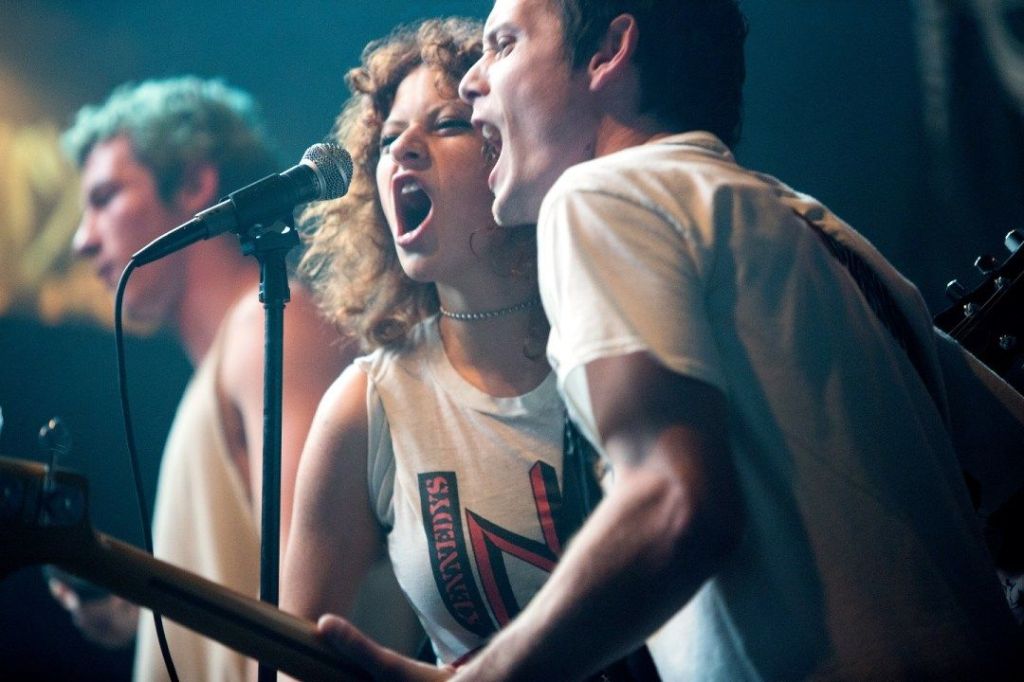
And that particular track is captured in writer-director Jeremy Saulnier’s Green Room, which finds a grassroots punk rock band stranded in the middle of nowhere & tasked with playing a show at a rural sometimes far right-wing, sometimes far left-wing club where they were told to simply keep their cool. Play the early stuff, they’re told, and they’ll be fine. But this band won’t suffer right-wing idolatry – there’s a reason they call themselves the Ain’t Rights. Even after understanding their surroundings, the band launches into raucous, nose-thumbing numbers that not only make them the target of bubbling hatred from the crowd but also make them the target of violence when they witness a murder backstage.
Suddenly, the film’s song – if it had just one – has somewhere really interesting to go, which isn’t where you thought it would.
And, once more, Yelchin – playing a supporting yet vocal member of the band – embodies the character of the small fry standing up to a small army of Neo-Nazis, someone stronger in his beliefs than his physical prowess, and Green Room becomes a taut, frequently very violent showdown by two opposing forces:
One force – the upstart Ain’t Rights – who prefer to keep it analog, to stay off social media, to live only onstage, because, as Pat (Yelchin) tells a rock journalist in an interview, social media isn’t where punk lives. Recording physical media release after physical media release isn’t where punk lives. “You gotta be there,” Pat says. “The music is for effect. It’s time and aggression. And it’s shared live.” It makes perfect sense that punk rock be temporary, with too much energy to be sustainable …
… Just like the other opposing force: the fascism that the Ain’t Rights must now confront. What follows then is a bloody, tense showdown between two strongly-held belief systems.
Today, it’s a bit more punk rock to trust science than partisan politics or personal inconvenience. It’s a bit more punk rock to raise two forefingers and embrace your fellow man & his feelings than raise your middle finger and tell your fellow man to fuck off, to fuck his feelings.
And despite the violence that erupts in that smoky, unkept Neo-Nazi beer hall in Green Room, there’s something gorgeous about a film that doesn’t end in a barrage of bullets or widescreen explosions, where some of us would want to watch fascists perish. Instead, this movie allows the central monstrosity of this movie, like its backwoods leader, to die pathetically – not nobly, but whimpering, aware that its time has come, as it should – certainly not in a blaze of glory commemorated in history textbooks, but like a wounded dog who faithfully rests next to his cold-blooded owner. It’s a sad image, but it’s a faith that should be recognized, misguided as it was.
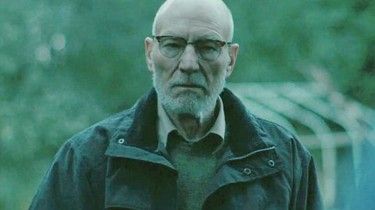
And that’s love, the director tells us — and that is the end of hate — against a washed out background that altogether mutes the colors of Swastikas & the American flag, the latter of which clearly doesn’t understand the assignment today, would that it could. And when Patrick Stewart’s villainous Darcy finally crumbles to the grassy floor of rural Portland, I want to sing: “Looks like we made it,” whether at the end of a make believe paintball war or a debate of political beliefs, geographical boundaries, and racism.
“‘And then, it’s over,’” Pat says in his college radio interview. “The energy can’t last.”
That punk rock power is momentary, raucous, just like the KKK, energizing for a moment, but the energy can’t last, although we wish the former — punk rock — would outlive the latter of the KKK.
I suppose we shall see.
So — ‘What is my desert island band?’ you might want to know.
Gun to my head? It’s not so much a band but an angel sent from Heaven.
Barry Fucking Manilow.
* * * *
* * * *
Green Room is streaming on Netflix.
W I N T E R
D O C U M E N T A R Y
* * * *
Love, Antosha
90 minutes | d. Drake Doremus | dp. John Gulesarian | s. Drake Doremus & Ben York Jones
* * * *
* * * *
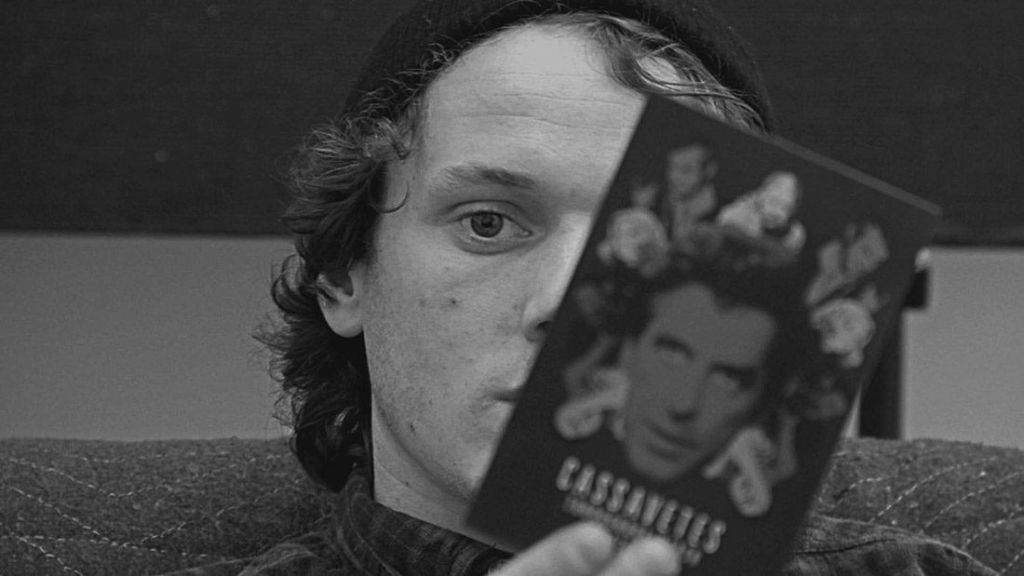
“Cinema should be a tool in which we explore these ideas of the existential nature of our existence as human beings on this Earth,” Anton Yelchin says in an interview featured in co-writer / director Drake Doremus’ documentary film Love, Antosha.
Yelchin’s comment on film came briefly before he began legitimate work on his directorial debut film Travis, so named for the young actor’s love of Martin Scorsese’s protagonist in the 1976 film Taxi Driver.
“And [cinema] should provide questions & speculations, and [cinema] never mythologizes & offer answers,” Yelchin added.
In Yelchin’s observation, there exists a dichotomous relationship that cinema should ask questions, but it should not provide concrete answers. And in that observation, Yelchin makes cinema sound so easy.
I would have to imagine in the wake of Anton Yelchin’s untimely & unfortunate death, many people were looking for answers that Yelchin suggested cinema shouldn’t provide. I’ve spent the last two weeks with Anton Yelchin, watching his movies & writing about them. In fact, I’ve rewatched a number of them in that time. I’ve seen two or more of his films more in two weeks than people that I know have seen in their lifetime. And I’ve been writing. And rewriting. And deleting. And writing. And editing. And abandoning some of my initial ideas altogether & discovering new ideas along the way, all in service to this project that you see before you.
That’s a lot of Anton in two weeks.
I’m jealous of any single person who had the pleasure of spending a day with Anton Yelchin, from what I’ve gathered from Love, Antosha, which chronicles the brilliant but abbreviated life of Anton Yelchin, from his young life with his adoring parents to his precocious childhood, reciting Hamlet’s ‘To be or not to be’ soliloquy at such a young age (and appearing to fully understand the weight of the bard’s words!) to his first film A Man Is Mostly Water (2000) to his death in 2016.
There’s not much that I want – nor need – to write about Love, Antosha, this intimate diary of Yelchin’s brief life. As a remembrance, the film hits the most important & moving beats: those home movie declarations by the child Anton that you’re about to see something really, really astounding (and you will) & those testimonials by those personally or professionally close to him, reminiscing on the impact that Anton Yelchin had on their lives (and he did).
And yet, those words – personally & professionally – are a misuse of the words in this context at best, a falsehood in this context at best.
Because – according to Love, Antosha – Yelchin’s life was always a matter of fate. Mortally diagnosed with cystic fibrosis, Yelchin appears to have lived his life as one conscious that he would leave it. (In one scene of his 2011 film Like Crazy, Yelchin & actor Felicity Jones visit a graveyard, and the scene – like much of the movie – was improvised, and Yelchin exposed his young, mortal life bare when his character Jacob becomes uncomfortable walking among the headstones of the dead, Yelchin perhaps aware of his future that lies in wait.)
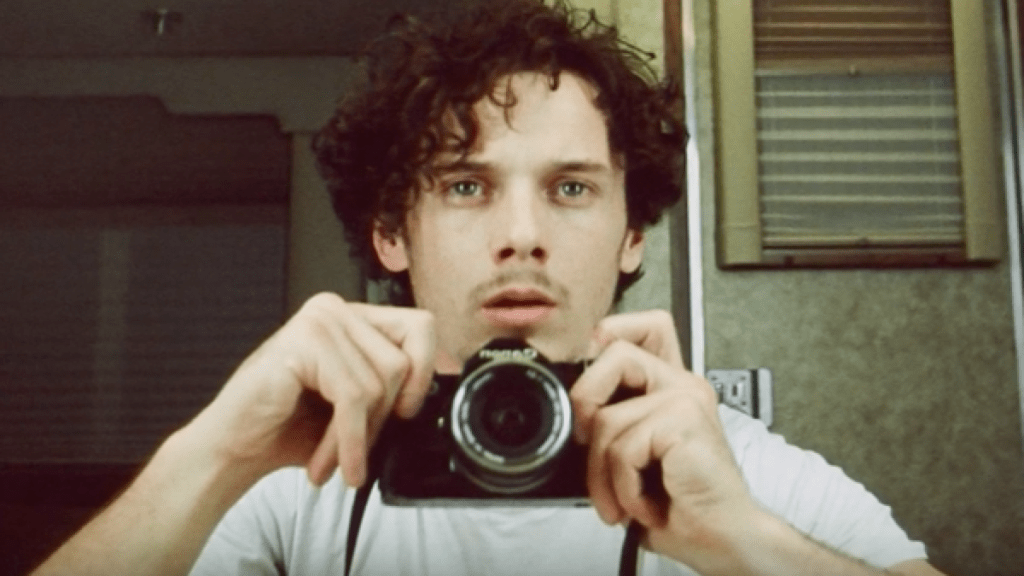
Embrace Yelchin’s filmography and Love, Antosha — the latter of which can be viewed as a restful conclusion or a celebratory coda — and it sometimes appears as if every role that Yelchin played was meant to serve as a substantive chapter in his life story.
The young space cadet tasked with proving that he possessed talent.
The young lover tasked with saving a romance on the verge of death.
The young street criminal tasked with having a real effect on the lives of others.
The philosophical musician who must finally act – not just observe – to save his own life.
These are only a handful of roles played by a young artist who was gone too soon, his audience now tasked with the duty to imagine what heights may have waited for him, what successes remained in his life.
It’s heartbreaking, then, that Yelchin’s brief life – like the cinema that Yelchin sought to create, that Yelchin embodied in his work – provides those questions, those speculations …
… And never offers the answers.
I suppose it’s never that easy.
* * * *
* * * *
Love, Antosha is streaming on Tubi.
Chris Kaine is the most amateur film essayist whom you may ever imagine. He earnestly contends that he was named after the actor Chris Sarandon, because he was either conceived while his parents watched Fright Night (1985) in his paternal grandparents’ basement, or because of their love for The Princess Bride (1987), which stars a character by the name of “Humperdink,” which is pretty funny, if you think about it.


Leave a comment