email: latenightpickwick@gmail.com
By definition, understanding the world – learning – shouldn’t be easy. It should be a challenge, a thing that both endorses what we know & yet never fully supports what we once knew as fact, never a matter of black & white.
And I took an African-American literature course in college, not the undergraduate course of literary works taught by graduate students working on their dissertations in their free time but the privileged playground of erudite professors who could turn Hansberry’s A Raisin in the Sun into something that required more than even a high school education. In that class, I read some really good books – Hurston’s Their Eyes Were Watching God, Morrison’s Jazz, Wright’s Native Son, and Ellison’s Invisible Man, and more – including the poetry of Cullen, Hughes, Wheatley, and Brooks.
I hadn’t graduated from a world that had already introduced me to thoughts like these. I know that I didn’t know then all that I needed to know upon African-American culture, but – at that age – I felt like I knew all that I needed to know. But I know now that I didn’t know the first thing about black art. And I know now that I still don’t know everything regarding black art.
But I know a thing or two. Now, I know at least nine things, and those things are what the Pickwick Drive-In is showcasing in recognition of Juneteenth – and building a nine-film watchlist of black films was no easy task for the Pickwick.
There’s a gray area when you want to serve nine different genres with a single film apiece, sometimes absolutely foreign to you.
And cinematic watchlists of this kind have traditionally been populated with films like Driving Miss Daisy (1989), 12 Years a Slave (2013), and Hidden Figures (2016) — motion pictures of slavery, historical achievement, or reminders that undervalued people can rise above the judgments that once momentarily defined them, reminders that all people can achieve the American dream.
This year, the Pickwick simply intends to celebrate blackness by highlighting films that recognize writers, directors, actors, and more, that illustrate blackness in everyday & extraordinary lives, that run the gamut of nine different genres, arriving finally at eight films that give viewers a choice as to how they will celebrate film & Juneteenth this year. These aren’t films to recognize the rich pageantry of African-American history in moviemaking.
Some of the films showcased here are familiar to the Pickwick – some of the films showcased here represent first-time watches for the Pickwick. The responses – whether studied or spontaneous – are authentic, and – ultimately – the Pickwick hopes to provide its readers with a balanced menu of films, so as to provide its readers with a freedom to choose that some citizens once never had.
Because it’s never been as simple as a matter of black or white.
Cooley High
C O M E D Y
1975 | PG | 107 minutes | d. Michael Schultz | dp. Paul vom Brack | s. Eric Monte
* * * *
You will enjoy this movie if you love Chicago, good music, high school, and urban life.
* * * *
This was a first-time screening for the Pickwick Drive-In.
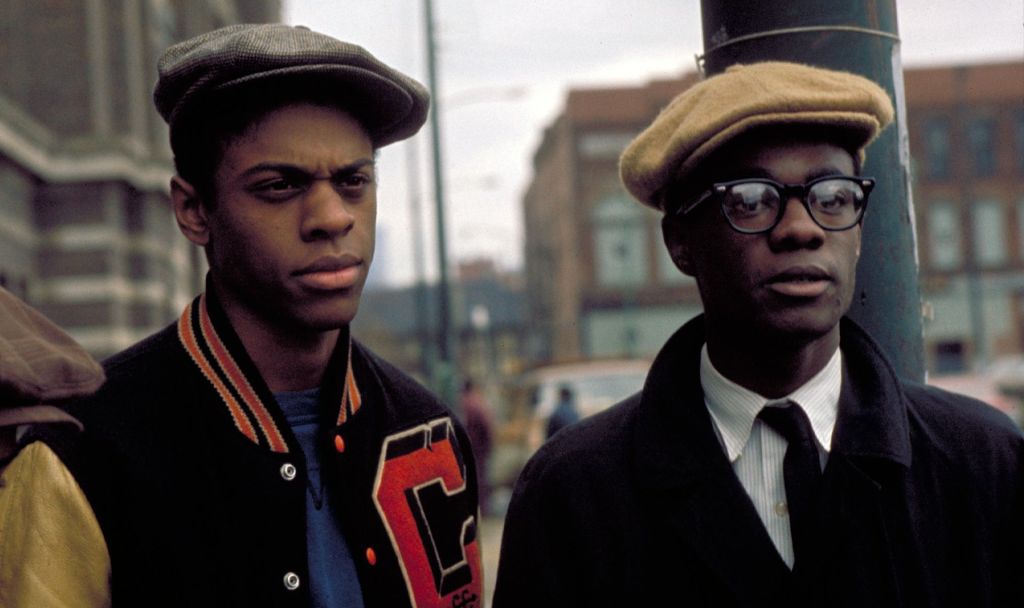
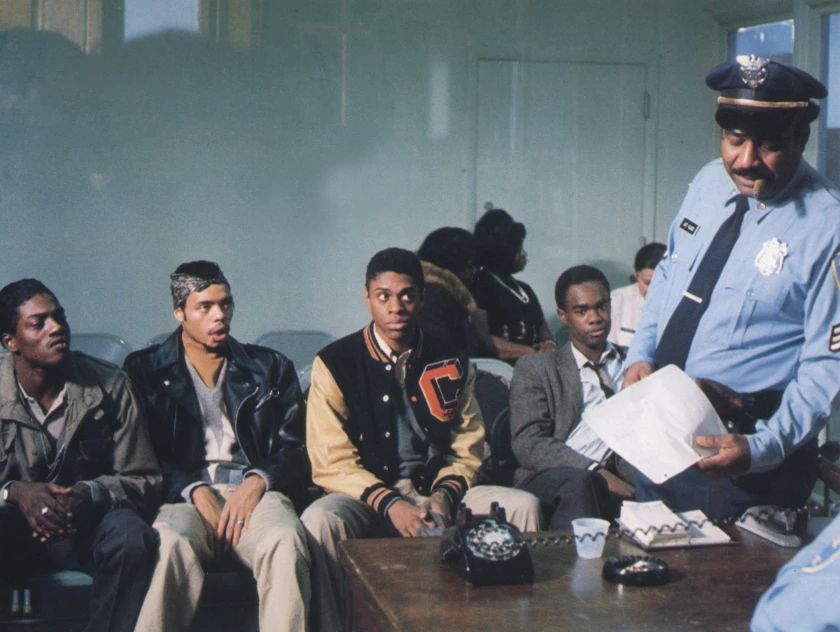
In this dramedy propelled by Motown music, two Chicago teens – Leroy “Preach” Jackson (Glynn Turman) & Richard “Cochise” Morris (Lawrence Hilton Jacobs) – both of them preparing for high school graduation in 1964 and anticipating their dream-laden futures, will discover a balance between the best of days of their lives and the bittersweet realities of their urban surroundings.
Despite my age, I was raised by 1980s teen movies, because my mom & uncle were raised by 1980s teen movies. They wanted to share a certain vocabulary with me – through movies & music & novels & comic books & more – so that they could talk with me about what I was seeing & hearing & digesting.
It wasn’t a terrible way to grow up.
They knew I would follow my own interests when I finally discovered them – in fact, they expected me to follow them – but for just a while, the three of us could share a common language.
That was a part of my growing up.
Ferris Bueller, then, was my Holden Caulfield, my Margaret. John Hughes was the first director whom I knew by name. And the Breakfast Club was the first club that I ever wanted to join. There would be time enough for the dark satire of Heathers (1988), the heartbreaking nature of growing up in Dead Poets Society (1989), and the social commentary of free speech & high school life in Pump Up the Volume (1990) later.
If only there had been an awkward yet necessary moment of motion picture puberty that could transplant me from one era of teen films to the next era of teen films.
Because — by & large — the teen films of the 1980s were feel-good adventures, both lacking circumstantial consequence & lacking life-changing dramatic twists in the second or third act.
And that’s what makes Cooley High such a critical pit stop on ones journey through this formative genre.
Hitting the screen a decade before so many of the 1980s feel-goods, the motion picture is only dated by the phenomenal Motown soundtrack and the atmosphere itself. The movie is as much from 1975 as it was of 1975. And yet that’s only part of its charm, because the film could have been a perfect re-release in theaters in 1985.
That year, The Cosby Show (1984 – 1992) was enjoying stardom on Thursday evenings on televisions across the nation. The radio waves were ruled by black artists that were starting their careers or solidifying them. Prince’s “Raspberry Beret” further demonstrated the artist’s stranglehold on pop music, the success of Run DMC’s sophomore album promised that hip-hop was a legitimate art form, Sade’s debut album – which includes the chart-topping “Smooth Operator” – announced the band’s longevity in music, and “You Give Good Love” introduced Whitney Houston to the world as the first single released from her eponymous debut album. Meanwhile, Eddie Murphy was staking a claim at the box office, fresh off his success with Trading Places (1983) & Beverly Hills Cop (1984), then preparing for The Golden Child (1986) and a Beverly Hills sequel (1987).
An era of black pop culture had descended upon America once more.
But a re-release of Cooley High in ‘85 would have positioned the motion picture in the perfect place for teen movies – somewhere between the titular recklessness of Risky Business (1983) & the tragic realism of Stand by Me (1986). Both films would utilize era-appropriate music to great effect, but Cooley High would serve as the natural bridge between two chapters in teen films, a link between the immortal youthfulness of those singular films and the mortal & resultant certainty that many of those first films never addressed.
And perhaps that bridge could become a part of every fan of a film genre characterized by one crazy summer or 16 candles, like a natural part of growing up.
* * * *
* * * *
Cooley High is streaming on Tubi.
Enemy of the State
A C T I O N
1998 | R | 140 minutes | d. Tony Scott | dp. Dan Mindel | s. David Marconi
* * * *
You will enjoy this movie if you love blended fruity beverages, dogs, governmental surveillance, and women’s lingerie.
* * * *
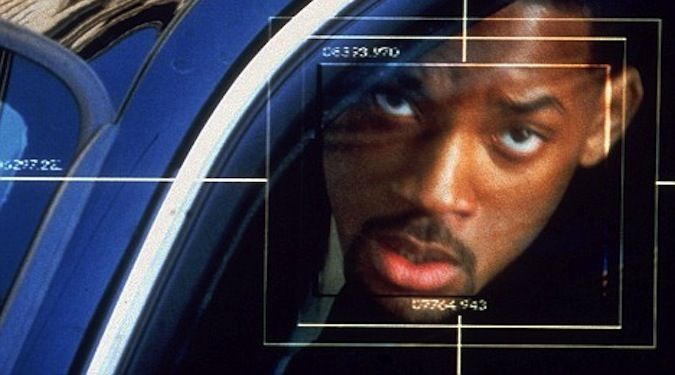
Robert Dean (Will Smith) is a successful labor lawyer, fighting for justice for those abused by union regulations & more. But when a video of the murder of a United States senator (James Robards) falls into Dean’s hands, his credit cards are canceled, his bank account is closed, his home is bugged, and his entire life appears under the microscope of an unscrupulous agency director (John Voight) who will stop at nothing to retrieve any evidence of that senator’s murder.
It’s a crime that threatens America’s national security, a transgression that will make Dean not only the target of the nation’s government but also the target of a powerful mob boss (Tom Sizemore), unless former CIA operative “Brill” (Gene Hackman) can help him survive.
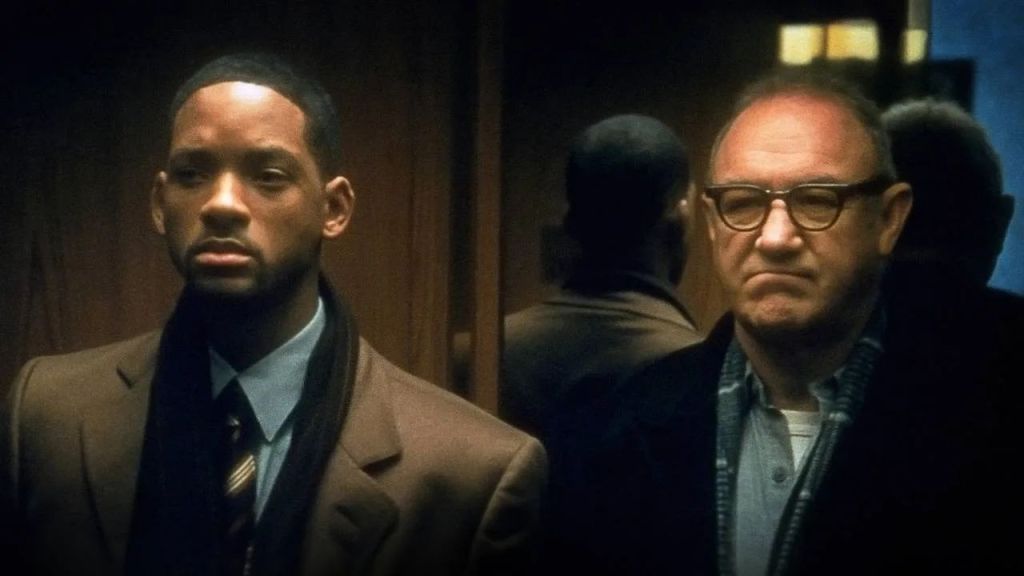
“You’re either incredibly smart or incredibly stupid,” Brill tells Dean just before the straight-laced labor lawyer walks into a mafia den with armed government agents. He’s walking into a Mexican stand-off, and there are no truer words than those that should be carved onto his headstone.
And I was a little too young then to understand the urgency of 9/11’s World Trade Center attack and the governmental fallout that occurred as a result of it, but Enemy of the State percolates with a need to address where the nation’s intelligence agencies could go, if America allows it to. Released just a few years before 9/11, Enemy of the State seems so prescient now – or it should, because the film hinted then at the government’s blind devotion to the Patriot Act, as well as its utter disregard of the Constitution. But, here, director Tony Scott’s motion picture is populated with an impressive cast and an abrasively compelling partnership between Smith & Hackman that this motion picture is pure theater. The movie tells a tale of how personal life could be affected by unrestrained watchmen, but what Enemy of the State is truly concerned with is telling a taut, action-packed story of a street-level citizen taking on the would-be (and yet very real) authoritarianism of the United States. Despite the white-knuckled scenes that play out in city sewers and on the sides of high-rise hotels, there’s something truly humanistic to the potential horror of a world like this film.
Maybe I’m incredibly stupid, in thinking so.
Or maybe – incredibly smart.
* * * *
* * * *
Enemy of the State is streaming on AMC+.
Fallen
T H R I L L E R
1998 | R | 124 minutes | d. Gregory Hoblit | dp. Newton Thomas Sigel | s. Nicholas Kazan
* * * *
You will enjoy this movie if you love the eternal battle between good & evil, the human touch, and the Rolling Stones. Barring that, you’ll enjoy this film if you’ve managed to quit smoking cigarettes.
* * * *
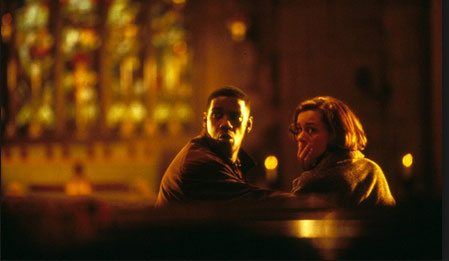
Detective John Hobbes (Denzel Washington) is sitting on top of the world tonight. He’s an accomplished investigator with eight convictions under his belt. And he’s just visited convicted killer Edgar Reese (Elias Kotias), whom Hobbes was instrumental in putting on Death Row – moments before Reese’s execution.
But a string of copycat murders suggests that something sinister is moving through the homes & streets & alleyways – and even bodies – of Philadelphia: a demonic presence that can leap from human body to human body simply through touch, allowing the entity to control the corporeal form. Now Hobbes – apparently immune to possession – is now in great danger, as the entity moves through Hobbes’ city, Hobbes’ precinct, and Hobbes’ personal life in order to exact its revenge on the man who dealt it Earthly justice.
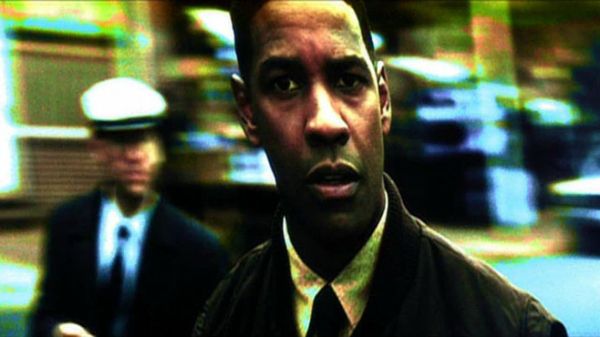
“Time is on my side,” the Rolling Stones’ chorus of the band’s haunting 1964 single echoes throughout the supernatural thriller Fallen. Hearing it over & over again over the course of the picture, an omen that Hobbes’ otherworldly nemesis is so very close – well, it got me thinking about time. About nature. About mortality & one’s own life span. Even about what might come after death.
Which then reminded me that I was once told that there’s a tremendous difference between being a religious person & being a spiritual person. One can have religion – Catholic, Methodist, Muslim – but not really be spiritual in thought or behavior. Meanwhile, one doesn’t need to have religion to be a spiritual person – one doesn’t have to subscribe to a particular religious ideology in order to demonstrate the tenets of spirituality: a belief in the unifying nature of the world, kindness, generosity, and more.
I admit that I belong to one of these ideological camps. I hope that my explanation will be as conclusive as the binary definitions that I embrace today.
Which brings me back to Fallen, which demonstrates the same sort of duality as religion & spirituality were defined to me. Thanks in no small part to the heady conversations that I’ve had with my mom & my uncle, I’ve always been intrigued by films that flirt with the subject of religion & morality ambiguity. Some religious films only cater to the fandom. Others seek to proselytize.
But movies like The Last Temptation of Christ (1988) explored Christ’s inner turmoil in executing his role as the Son of Jesus, while Fincher’s Se7en (1995) married Biblical imagery with the grit of modern-day noir to tell a story about the thin line that separates well-meaning people from the sadistic. Comic book adaptations like Dark Horse’s Hellboy (2004) & (then) Vertigo Comics’ Constantine (2005) tried to turn the spiritual anti-hero into the savior of humanity. And both A24’s First Reformed (2017) & Heretic (2024) offered compelling observations about the mind-boggling & life-changing power of religious belief. In their ambiguous conclusions, neither film offers the viewer a definitive judgment of religion’s place in the contemporary world.
And that’s what I’ve enjoyed about all of these motion pictures, including Fallen. Films like these give audiences something to chew on: blind faith or true belief, like Job was asked to re-examine his own faith in the face of the worst days of his life.
I write: Let’s have a few more films over time that ask us to truly address – even challenge – our dogmas. Per the films highlighted here, it appears that audiences can expect more & more complex confrontations with what the moviegoer believes. And I, for one, can’t wait: to consider & re-consider & make up my mind & then make up my mind again.
Maybe free will allows me to do so.
Maybe it’s all part of God’s plan.
Maybe time is on my side.
* * * *
* * * *
Fallen is available to rent or own on a number of streaming services.
Love & Basketball
R O M A N C E
2000 | PG-13 | 124 minutes | d. Gina Prince-Bythewood | dp. Reynaldo Villalobos | s. Gina Prince-Bythewood
* * * *
You will enjoy this movie if you love the Los Angeles Lakers, one-on-one roundball, the University of Southern California, and the WNBA.
* * * *
This was a first-time screening for the Pickwick Drive-In.
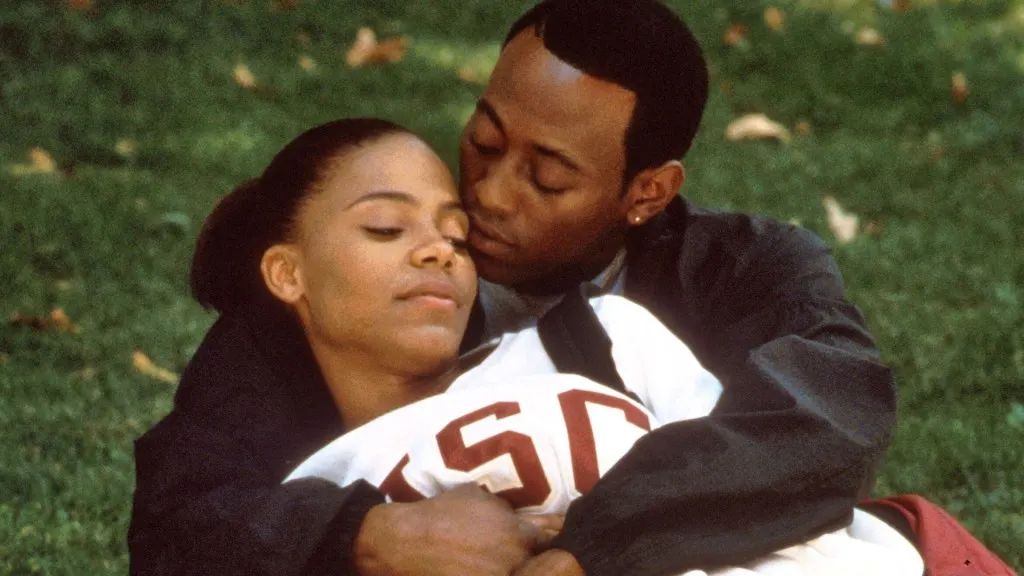
Love & Basketball — like the game of basketball — spans four quarters: childhood, young adulthood, adulthood, and the rest of it. Two childhood friends — Monica (Sanaa Lathan) & Quincy (Omar Epps) — share a profound love of basketball with one another, and as they grow & pursue their individual futures in the sport, they also develop a complex, multi-part romance together.
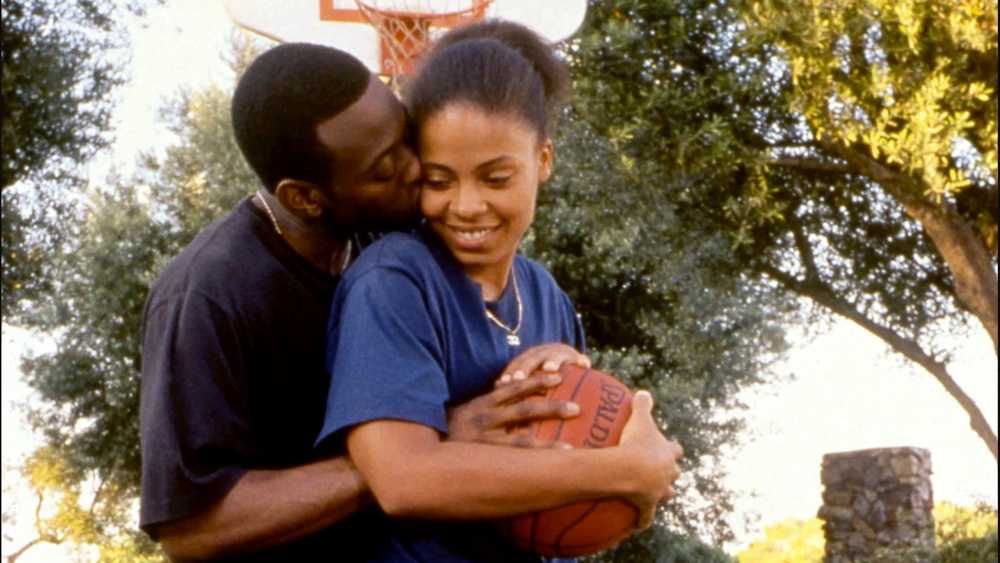
True romance has always eluded me, on & off the big screen. My mother & my uncle showed me romance films through the most pervasive & popular 1980s movies, for better or for worse.
Mostly for the worse.
So when I saw Love & Basketball, my perception of romantic movies changed, mostly based upon the film’s drop date. Released in 2000, writer-director Prince-Bythewood’s motion picture about – well – love & basketball was not what I’d come to know in the 80s or 90s. It wasn’t Splash (1984) – the story of a produce store owner falling in love with a mermaid. It wasn’t Say Anything (1988) – the story of an eternal optimist falling head over heels for the school’s valedictorian. It wasn’t Edward Scissorhands (1990) – the story of a robotic man with scissor-like fingers, falling in love with a suburban teen. It wasn’t even She’s All That (1999) – the story of a hotshot high school cool kid who takes on the challenge of turning the most awkward girl in school into the queen of the prom. These couples couldn’t be more dissimilar, a greater cautionary tale of love.
But Love & Basketball demonstrates that two people with so much in common – like a love of roundball – can still come to odds when it comes to dealing with one another, and that’s what makes the motion picture so compelling. As possessed as they are with a common goal, one would think that their romance is assured – but it’s not.
Throughout the film, there are flagrant fouls & technical fouls & crimes of the heart & turnovers that you never saw coming, but the movie intends to bring everything together before the end of the fourth quarter, so that audiences may see that winning (and losing) isn’t everything.
Because all’s fair in love & basketball.
* * * *
* * * *
Love & Basketball is streaming on Tubi.
The Girl With All the Gifts
H O R R O R
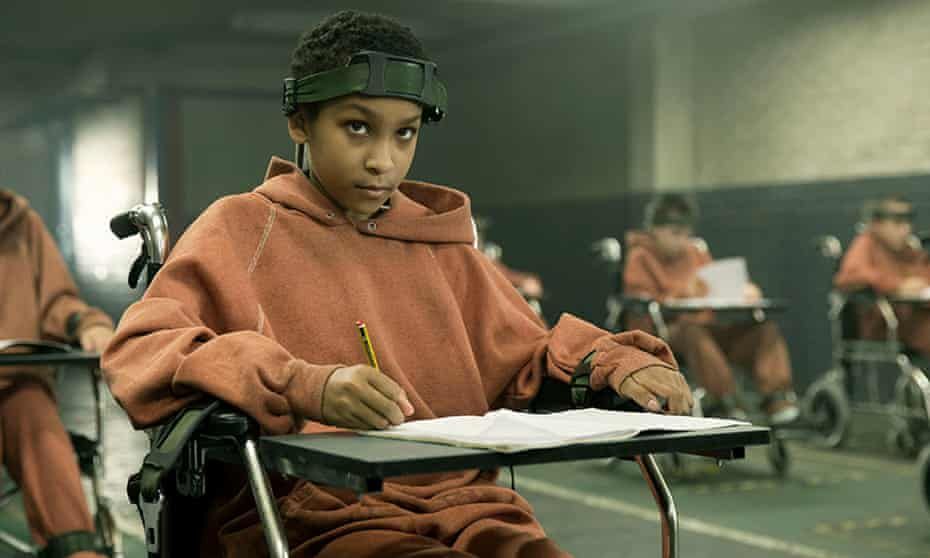
2016 | R | 111 minutes | d. Colm McCarthy | dp. Simon Dennis | s. Mike Carey
* * * *
You will enjoy this movie if you love global pandemics, medical research, militarized occupations, and zombie films.
* * * *
This was a first-time screening for the Pickwick Drive-In.
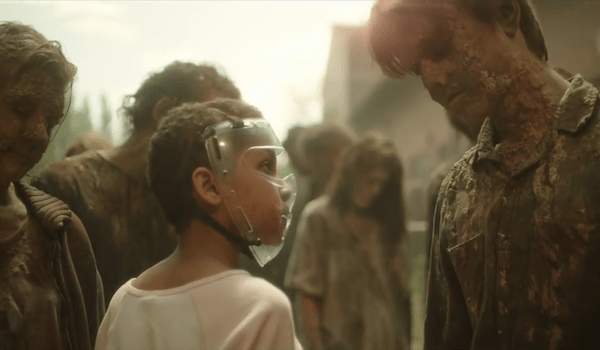
This British post-apocalyptic movie follows the survivors of a fungal infection that generally turns humans into “hungries”: flesh-eating zombies who have prevailed in one way or another in countless films for decades.
One group of survivors — a teacher (Gemma Artherton) who instructs a small group of zombie-hybrids, a scientist (Glenn Close) who hopes to use a single hybrid to discover a cure for the plague, and an assemblage of soldiers — makes a unique journey with a hybrid child named Melanie (Sennia Nanua), a unique young girl who may possess a cure for the infection.
This was a first-time screening for the Pickwick Drive-In.
If I’ve read the book, I’ll never see the film adaptation, mostly because I’ve never read a book & seen its film adaptation & enjoyed the movie more.
I saw Life of Pi (2012) – and I really loved it. I read the book (2001) – and I loved the novel more than the movie. But I still love the movie so much. And I saw The Lord of the Rings trilogy in its extended cuts & loved them. I didn’t have the patience to watch the theatrical cuts, abbreviated & incomplete as they were. So – in a moment where I tried to embrace reading over movie-watching – I tackled Tolkien’s encyclopedic novels, but Jackson did such a brilliant job in adapting the first 30 pages of The Fellowship that I abandoned the venture.
I’d rather be watching movies.
And I really enjoyed The Girl With All the Gifts – which I would discover was also an adaptation. I’d further discovered that both the book & its adapted screenplay were written by Mike Carey, whom I’d been introduced to through his work on Vertigo Comics’ Hellblazer and Lucifer. And it was the nuance of both media that made me appreciate this particular iteration of zombie culture all the more.
In Carey’s novel, Miss Justineau – the educator of “hungry” hybrids – was black-skinned; the “hungry” hybrid Melanie was white-skinned. In his adapted screenplay, Justineau is white-skinned & Melanie black-skinned. Both texts provide different opportunities for analysis. Both texts raise questions of racial differences. Both texts raise questions of hierarchy in some way.
In the end, both the novel & the motion picture ask the audience to understand that because something looks human, it is human.
That knowledge remains contrary to the ideologies of the two texts’ antagonists, which makes The Girl With All the Gifts a unique addition to this watchlist.
The film exposes the exploitation of the lifeblood of a population while simultaneously seeing that population as human, demonstrating that the far-flung future obliterated by a virus doesn’t inspire a human response much different from today.
* * * *
The Girl With All the Gifts is streaming on Fandango At Home.
Spider-Man: Into the Spider-Verse
A N I M A T E D
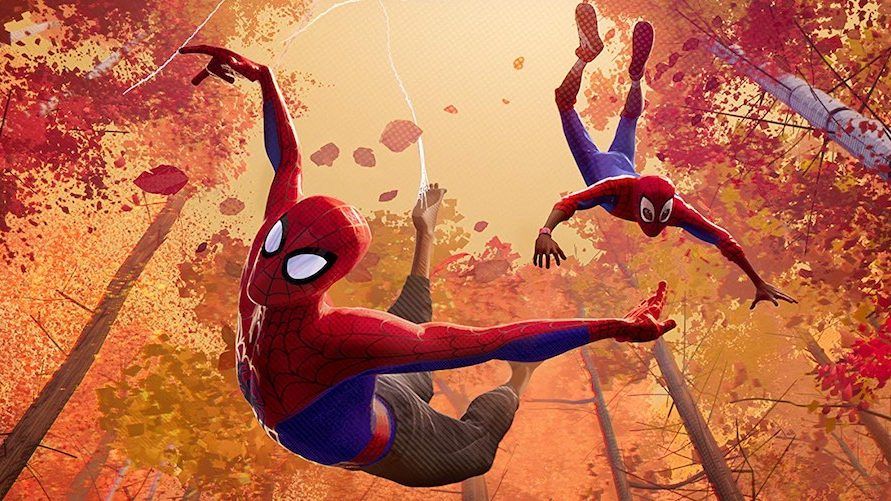
2018 | PG | 116 minutes | d. Bob Persichetti & Peter Ramsay, et al. | ed. Robert Fisher, Jr. | s. Phil Lord & Ron Rodman
* * * *
You will enjoy this movie if you love friendly neighborhood superheroes, graphitti, irradiated spiders, and various versions of yourself in adjacent dimensions.
* * * *
When multi-racial NYC teen Miles Morales (voiced by Shameik Moore) is bitten by an irradiated spider, he assumes all of the abilities that fans generally associate with Peter Parker as Spider-Man. But when the crimelord Kingpin (voiced by Liev Schreiber) — intent on abducting versions of his late wife & son from alternate realities — opens a transdimensional rift in multiple universes, Miles will team up with a new handful of Spider-People (voiced by Nicolas Cage, Kimiko Glen, Jake Johnson, John Mulaney, Gwen Stacy, and Hailee Steinfield) in order to return the world to its working order.
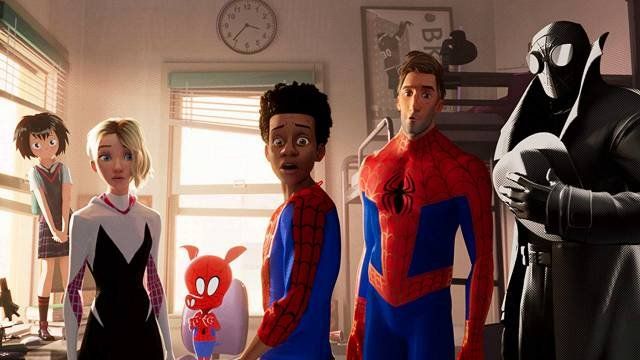
“I never thought I’d be able to do any of this stuff,” Miles Morales tells the audience in a voiceover, as this particular film concludes.
* * * *
Spoiler alert: This means that Morales survives the events of Into the Spider-Verse — do not be so certain that he survives the events of Across the Spider-Verse, if you haven’t seen it already.
* * * *
“But I can,” Morales says of the responsibility of donning the Spider-Man mask. “Anyone can wear the mask. You can wear the mask. If you didn’t know that before, I hope you do now.”
There is not a more heartening statement than this one in the Marvel cinematic universe, the assertion that all of us are capable of being heroes. And there is not a more heart-stopping & heart-warming Marvel movie than this one, a motion picture that — on its surface — doesn’t star humans at all but voice actors & yet remains the most organic of Marvel’s films. What Into the Spider-Verse does so well is pass the torch from Chapter One Peter Parker to the next generation of Spider … Persons. Audiences are now ready for a parade of Spider-Man projects featuring new heroes, new personas, protagonists that have more in common with us than the Stan Lee-centric underdog of the 1960s.
Spider-Man: Into the Spider-Verse doesn’t erase Peter Parker’s role from the Marvel Universe as we know it; rather, it creates opportunities for Miles Morales to become the next generation of the Spider-Hero, even if it isn’t in the world with which we have such a Spider-familiarity.
Few other franchises have pivoted so successfully, so it’s heartening to see that NYC will have a friendly neighborhood web-slinger — especially even if he doesn’t look under the mask like the comic book creators that originally brought him to life.
* * * *
* * * *
Spider-Man: Into the Spider-Verse is streaming on Disney+.
John Lewis: Good Trouble
D O C U M E N T A R Y
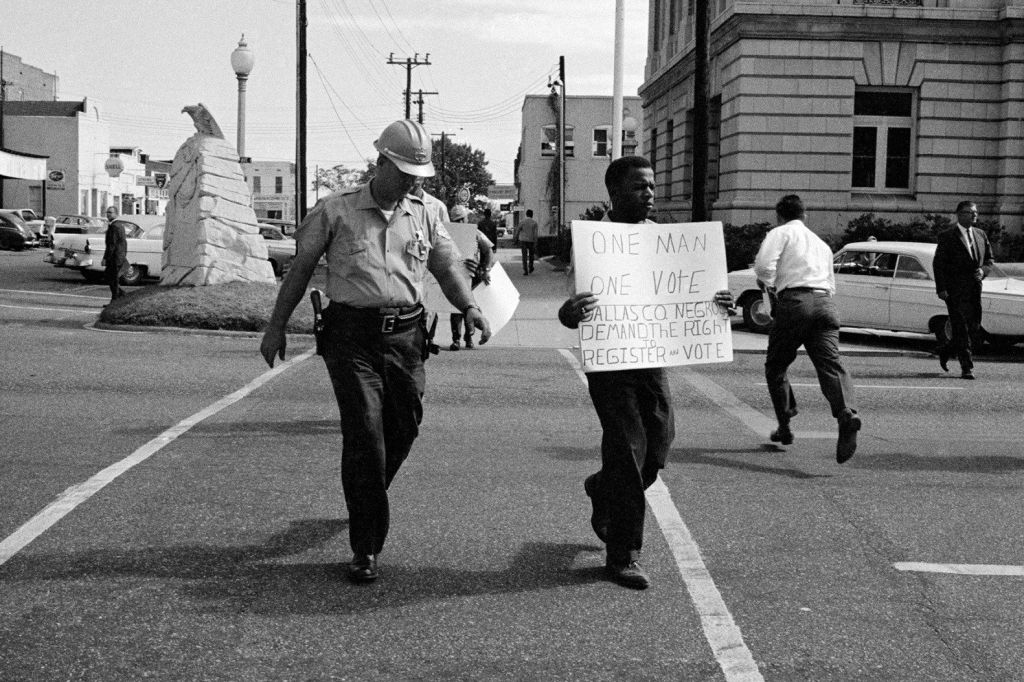
2020 | PG | 96 minutes | d. Dawn Porter | dp. Tony Hardmon & Keith Walker, et al.
* * * *
You will enjoy this movie if you love civil rights, democracy, peaceful protest, and progress.
* * * *
This was a first-time screening for the Pickwick Drive-In.
The film was released on June 19th – Juneteenth – in 2020. And it debuted in Tulsa, OK, a city famously known for “Black Wall Street,” the Greenwood District of Tulsa – the most affluent area of African-American life in the early 20th Century & the site of a 1921 massacre that destroyed more than 35 city blocks & took the lives of more than 100 black citizens. Needless to say, the debut was likely not an easy watch for those familiar with the tragedy. John Lewis: Good Trouble highlights the life of Civil Rights activist & United States congressman John Lewis, who – over the course of his lifetime – fought for voting rights, gun control, health care reform, and more for more than 60 years.
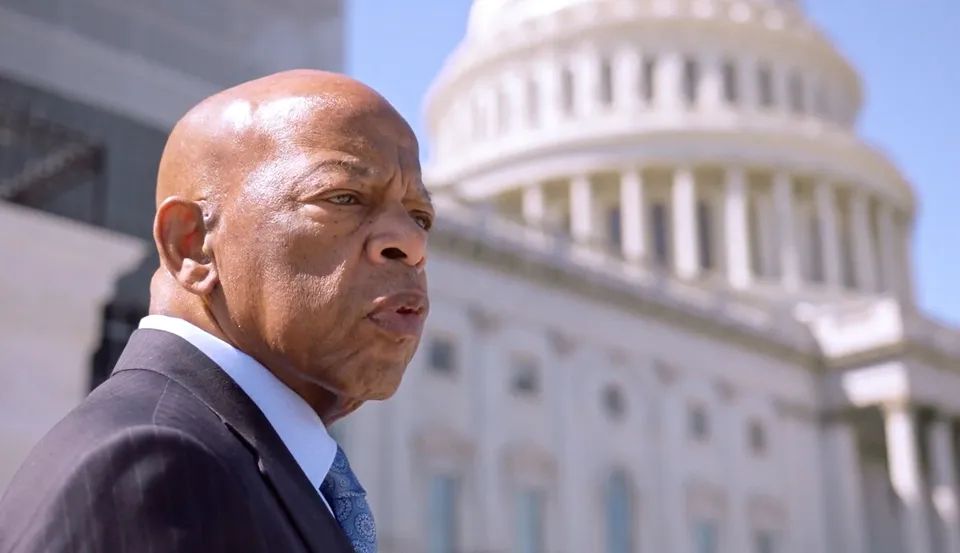
Yes, I’ve met people & had unfortunate conversations with people who both claimed to love movies but also refused to call a documentary a film, let alone a movie, if that designation resonates with you. According to these film fans, documentaries aren’t creative – they don’t require a screenwriter to create an unbelievable story. Documentaries simply record events as they happen, reported on those events after they’d happened. Documentaries don’t star talented actors interpreting a role or a plot, creating a persona that changes lives or changes the world – documentaries feature real people who simply did something important, perhaps some others commenting on those real people. And the subjects of documentaries don’t excite audiences, don’t attract crowds, don’t make an impact on the weekend.
Documentaries, finally, aren’t the same work of art as real movies.
And let’s imagine that in a moment of ignorance, I agreed with these criteria.
Fine. A documentary is not a work of art.
But see John Lewis: Good Trouble – a documentary – and you’ll likely reach the conclusion that I did, even if documentaries aren’t art.
John Lewis’ life is a work of art.
The film captures Lewis’ proximity to nation-shaking moments in American history, like the Nashville Sit-Ins in 1960 – which he led – to desegregate downtown lunch counters in public diners. He was arrested multiple times due to his participation. Lewis was also one of the original Freedom Riders of 1961, challenging segregated interstate transportation in the South. He was met with violence & imprisonment for doing so. Most recently, Lewis has fought for voting rights, where certain citizens have been met with voter suppression in an efforot to tip election scales in favor of a particular political party.
And he did it all through nonviolent protest: a form of protest that one would hope would be as newsworthy today as the violent protests that dominate news media today.
But enough of a narration of John Lewis: Good Trouble – and Lewis famously calling out to listeners: “When you see something that is not right, not fair, not just, you have a moral obligation to say something. Do something! Get in trouble — good trouble — necessary trouble.”
Let’s instead revisit those three criteria from earlier, those details that prohibit documentaries from entering into discussions about being a working of art:
1. John Lewis’ life is an unbelievable story;
2. John Lewis’ life changed so many lives, even the world;
3. And John Lewis’ life excited a number of people, the very people who John Lewis fought for. And his life excited — or perhaps infuriated — the people who John Lewis was fighting against.
Only one of John Lewis’ historic moments in the 20th Century – documented in detail in Good Trouble – was when he joined Reverend Martin Luther King, Jr., and hundreds of others attempted to peacefully march from Selma to Montgomery, Alabama. They marched for voting rights that day and were brutally assaulted by state troopers & deputies.
That day was March 7th, 1965.
It was a Sunday.
Clearly, John Lewis’ life attracted crowds. And John Lewis’ life had an impact on the weekend.
For now, let’s not give oxygen to the debate regarding documentary films as real film.
John Lewis: Good Trouble & the man it chronicles are both works of art.
That’s good enough for me.
* * * *
John Lewis: Good Trouble is streaming on Hulu.
One Night in Miami …
D R A M A
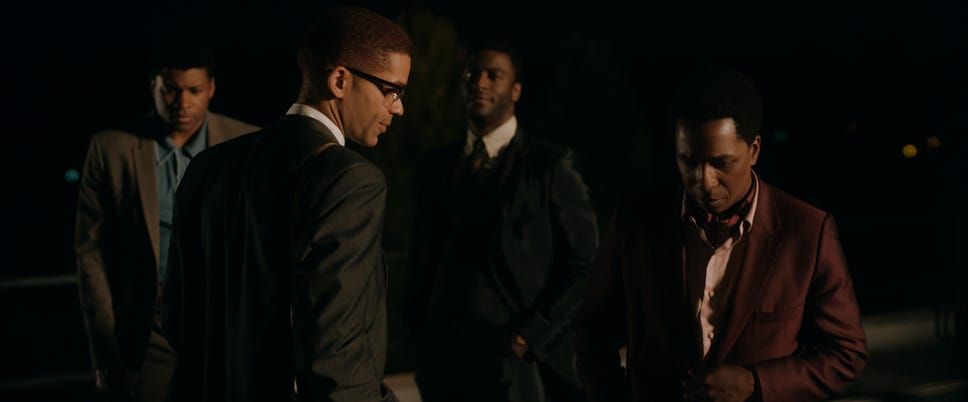
2020 | R | 114 minutes | d. Reginald King | dp. Tami Reiker | s. Kemp Powers
* * * *
You will enjoy this movie if you love evenings out with friends, hard truths, Miami, and philosophical conversations of conscience.
* * * *
This was a first-time screening for the Pickwick Drive-In.
It’s February 25th, 1964, in Miami, Florida, and it’s a night like no other … because it’s an imagining of what may have happened if four black icons — NFL legend Jim Brown (Aldis Hodge), boxing champion Cassius Clay (Eli Goree), soul singer Sam Cooke (Leslie Odom, Jr.), and Malcolm X (Kingsley Ben-Adir) – had spent an evening together & had a conversation with one another about their lives, their successes, their true identities, and their responsibilities to their people in the currents of the Civil Rights Movement that were engulfing America at that time.
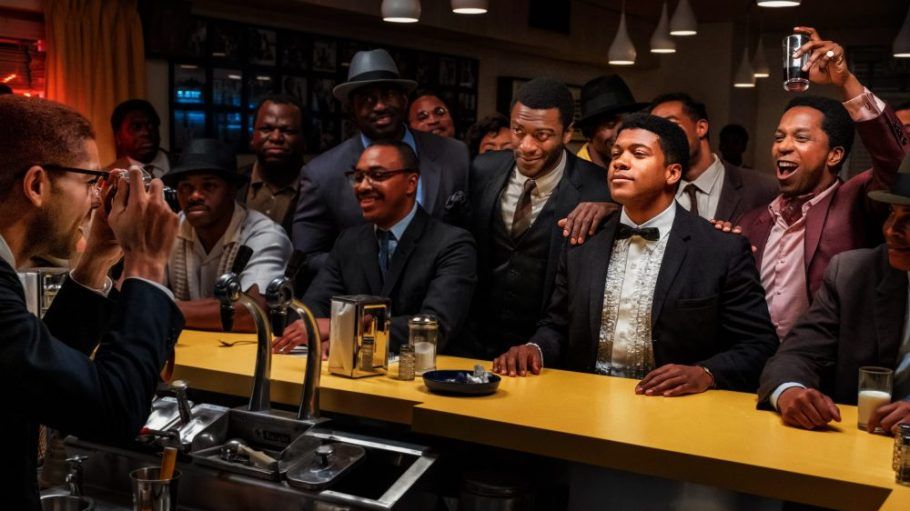
There’s a duality to One Night in Miami … that I simply can’t shake, like one of the worst moments of your life, even like the night upon which you’d realized that you discovered success.
Co-writer / director Regina King elects to begin the film at a moment in the lives of each of our four black heroes – Jim Brown, Cassius Clay, Sam Cooke, and Malcolm X – on a sour note: a moment of defeat for each of them. The movie seamlessly transports the audience to that one night in Miami which gives its name to the film’s title, finding the four after they’ve discovered so much success, after they’ve eclipsed those singular moments of perceived failure and trepidation.
Suddenly, the motion picture is about their lives of promise & success set against the backdrop of the 1960s, when black Americans were not enjoying similar promise & success.
Yet despite the “fictional” nature of the film, there’s a prescient understanding of the world today that One Night in Miami … predicts at this time, tomorrow, and every night, for a long, long time, and I dig that clairvoyance, and not just because that crystal globe got it right.
That makes the answer to any question a matter of dichotomy. It’s what attracts me to the film – like discussions of certainty versus skepticism (because they’re obviously different) & discussions of religion versus spirituality (which are so very different).
And sometimes – just sometimes – there are three or four sides to a story – like there are in One Night in Miami …
And sometimes, there are even more – demonstrating that any of these questions are going to require a long night to answer.
And the answer is not a promise – as Sam Cooke crooned — that “change is gonna come” but a promise – as Dylan moaned – that “the answer is blowin’ in the wind.”
And it still is — in Miami, FL — every night in America.
****
One Night in Miami … is streaming on Amazon Prime.
A Quiet Place: Day One
S C I E N C E F I C T I O N
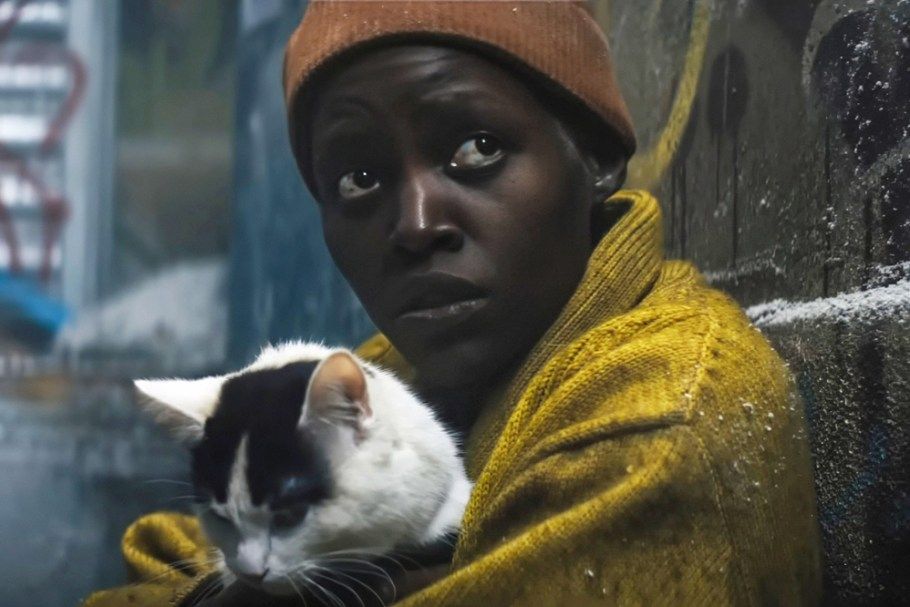
2024 | PG-13 | 99 minutes | d. Michael Sarnoski | dp. Pat Scola | s. Michael Sarnoski & Jon Krasinski
* * * *
You will enjoy this movie if you love cats, field trips, pizza, and remaining quiet at all costs.
* * * *
In the follow-up to the first two films in the franchise, this prequel explores the alien attack on New York City. While on a field trip in the big city, hospice cancer patient Sam (Lupita Nyong’o) & her cat Frodo are waylaid by the invasion of aliens who hunt their prey based upon sound. Disillusioned & dying, Sam refuses to evacuate NYC, preferring instead to seek out her favorite pizza joint as the last act of her abbreviated life — joined by English law student Eric (Joseph Quinn).
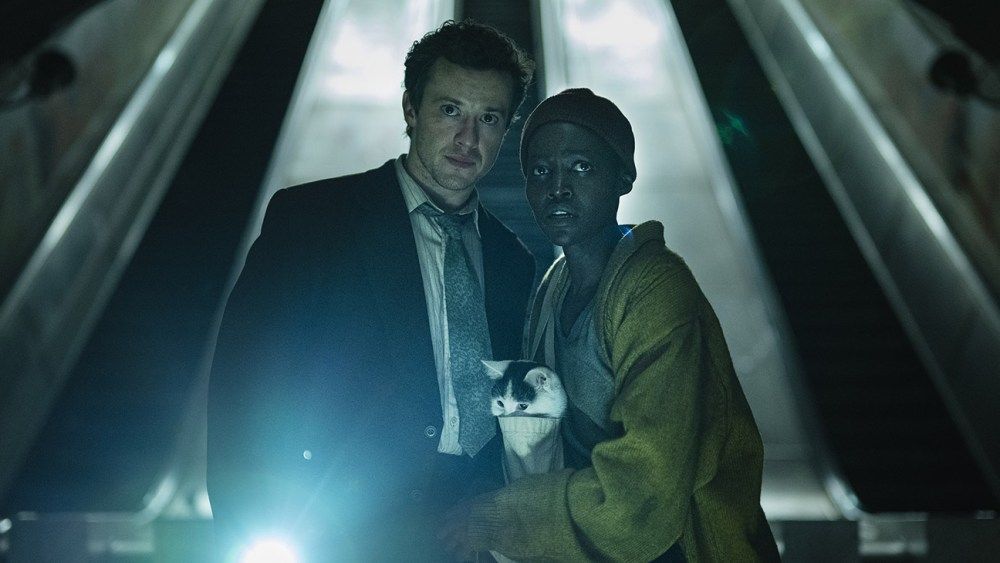
I love quiet places. And I love stories that deliberately play with time. Therefore, I loved A Quiet Place: the film was the perfect marriage of science fiction, horror, and pathos – a thing that I hadn’t seen in genre filmmaking for as long as I can remember – that transported the audience from that heartbreaking railroad bridge moment to the film’s overarching narrative. And I quite enjoyed the film’s sequel as well – picking up some time after the original picture – concluding as it did with the promise of another sequel. There was magic in those first two films – a magic that I hoped would be captured in the motion picture that would round out the trilogy.
So when I saw the display in my local movie theater for Day One, I was justifiably taken aback. I wanted the films to move forward, not look back. I enjoy movies that play with time, but not as Day One intended to do, I thought.
Genre films don’t do sequels well — most films don’t do sequels well. No one really asked for Rambo II, and no one asked for Rocky V. In horror, slashers Michael Myers, Jason Voorhees, and Freddy Krueger all deteriorate after their third film, at most. We never should have returned to Caddyshack without Bill Murray, Rodney Dangerfield, and jokes — at least. And Marvel should have ended with Endgame — that franchise announced its conclusion and yet still stayed long after the guests had filed out.
There are so few exceptions to this rule – only two other franchises come to mind that have managed to remain rather enjoyable, to me. But Day One isn’t so much a prequel as it is the next chapter for Sam (Nyong’o), apparently at the end of her life & somewhat giving up by seeking out one last slice of NYC pizza before cancer inevitably kills her.
And I’m here for Day One. And I’m here for Sam. I’m here for pizza. And I’m here for Frodo too.
Day One is not meant to serve as some explanation of how the world “got here” as so many prequels failingly try to do. I – for one – don’t need to see Joker’s origin story, nor do I need to see how Maleficent became the diabolical mistress that terrorized Aurora. Day One is a picture about moving forward – when the end appears so incredibly near – and it’s in that quiet moment that the audience will embrace the film. It’s a motion picture about looking forward when everything in the universe tells you that nothing lies ahead.
It’s about time a genre franchise film maintained that sense of magic, as illusory as it may be.
* * * *
* * * *
A Quiet Place: Day One is streaming on Paramount+.
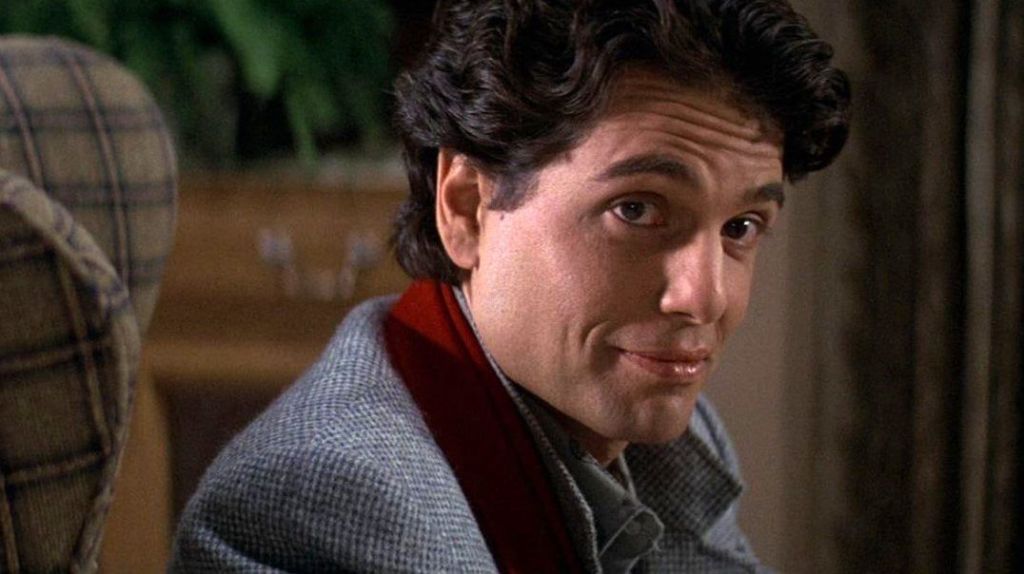
Chris Kaine is the most amateur film essayist whom you may ever imagine. He earnestly contends that he was named after the actor Chris Sarandon, because he was either conceived while his parents watched Fright Night (1985) in his paternal grandparents’ basement, or because of their love for The Princess Bride (1987), which stars a character by the name of “Humperdink,” which is pretty funny, if you think about it.


Leave a comment